
Catalogue Search | MBRL


Are you sure you want to remove the book from the shelf?

{{itemTitle}}
7,723
result(s) for
"Peace research"
Sort by:

Nation building : why some countries come together while others fall apart
\" A new and comprehensive look at the reasons behind successful or failed nation building Nation Building presents bold new answers to an age-old question. Why is national integration achieved in some diverse countries, while others are destabilized by political inequality between ethnic groups, contentious politics, or even separatism and ethnic war? Traversing centuries and continents from early nineteenth-century Europe and Asia to Africa from the turn of the twenty-first century to today, Andreas Wimmer delves into the slow-moving forces that encourage political alliances to stretch across ethnic divides and build national unity. Using datasets that cover the entire world and three pairs of case studies, Wimmer's theory of nation building focuses on slow-moving, generational processes: the spread of civil society organizations, linguistic assimilation, and the states' capacity to provide public goods. Wimmer contrasts Switzerland and Belgium to demonstrate how the early development of voluntary organizations enhanced nation building; he examines Botswana and Somalia to illustrate how providing public goods can bring diverse political constituencies together; and he shows that the differences between China and Russia indicate how a shared linguistic space may help build political alliances across ethnic boundaries. Wimmer then reveals, based on the statistical analysis of large-scale datasets, that these mechanisms are at work around the world and explain nation building better than competing arguments such as democratic governance or colonial legacies. He also shows that when political alliances crosscut ethnic divides and when most ethnic communities are represented at the highest levels of government, the general populace will identify with the nation and its symbols, further deepening national political integration. Offering a long-term historical perspective and global outlook, Nation Building sheds important new light on the challenges of political integration in diverse countries. \"-- Provided by publisher.
Book

Understanding Peace Research
This textbook provides a comprehensive overview of different methods and sources of information-gathering for peace and conflict students and researchers, as well as the challenges presented by such work.
Research on conflict-ridden societies carries special challenges for the collection and evaluation of information about the conflict and its actors. First, due to the nature of information emerging, incentives to misrepresent and propaganda is common. News coverage is sometimes poor and reporting is often incomplete, selective and biased. Second, the sensitivity of the topic and the questions posed in peace and conflict research means that access to and the security of informants can be a problem.
Peace and conflict research as a discipline encompasses a number of different approaches for obtaining empirical information which serve as a basis for analyzing various research topics. This book provides a comprehensive overview of different methods and sources of information-gathering for students and researchers, as well as the challenges presented by such work. It offers:
tools for evaluating sources and information
suggestions on where different types of information can be found
advice on using different types of sources, including news reports and written narratives
practical guidelines for constructing large-scale datasets
insights and guidelines for comparative fieldwork, in-depth interviews, focus groups, and surveys
reflection and discussion on important ethical concerns in peace research
This book will be of much interest for students and researchers of peace and conflict studies, conflict resolution, war and conflict studies, development studies, security studies and IR, as well as for NGO workers/researchers.
Kristine Höglund is Associate Professor
eBook

Data and progress in peace and conflict research
We highlight how efforts to collect systematic data on conflict have helped foster progress in peace and conflict research. The Journal of Peace Research has played a key role in these developments, and has become a leading outlet for the new wave of disaggregated conflict data. We survey progress in the development of conflict data and how this interacts with theory development and progress in research, drawing specifically on examples from the move towards a greater focus on disaggregation and agency in conflict research. We focus on disaggregation in three specific dimensions, namely the resolution of conflict data, agency in conflict data, and the specific strategies used in conflict, and we also discuss new efforts to study conflict processes beyond the use of violence. We look ahead to new challenges in conflict research and how data developments and the emergence of 'big data' push us to think harder about types of conflict, agency, and the 'right' level of aggregation for querying data and evaluating specific theories.
Journal Article
Introducing the UCDP Georeferenced Event Dataset
This article presents the UCDP Georeferenced Event Dataset (UCDP GED). The UCDP GED is an event dataset that disaggregates three types of organized violence (state-based conflict, non-state conflict, and one-sided violence) both spatially and temporally. Each event — defined as an instance of organized violence with at least one fatality — comes with date, geographical location, and identifiers that allow the dataset to be linked to and merged with other UCDP datasets. The first version of the dataset covers events of fatal violence on the African continent between 1989 and 2010. This article, firstly, introduces the rationale for the new dataset, and explains the basic coding procedures as well as the quality controls. Secondly, we discuss some of the data's potential weaknesses in representing the universe of organized violence, as well as some potential biases induced by the operationalizations. Thirdly, we provide an example of how the data can be used, by illustrating the association between cities and organized violence, taking population density into account. The UCDP GED is a useful resource for conflict analyses below the state and country-year levels, and can provide us with new insights into the geographical determinants and temporal sequencing of warfare and violence.
Journal Article

Gender Gap or Gender Bias in Peace Research? Publication Patterns and Citation Rates for \Journal of Peace Research\, 1983-2008
Many studies report lower academic productivity among women. But are women less likely to get their research published in the first place? The evidence for potential gender bias in publication and impact is mixed. This article examines the gender dimension of scientific publication in international relations (IR) based on submission data for Journal of Peace Research for the period 1983-2008. It examines the gender gap in submissions and explores whether the perceived merit of a research paper is affected by the gender of the authors and reviewers. It also investigates whether the gender of the first author influences citation counts. The data show a clear but declining gender gap. They do not indicate any significant gender bias in publication success or citations.
Journal Article
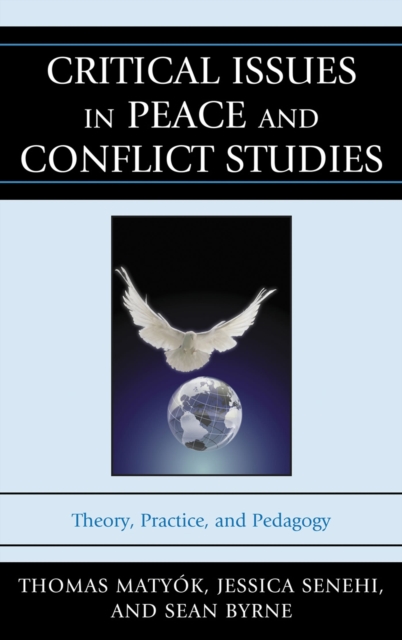
Critical issues in peace and conflict studies
Peace and Conflict Studies (PCS) includes scholars and practitioners throughout the world working in peace studies, conflict analysis and resolution, conflict management, appropriate dispute resolution, and peace and justice studies. They come to the PCS field with a diversity of ideas, approaches, disciplinary roots, and topic areas, which speaks to the complexity, breadth, and depth needed to apply and take account of conflict dynamics and the goal of peace. Yet, a number of key concerns and dilemmas continue to challenge the field. Critical Issues in Peace and Conflict Studies: Theory, Practice, and Pedagogy, edited by Thomas Matyók, Jessica Senehi, and Sean Byrne, is a collection of essays that explores a number of these issues, providing a means by which academics, students, and practitioners can develop various methods to confront the complexity of contemporary conflicts. Critical Issues in Peace and Conflict Studies discusses the emerging field of PCS, and suggests a framework for the future development of the field and the education of its practitioners and academics. The book has a wide audience targeting students at the undergraduate, graduate, and post-graduate levels. It also extends to those working in and leading community conflict resolution efforts as well as humanitarian aid workers.
eBook
Peace and conflict studies research : a qualitative perspective
This edited book is a new and valuable resource for students, teachers, and practitioners, providing a detailed exploration of how qualitative research can be applied in the field of peace and conflict studies. This book explores considerations and components of designing, conducting, and reporting qualitative research in this field, and also provide exemplars of recent empirical research in peace and conflict studies that employed qualitative methods. Scholars and researchers in peace and conflict studies and peace education face unique challenges in teaching, designing, and conducting qualitative research in these fields. This edited book discusses tips in designing qualitative studies in this area and for teaching emerging peace researchers best practices of qualitative inquiry. In addition, the book discusses some of the trends, challenges, and opportunities associated with research in peace and conflict studies and peace education. Written at a level appropriate for both graduate students and active researchers, the primary audience for this book is those teaching and learning about the application of qualitative methods to peace and conflict studies, as well as those conducting research in this field. There are currently approximately 230 graduate programs in peace and conflict studies. This book also provides a useful tool for researchers and students in other academic disciplines who are interested in qualitative research. Such disciplines might include education, sociology, criminology, gender studies, psychology, political science, and others.
eBook
Armed Conflicts, 1946—2012
In 2012, the Uppsala Conflict Data Program (UCDP) recorded 32 armed conflicts with a minimum of 25 battle-related deaths. This is a significant decrease from the 37 recorded in 2011. Overall, the 2000s has been the least conflict-ridden decade since the 1970s. A worrying finding, however, is that the number of internationalized intrastate conflicts continued to be at a high level for the fourth consecutive year. At six, the number of wars — conflicts leading to 1,000 or more battle-related deaths — remained the same as in 2011. In total, UCDP estimates that the conflicts that were active in 2012 caused between 37,175 (low estimate) and 60,260 (high estimate) battle-related deaths, with a best estimate of 37,941. The conflict that caused the highest number of fatalities in 2012 is the Syrian conflict, which led to between 14,830 (low) and 30,805 (high) battle-related deaths, with the best estimate being 15,055. Eleven armed conflicts listed in 2011 were not active in 2012; however, three new conflicts erupted during the year — India (Garoland), Mali and South Sudan vs. Sudan (common border) — and three previously registered conflicts were resumed by new actors. Lastly, 2012 saw an increase in the number of signed peace agreements which had been at a very low level over the past three years; four accords were concluded during the year, compared with one in 2011.
Journal Article
Introduction: Forecasting in peace research
Prediction and forecasting have now fully reached peace and conflict research. We define forecasting as predictions about unrealized outcomes given model estimates from realized data, and predictions more generally as the assignment of probability distributions to realized or unrealized outcomes. Increasingly, scholars present within- and out-of-sample prediction results in their publications and sometimes even forecasts for unrealized, future outcomes. The articles in this special issue demonstrate the ability of current approaches to forecast events of interest and contributes to the formulation of best practices for forecasting within peace research. We highlight the role of forecasting for theory evaluation and as a bridge between academics and policymakers, summarize the contributions in the special issue, and provide some thoughts on how research on forecasting in peace research should proceed. We suggest some best practices, noting the importance of theory development, interpretability of models, replicability of results, and data collection.
Journal Article
Peace research – Just the study of war?
The concept of peace has been under discussion in peace research from its start over 50 years ago. This article reviews the debate on broader and narrower conceptions of peace and investigates empirical patterns in the first 49 volumes of Journal of Peace Research, with some comparisons with Journal of Conflict Resolution. Negative peace, in the sense of reducing war, was the main focus in peace research from the inception. But positive peace, in the sense of cooperation or integration, has also always been on the peace research agenda, as reflected in the contents of both journals. Over time, a larger share of the articles in JPR has 'violence' or related terms in the title, while the incidence of the word 'peace' is fairly stable. Furthermore, articles on peace generally have fewer citations than those with violence-related terms. A broad concept of peace, as encouraged by the definition of positive peace as the reversal of structural violence, was popular in peace research for a decade or so, but has largely evaporated. To some extent, peace research has returned to its original agenda, although the main attention has shifted from interstate war to civil war and to some extent to one-sided and non-state violence. Articles dealing with patterns of cooperation, the traditional meaning of positive peace, now tend to address the liberal agenda and ask how they can foster a reduced probability of violence. Despite the 'gender gap', the increasing share of female authors in the journal appears to have had little influence on these developments although it may well have had other effects.
Journal Article