
Catalogue Search | MBRL


Are you sure you want to remove the book from the shelf?

{{itemTitle}}
42,282
result(s) for
"Pearl"
Sort by:

Pearl diving
\"Imagine a job where you must stay at sea for four months. Imagine diving deep under the sea to collect oysters. This is what pearl divers of the past had to do. Find out all about this interesting and dangerous job in this book.\"--Page 4 of cover.
Book

The China Mystique
Throughout the history of the United States, images of China have populated the American imagination. Always in flux, these images shift rapidly, as they did during the early decades of the twentieth century. In this erudite and original study, Karen J. Leong explores the gendering of American orientalism during the 1930s and 1940s. Focusing on three women who were popularly and publicly associated with China-Pearl S. Buck, Anna May Wong, and Mayling Soong-Leong shows how each negotiated what it meant to be American, Chinese American, and Chinese against the backdrop of changes in the United States as a national community and as an international power.The China Mystiqueillustrates how each of these women encountered the possibilities as well as the limitations of transnational status in attempting to shape her own opportunities. During these two decades, each woman enjoyed expanding visibility due to an increasingly global mass culture, rising nationalism in Asia, the emergence of the United States from the shadows of imperialism to world power, and the more assertive participation of women in civic and consumer culture.
eBook


American Baroque
Pearls have enthralled global consumers since antiquity, and the Spanish monarchs Ferdinand and Isabella explicitly charged Columbus with finding pearls, as well as gold and silver, when he sailed westward in 1492.American Baroquecharts Spain's exploitation of Caribbean pearl fisheries to trace the genesis of its maritime empire. In the 1500s, licit and illicit trade in the jewel gave rise to global networks, connecting the Caribbean to the Indian Ocean to the pearl-producing regions of the Chesapeake and northern Europe.Pearls-a unique source of wealth because of their renewable, fungible, and portable nature-defied easy categorization. Their value was highly subjective and determined more by the individuals, free and enslaved, who produced, carried, traded, wore, and painted them than by imperial decrees and tax-related assessments. The irregular baroque pearl, often transformed by the imagination of a skilled artisan into a fantastical jewel, embodied this subjective appeal. Warsh blends environmental, social, and cultural history to construct microhistories of peoples' wide-ranging engagement with this deceptively simple jewel. Pearls facilitated imperial fantasy and personal ambition, adorned the wardrobes of monarchs and financed their wars, and played a crucial part in the survival strategies of diverse people of humble means. These stories, taken together, uncover early modern conceptions of wealth, from the hardscrabble shores of Caribbean islands to the lavish rooms of Mediterranean palaces.
eBook

Octopus crowd : maritime history and the business of Australian pearling in its schooner age
\"A detailed study of the origins and demise of schooner-based pearling in Australia\"-- Provided by publisher.
Book
The people between the rivers
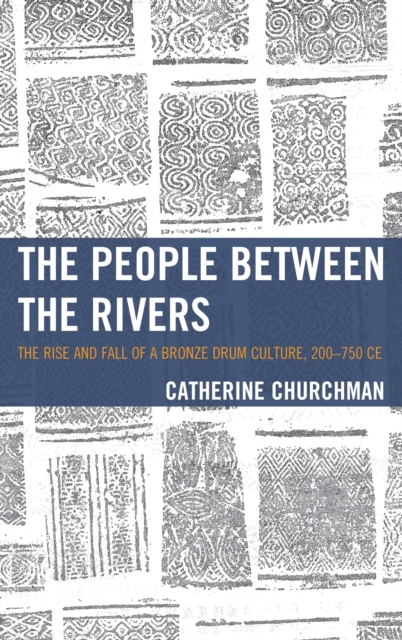
This fundamental study provides the first comprehensive history in any language of the lands between the Red and Pearl Rivers in southern China and the people who resided there over a span of a thousand years. Bringing to life the mysterious early people known as Li and Lao who inhabited the area, Catherine Churchman explores their custom of casting large bronze kettledrums. As the symbols of political authority and legitimacy for the Li and Lao rulers, the abundance of drums found in the archaeological record is an indication not only of the great number of such rulers, but also of their great wealth and power, which increased significantly from the third century CE even as the Chinese Empires tightened their control over surrounding districts. Drawing on a combination of Classical Chinese sources and scholarship in archaeology, anthropology, and historical linguistics, the author explains the political and economic factors behind the rise to power and subsequent disappearance of the indigenous leadership and its drum culture. She fills significant gaps in our understanding of the early interactions between China and northern Southeast Asia, challenging many widely held assumptions about the history of Chinese settlement and ethnic relations in the region, including those concerning the relationship between the Chinese Empires and the lands that would form the heart of a future Vietnamese state. A crucial work for understanding historical developments in the highland regions south of the Yangtze valley, it examines the first steps in the Sinic penetration of this highland world, one that has continued to the present. Bringing unprecedented attention to the historical identity of a previously overlooked region and a people, this book creates a new category in East Asian history.
eBook

Staff Ride Handbook For The Attack On Pearl Harbor, 7 December 1941 : A Study Of Defending America Illustrated Edition
Illustrated with over 80 photos of the ships, commanders, aircraft and locations involved in the attack on Pearl Harbor
This handbook on Pearl Harbor allows individuals and organizations to study this battle not only in the context of the Japanese attack but, more importantly, in the context of issues that are relevant to the current global war on terror. In addition to analyzing the actual attack, it also enables users of this work to examine the problems associated with conducting joint planning and operations between the US Army, the Army Air Forces, and the US Navy. He also provides insights into the problems of a Homeland Security environment in which intelligence operatives from a foreign nation (and potentially even recent immigrants from that foreign nation who are now US citizens) can operate with little hindrance in a free and open democratic society. Additionally, this study provides an opportunity to look at how military commanders and planners prepared for their wartime mission with inadequate resources and equipment.
eBook


Misadventures of a Civil War Submarine
In 2001, while vacationing on Panama’s Pacific coast, maritime archaeologist James P. Delgado came upon the hulk of a mysterious iron vessel, revealed by the ebbing tides in a small cove at Isla San Telmo. Local inquiries proved inconclusive: the wreck was described as everything from a sunken Japanese suicide submarine from World War II to a poison-laden craft of death that was responsible for the ruin of the pearl beds, decades before.
His professional interest fully aroused, Delgado would go on to learn that the wreck was the remains of one of the first successful deep-diving submersibles, built in 1864 by Julius H. Kroehl, an innovator and entrepreneur who initially sought to develop his invention for military use during the Civil War. The craft’s completion coming too late for that conflict, Kroehl subsequently convinced investors that it could be used to harvest pearls from the Pacific beds off Panama, in waters too deep for native pearl divers to reach.
In Misadventures of a Civil War Submarine, Delgado chronicles the confluence of technological advancement, entrepreneurial aspiration, American capitalist ambition, and ignorance of the physiological effects of deep diving. As he details the layers of knowledge uncovered by his work both in archival sources and in the field excavation of Kroehl’s ill-fated vessel, Delgado weaves the tangled threads of history into a compelling narrative. This finely crafted saga will fascinate and inform professional archaeologists and researchers, naval historians, students and aficionados of maritime exploration, and interested general readers.
eBook