
Catalogue Search | MBRL


Are you sure you want to remove the book from the shelf?

{{itemTitle}}
7
result(s) for
"Pearls Bahrain"
Sort by:
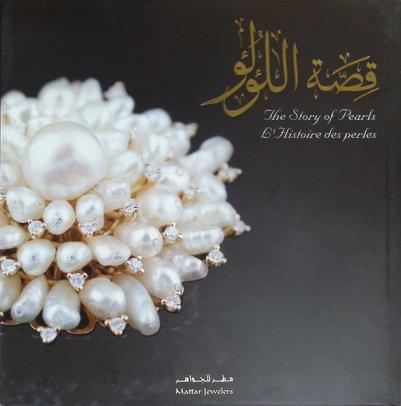
The story of pearls : A Bahraini family relationship with natural pearls
\"The Story of Pearls\" is an intimate and scholarly account of the Mattar family’s multi-generational legacy in the natural pearl trade of Bahrain. Edited by Reem Ebrahim Mattar, the volume documents the evolution of the pearling industry from its peak as the backbone of the Gulf economy to its current status as a cherished cultural heritage. The work serves as a primary source for understanding the social and economic fabric of Bahrain, tracing the family's expertise in the sorting, grading, and trading of \"Basra\" pearls—the world’s most sought-after natural pearls.
BOOK

Elevating Cultural Preservation Projects into Urban Regeneration: A Case Study of Bahrain’s Pearling Trail
The island of Muharraq in the Kingdom of Bahrain was previously in a state of socioeconomic disrepair and neglect, until the nine years-long “Pearling Trail” project revived the area. Historically, Muharraq’s importance inheres in it being the main trade center of the Middle East since the Mesopotamian period, especially as the source of the finest pearls in the world. However, the discovery of oil that led to the rapid urbanization of the region and Japan perfecting the production of cultured pearls had meant that Muharraq dwindled out of cultural significance. Due to the residents’ dissatisfaction and nostalgia for the island’s past glory, along with the government’s new policies towards cultural preservation, the “Pearling Trail” Project commenced in 2012. The Ministry of Culture of Bahrain repaired, renovated and preserved an area of 3.5 km, transforming it into an eco-museum with a thriving business and cultural community. The transformation of the island elevated the city into a trendy local attraction, hosting local and global cultural festivals and events, owing to the “Pearling Trail’s” Urban Regeneration Project’s success. By studying the “Pearling Trail” three success factors are identified: Project expansion beyond UNESCO preservation requirements, focus on sustainability and continuous use, and improved access to culture and cultural opportunities. Identifying these factors could allow for future preservation projects in Bahrain or elsewhere to be upgraded for urban regeneration or revitalization.
Journal Article

Comprehensive associations between pearl oyster beds and coral, seagrass, and algal habitats in the hottest sea on the planet
IntroductionPearl oyster ecosystems have played a central role in Bahrain’s marine economy and cultural heritage for centuries. Despite their ecological importance, systematic research on Bahrain’s pearl oyster beds is lacking since the early 1990s. In this study a detailed assessment of the benthic composition, pearl oyster community structure, population size, and pearl yield on pearl oyster beds is provided for Bahraini waters.MethodsBetween January and May 2024, field surveys were conducted at ten sites across Bahrain’s northern, eastern, and western waters to assess benthic composition, pearl oyster community structure, population size structure, and pearl yield. A total of 1,973 pearl oysters were collected and studied.ResultsNine species of pearl oysters were recorded, with Pinctada radiata dominating across all sites. Pinctada species richness was highest in the north (six species) with greater oyster densities (34 ± 4.9 oysters/m2) compared to the east (6 ± 2.7 oysters/m2) and west (10 ± 2.9 oysters/m2). Oyster beds were associated with coral in the north (up to 22.6 ± 2.3% cover), algae in the upper eastern (75.6% ± 4.4%) and western (65.8% ± 4.2%) sites, and seagrass mixed with algae in the lower eastern (27.9% ± 4.9% seagrass) and western (33.1% ± 4.2% seagrass) sites. Pearl yield was highest in the Northern and western sites, with Hayr Bu Amamah (14.3%) and Hayr Bul Thamah (11.1%) showing the highest incidence of pearls.Discussion/ConclusionThis study provides the first comprehensive quantitative assessment of Bahrain’s pearl oyster beds in over three decades. Given that these oyster beds inhabit some of the most extreme marine environments on the planet, where temperatures fluctuate annually between 16 °C to 36 °C and salinity exceed 50 ppt in certain areas. These findings provide critical baseline data to inform sustainable management, conservation planning and marine heritage protection in Bahrain and the wider Gulf region.
Journal Article

The Impact of Increasing Seawater Temperatures over the Last 30 Years on the Reproductive Cycle of the Pearl Oyster Pinctada radiata (Leach, 1814) in the Arabian Gulf
The pearl oyster Pinctada radiata (Leach, 1814), a crucial ecosystem builder in the Arabian Gulf, has experienced a significant decline, mainly attributed to anthropogenic pressures. This study aimed to characterize the reproductive cycle of P. radiata in Qatar and compare the current data with historical records in the region obtained between 1992 and 1993. From May 2020 to April 2022, we found a well-defined seasonal reproductive pattern, with a narrow peak spawning period in April. This observation stands out strongly from the previous recordings of 1992–1993 for the region, where spawning extended from May to August. The observed shift in the reproductive cycle coincides with a notable increase in the maximum sea surface temperature (SST), rising from 34 °C in August (1992–1993) to 37 °C in July (2020–2022), while the minimum SST remained stable at 15–16 °C in January during both periods. Furthermore, a contraction in the duration of the main spawning period was observed, with spawning now confined to an earlier and shorter timeframe. We propose that climate change, in addition to other environmental stressors, must have played a key role in modifying the reproductive cycle of the pearl oyster P. radiata in the Arabian Gulf. These findings highlight the importance of further monitoring reproductive dynamics in the context of climate change.
Journal Article

The Manumission Movement in the Gulf in the First Half of the Twentieth Century
Between 1906 and 1949, more than 950 slaves reported at the British agencies in Bahrain, Kuwait, Muscat, and Sharjah and asked for manumission. Their written statements prove that slavery was an important part of the local socio-economic system and that many slaves had for generations been bound with the same families of owners. The manumission movement was caused mainly by the collapse of the pearl industry in the Gulf in the 1920s and 1930s, but it was the psychological factor rather than the economic one which played the decisive role in slaves coming to a decision to run away from their master.
Journal Article

Views from the Arab Gulf on the ‘Arab Spring’ and its repercussions
This opinion piece of different Arab views and perspectives on the ‘Arab Spring’ and its significance and repercussions in the Arab Gulf region comprises three papers: ‘Repercussions of the Arab movements for democracy on the Saudi street’, by Mohammed Iben Sunitan; ‘Arab Spring … fleeting or perpetual?’, by Jasem Khaled Al-Sadoun; and ‘Repercussions of the Arab movements for democracy in Bahrain’, by Ali Mohammed Fakhro. Iben Sunitan posits a framework for a reading of the repercussions of the current movements on the Arab street in Saudi Arabia in a brief but highly informative account of the various Saudi opposition groups since the inception of the state under King ‘Abd al-’Aziz bin Sa’ud. The author details the various strategies that have been employed by Saudi monarchs for dealing with or assimilating various opposition groups that have appeared and he examines the new dynamics of a situation in which the youth figure prominently and the house of Al Sa’ud is at a crossroads where it must successfully adapt to the new objective conditions and atmosphere engendered by the climactic and momentous events of 2011. Al-Sadoun deals with numerous issues that pertain to the Gulf region in general such as age demographics, unemployment, economic issues, and the question of what he terms the dichotomy of ‘projects of rule’ as opposed to modern ‘projects of state’, where the former have tended to characterize the Arab world at the expense of both efforts to modernize and democratize. In the global context al- Sadoun sees hope for democratic transition provided that various Gulf rulerships and governments arrive at the conclusion that voluntary democratic reform is considerably less costly than suppression of the popular will. With regard to Tunisia and Egypt – despite serious socio-economic challenges in the latter – he sees promise in the models of Malaysia and Turkey. Fakhro deals with the particular situation in Bahrain characterized by ‘missed opportunities’ as well as regional military intervention, where peaceful demonstrations with initial moderate, legitimate demands pertaining to parliamentary representation and housing concerns that started in public areas such as the Pearl Roundabout were handled ineptly by the government, which chose to deal with them by force from the outset. Both sides crossed ‘red lines’ as demands escalated and demonstrators were gunned down not far from the royal palace. The King has called for an unconditional national dialogue; and while the situation has apparently calmed down for the moment, there remains grave concern over the future course of events. All three articles provide useful information and insight into the sociopolitical and economic dynamics of opposition movements in the Arab Gulf and the nature of their interaction with different types of political authority where it remains to be seen whether or not the prevailing climate of the ‘Arab Spring’ will persist in bringing about structural and genuine democratic reforms or whether protests will ultimately dissipate or assimilated through traditional means.
Journal Article
