
Catalogue Search | MBRL


Are you sure you want to remove the book from the shelf?

{{itemTitle}}
2
result(s) for
"Peasants -- Political activity -- Thailand"
Sort by:

Thailand’s Political Peasants
When a populist movement elected Thaksin Shinawatra as prime minister of Thailand in 2001, many of the country’s urban elite dismissed the outcome as just another symptom of rural corruption, a traditional patronage system dominated by local strongmen pressuring their neighbors through political bullying and vote-buying. In
Thailand’s Political Peasants , however, Andrew Walker argues that the emergence of an entirely new socioeconomic dynamic has dramatically changed the relations of Thai peasants with the state, making them a political force to be reckoned with. Whereas their ancestors focused on subsistence, this generation of middle-income peasants seeks productive relationships with sources of state power, produces cash crops, and derives additional income through non-agricultural work. In the increasingly decentralized, disaggregated country, rural villagers and farmers have themselves become entrepreneurs and agents of the state at the local level, while the state has changed from an extractor of taxes to a supplier of subsidies and a patron of development projects.
Thailand’s Political Peasants provides an original, provocative analysis that encourages an ethnographic rethinking of rural politics in rapidly developing countries. Drawing on six years of fieldwork in Ban Tiam, a rural village in northern Thailand, Walker shows how analyses of peasant politics that focus primarily on rebellion, resistance, and evasion are becoming less useful for understanding emergent forms of political society.
eBook
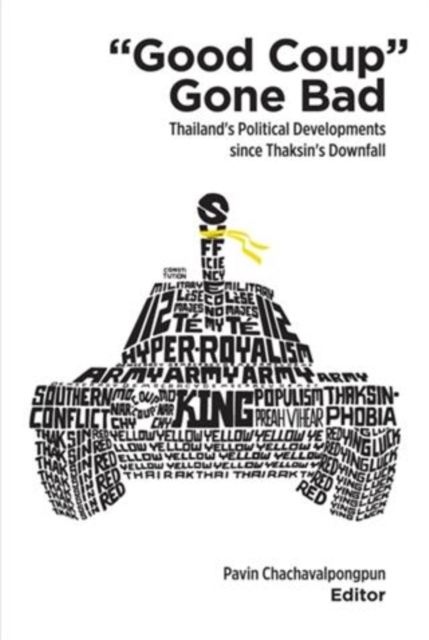
\Good coup\ gone bad: Thailand's political developments since Thaksin's downfall
What did the 2006 military coup show us? It demonstrated that the crux of the Thai crisis is far more serious and much wider in scope than had previously been thought. The monarchy is surely not a victim in the protracted conflict, but the root cause and continuing factor that has eroded Thai politics. The coup set in motion more prejudicial uses of the lese-majeste law, and in the process, has led to more political prisoners. It has also shredded the military into several segments, turning generals into desperate royalists who continue to live off the monarchy in order to survive. Issues of violence in the Thai south and the Thai-Cambodian dispute became greatly intensified in the age of militarized politics. The coup also produced unique colour-coded politics and created crises of legitimacy. This book is a collection of essays that reflect developments in Thai politics in the post-coup period.
eBook