
Catalogue Search | MBRL


Are you sure you want to remove the book from the shelf?

{{itemTitle}}
102
result(s) for
"Peddling"
Sort by:


Pedlars and the Popular Press
This book studies the itinerant book trade in an English and Dutch, urban context, leading to a new perspective on the role of the pedlars as an intermediary between the established booksellers and an extensive, socially diverse reading public.
eBook

Israel Potter : his fifty years of exile
\"Soldier, sailor, prisoner of war, and spy, Israel Potter's lively career leads to encounters with historic figures such as Ben Franklin, John Paul Jones, and George III. Based on the memoirs of a Revolutionary War veteran, this novel was acclaimed by The Village Voice as \"hilarious, tender, expressive.\" This edition also includes Potter's autobiography, The Life and Remarkable Adventures of Israel R. Potter. \"-- Provided by publisher.
Book

Street Occupations
Street vending has supplied the inhabitants of Rio de Janeiro with basic goods for several centuries. Once the province of African slaves and free blacks, street commerce became a site of expanded (mostly European) immigrant participation and shifting state regulations during the transition from enslaved to free labor and into the early post-abolition period. Street Occupations investigates how street vendors and state authorities negotiated this transition, during which vendors sought greater freedom to engage in commerce and authorities imposed new regulations in the name of modernity and progress. Examining ganhador (street worker) licenses, newspaper reports, and detention and court records, and considering the emergence of a protective association for vendors, Patricia Acerbi reveals that street sellers were not marginal urban dwellers in Rio but active participants in a debate over citizenship. In their struggles to sell freely throughout the Brazilian capital, vendors asserted their citizenship as urban participants with rights to the city and to the freedom of commerce. In tracing how vendors resisted efforts to police and repress their activities, Acerbi demonstrates the persistence of street commerce and vendors’ tireless activity in the city, which the law eventually accommodated through municipal street commerce regulation passed in 1924. A focused history of a crucial era of transition in Brazil, Street Occupations offers important new perspectives on patron-client relations, slavery and abolition, policing, the use of public space, the practice of free labor, the meaning of citizenship, and the formality and informality of work.
eBook

Unbundling Corruption: Revisiting Six Questions on Corruption
Corruption is conventionally measured in global indices as a one-dimensional problem—one score for every country—a practice that has profoundly shaped our conceptualization of corruption and its relationship with capitalism. What if we unbundle corruption into qualitatively distinct types and then measure them across countries? How will this approach change our understanding of corruption? This review article serves two purposes. First, it introduces a new framework for “unbundling corruption” into four varieties and highlights their differential economic effects. Based on this typology, I piloted a new cross-national measure of these four varieties of corruption in fifteen countries, using an expert, perception-based survey—the Unbundled Corruption Index (UCI)™. Second, I review six questions on corruption through the lens of unbundling corruption. Shifting our focus of corruption from its aggregated quantity to its quality not only changes our responses to commonly asked questions about corruption, it also prompts new questions.
Journal Article

Rural–Urban Dynamics of Police Corruption: Views of Ghanaian Police Officers
Police corruption referring to police officers’ use or misuse of authority for private or organisational gain is a major obstacle to effective policing globally. The effect of police corruption is particularly grave in rural areas due to the remoteness of rural areas, inadequate frontline supervision, and people in rural areas being largely poor. Evidence shows that corruption denies people in rural areas of justice and contributes to increasing poverty levels. Despite the effect of police corruption in rural areas, studies hardly consider the rural–urban dynamics and perspectives. Addressing this gap, the current study explores the causes of corruption from the perspectives of police officers working in rural and urban areas. The study uses survey data from 616 Ghanaian police officers, which is analysed using proportions, correlations, and regression. Results show that the area where police officers work influences what factors they perceive as causes of corruption: officers working in rural areas are less likely to regard economic factors and institutional (in)actions as causes of police corruption. Also, officers’ gender is an important determinant of factors that are considered causes of corruption irrespective of whether they work in a rural or urban area. The results suggest that for anti-corruption policies addressing causes of police corruption to be effective, measures must factor in the rural–urban dynamics as different factors are regarded as causes of corruption among police officers working in rural and urban areas.
Journal Article
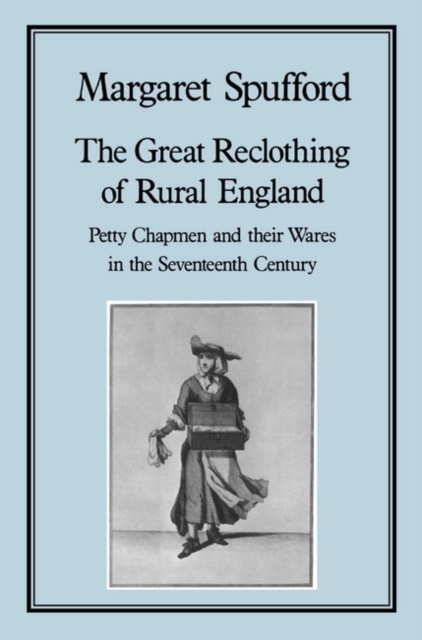
The Great Reclothing of Rural England
Margaret Spufford has written as detailed an account of the lives and activities of the chapmen as there is likely to be, given the widely-spread and fragmented evidence. She shows where and when they were active, and in particular their rise in the 17th century, their ranks and their typical careers, the variety of the cloths and other wares they carried, and the attitude of authority towards them.
eBook
Great Reclothing of Rural England
Margaret Spufford has written as detailed an account of the lives and activities of the chapmen as there is likely to be, given the widely-spread and fragmented evidence. She shows where and when they were active, and in particular their rise in the 17th century, their ranks and their typical careers, the variety of the cloths and other wares they carried, and the attitude of authority towards them.
eBook

Grey corruption issues in the public sector
PurposeThis paper aims to identify key learnings around the concept of “grey corruption” by systematically reviewing the extant literature. The concept is addressed in terms of areas of alleged misconduct often considered “minor” or “borderline” in relation to “black corruption”. Common examples include favourable treatment of friends and relatives by public officials, receipt of gifts, excessive expenditures and pork barrelling, influence peddling through donations and lies and false promises. The focus of this study is on definitions, extent, public perspectives, explanations and evidence of promising prevention strategies.Design/methodology/approachRelevant sources were sought using systematic keyword searches of major criminological and political databases, a media database and relevant government and non-government websites, up to the end of December 2019.FindingsThe main findings were that there is no single accepted definition of grey corruption but that the concept remains useful, practice is often extensive, it is generally at odds with public opinion, opportunity is a key factor in its incidence and prevention requires the enactment and enforcement of clear principles.Research limitations/implicationsMedia-reported cases were too numerous to analyse in detail for the present study.Practical implicationsEfforts to improve integrity in government need to take account of the concept. Rules require clarification and communication. Enforcement needs improvement. More experiments are needed in prevention.Social implicationsThis paper captures a range of integrity issues of importance to the public but often downgraded or dismissed by politicians.Originality/valueThis paper is unique in reporting the results of a systematic search of the international literature on the topic.
Journal Article

Great Reclothing of Rural England
Margaret Spufford has written as detailed an account of the lives and activities of the chapmen as there is likely to be, given the widely-spread and fragmented evidence.She shows where and when they were active, and in particular their rise in the 17th century, their ranks and their typical careers, the variety of the cloths and other wares they.
eBook