
Catalogue Search | MBRL


Are you sure you want to remove the book from the shelf?

{{itemTitle}}
525
result(s) for
"Penelope Lively"
Sort by:

Dancing fish and ammonites : a memoir
\"The beloved and bestselling author takes an intimate look back at a life of reading and writing. \"The memory that we live with is the moth-eaten version of our own past that each of us carries around, depends on. It is our ID; this is how we know who we are and where we have been.\" Memory and history have been Penelope Lively's terrain in fiction over a career that has spanned five decades. But she has only rarely given readers a glimpse into her influences and formative years. Dancing Fish and Ammonites traces the arc of Lively's life, stretching from her early childhood in Cairo to boarding school in England to the sweeping social changes of Britain's twentieth century. She reflects on her early love of archeology, the fragments of the ancients that have accompanied her journey-including a sherd of Egyptian ceramic depicting dancing fish and ammonites found years ago on a Dorset beach. She also writes insightfully about aging and what life looks like from where she now stands\"-- Provided by publisher.
Book

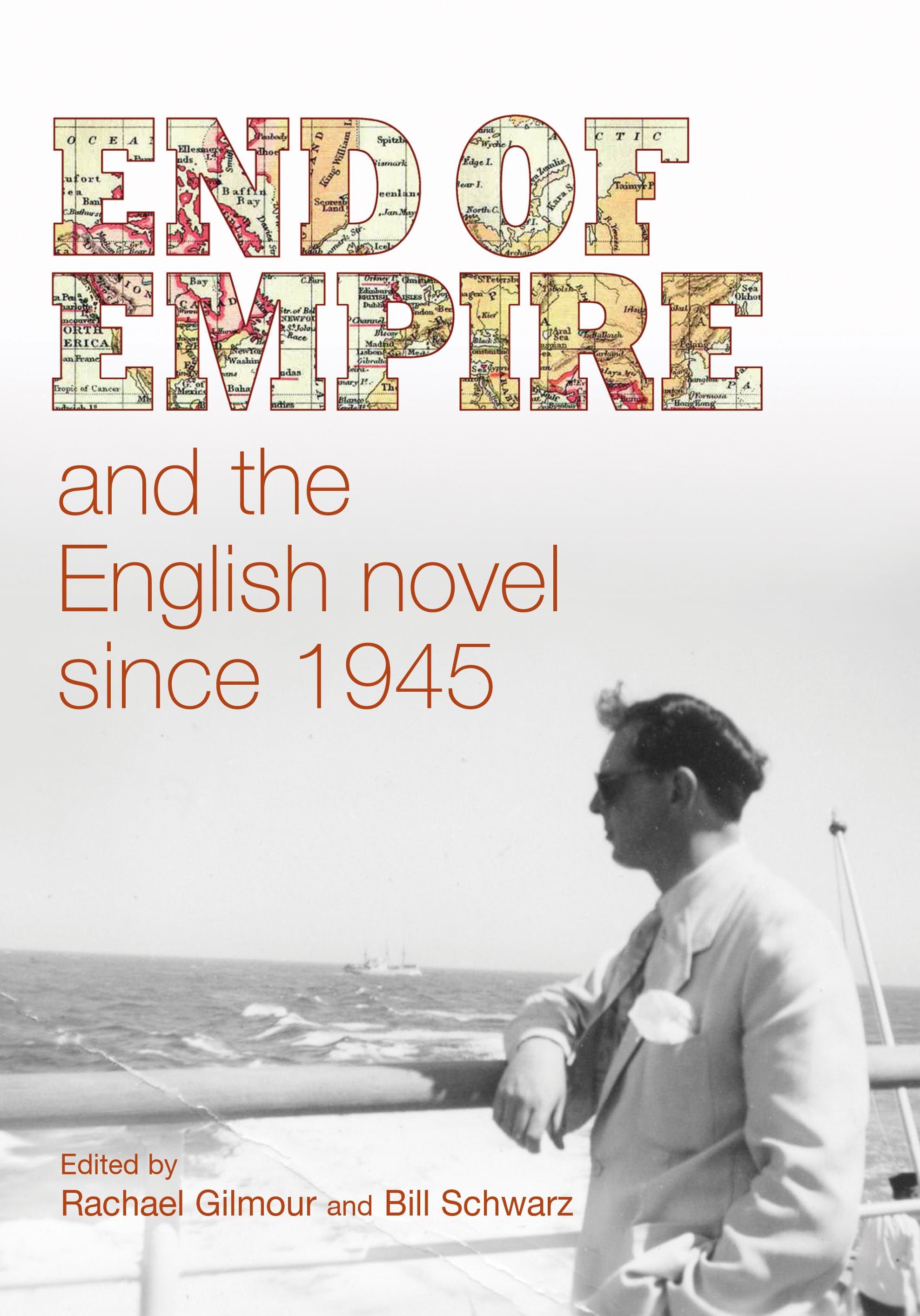
End of empire and the English novel since 1945
Available in paperback for the first time, this first book-length study explores the history of postwar England during the end of empire through a reading of novels which appeared at the time, moving from George Orwell and William Golding to Penelope Lively, Alan Hollinghurst and Ian McEwan. Particular genres are also discussed, including the family saga, travel writing, detective fiction and popular romances.All included reflect on the predicament of an England which no longer lies at the centre of imperial power, arriving at a fascinating diversity of conclusions about the meaning and consequences of the end of empire and the privileged location of the novel for discussing what decolonization meant for the domestic English population of the metropole. The book is written in an easy style, unburdened by large sections of abstract reflection. It endeavours to bring alive in a new way the traditions of the English novel.
eBook

The Camera Lens: Representation, Authenticity, and Manipulation in Penelope Lively's The Photograph and J. M. Coetzee's Slow Man
This article examines the presence of photographs in Penelope Lively's The Photograph in relation to personal experience, and in J. M. Coetzee's Slow Man regarding cultural implications. Most importantly, it demonstrates the photograph's ability to distort, recreate, and complicate one's perceptions of reality. It argues that an unconditional belief in the appearance that the photograph offers distorts and alters the characters' perception of their experience in time. Moreover, the digital forging of some of the photographs and disappearance of the originals draw attention to the threat of a deceitful recreation of human history. Such a recreation illustrates the transformation of documentary photographs into simulacra. In order to explain how photographs can distort an authentic version of reality and generate alarming anomalies, this article relies on close reading of the texts informed by Roland Barthes's reflections on photography and Jean Baudrillard's concepts of \"simulacra\" and \"simulation.\"
Journal Article

ON THE 2018 MAN BOOKER PRIZE
[...]about nine thousand people voted on the Guardian website to produce the winner, Ondaatje's The English Patient. The International Prize, first awarded in 2005, was originally a biennial award for a lifetime's work given to any author from any country whose work was generally available in English: among the winners were Chinua Achebe and Philip Roth. Since 2015 it has been an annual award given to a single novel translated into English, with the fifty-thousand-pound prize divided between author and translator. Characters in this novel lack proper names; instead they are called things like \"middle daughter\" and \"almost-girlfriend\" (the narrator); \"the milkman\" or \"Milkman\" (a terrifying paramilitary figure who targets and stalks and threatens her); \"nuclear boy\" (who commits suicide because he worries about the arms race between the US and USSR); \"tablets girl\" (a poisoner); and so on. (Patrons in the fish-and-chip shop shrink away from her, but she is not allowed to pay for her food.) There are a few exceptions to the prevailing paranoia and hysteria, including middle-daughter herself, almost-boyfriend's parents, who ignore the divisions and are internationally famous ballroom dancers, and \"the real milkman\" (also known as \"the man who did not love anybody\"), who bravely denounces sectarian violence and is shot by the security services, who mistake him for Milkman.
Journal Article

CHOICE, CONTINGENCY, AND THE CRACK OF DOOM: PENELOPE LIVELY'S \JUDGMENT DAY\
Penelope Lively's fourth novel, Judgment Day (1981), although quiet and understated like most of her fiction, employs sophisticated thematic and structural patterns. The novel concerns an English village and focuses on four characters contributing to what Lively elsewhere refers to as her goal of \"illuminating the conflicts and ambiguities\" of being human. In Judgment Day these complexities involve its protagonists in the equivocal relationship between choice and contingency as well as entangle them in the circumstantial and psychological binaries of order and chaos, connection and isolation. The novel deploys two thematic and narrative trajectories in which the first factors in the three pairs jointly trend toward hope and the second toward its loss. The conclusion of Judgment Day leaves unclear which one, if either, will prevail, but the novel clearly favors humaneness as the appropriate response to the \"conflicts and ambiguities\" of being a conscious and overly-sensitive species. The community's attempt via a historical pageant to raise money to restore its medieval church becomes central stage for the playing out of the foregoing dynamics, which the church's ancient wall painting of The Last Judgment encapsulates. It does this as part of the novel's tactic of translating Christian concepts into secular ones as each of the four protagonists moves toward his or her own form of Judgment Day.
Journal Article

The Girl No One Knew: Photographs, Narratives, and Secrets in Modern Fiction
Photographs frequently appear in fiction because their reputation for indexicality confirms our view of what the world, and the world of the novel, is like. However, in The Photograph, Penelope Lively uses the unexpected discovery of a photograph to confound, not confirm, everything her characters know about themselves and each other.
Journal Article

Recollection and Revision: Penelope Lively’s Moon Tiger
The \"world\" part of her project is not inappropriate, however, because her life is connected not only to the world history she writes about in her books on important historical figures but also to momentous history that influenced her personal life, especially World War 11 but also the postwar Soviet domination of Eastern Europe: \"Moon Tiger is conscious of itself as a story of history, of personal relations in great historical events, and the unfeelingness of history to those relations and the characters involved\" (Dukes 89).According to Kotte, Claudia's experiences \"a break-up of her confident trust in her own terms of reference ... [that] derives from a fundamental ethical moment, i.e., the encounter with alterity\" (139).7 That Tom causes her to respond to something strange and disruptive, at odds with the ego-determination she had previously exercised, is certainly true, and it is ethical in that it causes her imaginatively and emotionally to experience and transcend otherness.Love in a time of war elicits a kind of clarity in the midst of confusion.[...]she begins to actually see Egypt and Egyptians.Claudia says of the feminist movement that it could have used her help but that she \"never felt its absence\" (14) since what matters to her is unrelated to women in general.Because of the prominence of Claudia and Tom's affair, Margaretta Jolly argues that in the novel \"History, and the particular question of masculinity, dissolve into romance\" (72).
Journal Article

Retrieving the Past—The Historical Theme in Penelope Lively’s Fictions
Penelope Lively (1933- ), the contemporary British writer, was first known mainly as a children’s writer prior to her winning the 1987 Booker Prize with her widely praised novel Moon Tiger (1987). The Road to Lichfield, published in 1977, is her first adult novel which was shortlisted for the Booker Prize. Treasures of Time (1979), her second adult novel, was the winner of Great Britain’s first National Book Award for fiction in 1980 and the Arts Council National Book Award. In her literary fictions, Lively interweaves the present and the past -- history, the public, collective past, and memory, the private and personal past -- together with the application of various narrative techniques, such as flashback, stream of consciousness, psychological time, etc. A predominant theme running through her literary world is her consistent focus on history. This essay intend to study Penelope Lively’s understanding and interpretation of history, and draw this conclusion: Although a complete understanding of history is impossible, yet as we realize our subjectivity and misunderstanding of history we can try to understand it in a new way and integrate it into the present life.
Journal Article
