
Catalogue Search | MBRL


Are you sure you want to remove the book from the shelf?

{{itemTitle}}
17,612
result(s) for
"Peninsulas"
Sort by:

Social Identities in the Classic Maya Northern Lowlands
Social Identities in the Classic Maya Northern Lowlands plumbs the archaeological record for what it can reveal about the creation of personal and communal identities in the Maya world. Using new primary data from her excavations at the sites of Yaxuna, Chunchucmil, and Xuenkal, and new analysis of data from Dzibilchaltun in Yucatan, Mexico, Traci Ardren presents a series of case studies in how social identities were created, shared, and manipulated among the lowland Maya.Ardren argues that the interacting factors of gender, age, familial and community memories, and the experience of living in an urban setting were some of the key aspects of Maya identities. She demonstrates that domestic and civic spaces were shaped by gender-specific behaviors to communicate and reinforce gendered ideals. Ardren discusses how child burials disclose a sustained pattern of reverence for the potential of childhood and the power of certain children to mediate ancestral power. She shows how small shrines built a century after Yaxuna was largely abandoned indicate that its remaining residents used memory to reenvision their city during a time of cultural reinvention. And Ardren explains how Chunchucmil's physical layout of houses, plazas, and surrounding environment denotes that its occupants shared an urban identity centered in the movement of trade goods and economic exchange. Viewing this evidence through the lens of the social imaginary and other recent social theory, Ardren demonstrates that material culture and its circulations are an integral part of the discourse about social identity and group membership.
eBook

The Politics of Nation-Building
What drives a state's choice to assimilate, accommodate or exclude ethnic groups within its territory? In this innovative work on the international politics of nation-building, Harris Mylonas argues that a state's nation-building policies toward non-core groups - individuals perceived as an ethnic group by the ruling elite of a state - are influenced by both its foreign policy goals and its relations with the external patrons of these groups. Through a detailed study of the Balkans, Mylonas shows that how a state treats a non-core group within its own borders is determined largely by whether the state's foreign policy is revisionist or cleaves to the international status quo, and whether it is allied or in rivalry with that group's external patrons. Mylonas injects international politics into the study of nation-building, building a bridge between international relations and the comparative politics of ethnicity and nationalism.
eBook

The Medieval Salento
Located in the heel of the Italian boot, the Salento region was home to a diverse population between the ninth and fifteenth centuries. Inhabitants spoke Latin, Greek, and various vernaculars, and their houses of worship served sizable congregations of Jews as well as Roman-rite and Orthodox Christians. Yet the Salentines of this period laid claim to a definable local identity that transcended linguistic and religious boundaries. The evidence of their collective culture is embedded in the traces they left behind: wall paintings and inscriptions, graffiti, carved tombstone decorations, belt fittings from graves, and other artifacts reveal a wide range of religious, civic, and domestic practices that helped inhabitants construct and maintain personal, group, and regional identities.The Medieval Salentoallows the reader to explore the visual and material culture of a people using a database of over three hundred texts and images, indexed by site. Linda Safran draws from art history, archaeology, anthropology, and ethnohistory to reconstruct medieval Salentine customs of naming, language, appearance, and status. She pays particular attention to Jewish and nonelite residents, whose lives in southern Italy have historically received little scholarly attention. This extraordinarily detailed visual analysis reveals how ethnic and religious identities can remain distinct even as they mingle to become a regional culture.
eBook

Slavery in Medieval and Early Modern Iberia
The enslaved population of medieval Iberia composed only a small percentage of the general populace at any given point, and slave labor was not essential to the regional economy during the period. Yet slaves were present in Iberia from the beginning of recorded history until the early modern era, and the regulations and norms for slavery and servitude shifted as time passed and kingdoms rose and fell. The Romans brought their imperially sanctioned forms of slavery to the Iberian peninsula, and these were adapted by successive Christian kingdoms during the Middle Ages. The Muslim conquest of Iberia introduced new ideas about slavery and effected an increase in slave trade. During the later Middle Ages and the early modern period, slave owners in Christian Spain and Portugal maintained slaves at home, frequently captives taken in wars and sea raids, and exported their slave systems to colonies across the Atlantic.Slavery in Medieval and Early Modern Iberiaprovides a magisterial survey of the many forms of bound labor in Iberia from ancient times to the decline of slavery in the eighteenth century. William D. Phillips, Jr., examines the pecuniary and legal terms of slavery from purchase to manumission. He pays particular attention to the conditions of life for the enslaved, which, in a religiously diverse society, differed greatly for Muslims and Christians as well as for men and women. This sweeping narrative will become the definitive account of slavery in a place and period that deeply influenced the forms of forced servitude that shaped the New World.
eBook

In and Of the Mediterranean
The Iberian Peninsula has always been an integral part of the Mediterranean world, from the age of Tartessos and the Phoenicians to our own era and the Union for the Mediterranean. The cutting-edge essays in this volume examine what it means for medieval and early modern Iberia and its people to be considered as part of the Mediterranean.
eBook
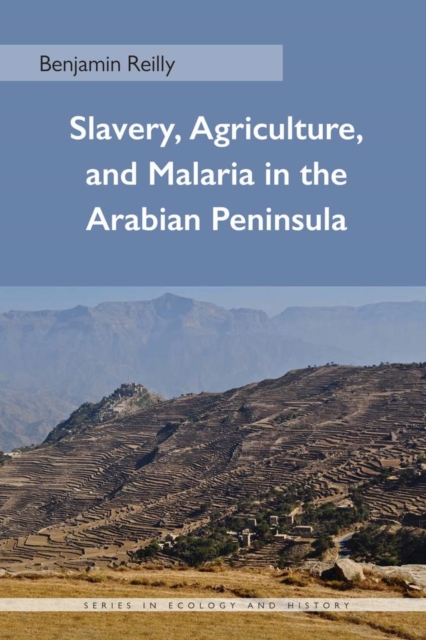
Slavery, Agriculture, and Malaria in the Arabian Peninsula
This book illuminates a previously unstudied phenomenon: the large-scale employment of people of African ancestry as slaves in agricultural oases within the Arabian Peninsula. The key to understanding this unusual system is the prevalence of malaria within Arabian Peninsula oases and drainage basins, which rendered agricultural lands in Arabia extremely unhealthy for people without genetic or acquired resistance to malarial fevers. In this way, Arabian slave agriculture had unexpected similarities to slavery as practiced in the Caribbean and Brazil. This book synthesizes a body of historical and ethnographic data about slave-based agriculture in the Arabian Peninsula. Reilly uses an innovative methodology to analyze the limited historical record and a multidisciplinary approach to complicate our understandings of the nature of work in an area that is popularly thought of solely as desert.
eBook

Maya tropical forest
The Maya Tropical Forest, which occupies the lowlands of southern Mexico, Guatemala, and Belize, is the closest rainforest to the United States and one of the most popular tourist destinations in the Western Hemisphere. It has been home to the Maya peoples for nearly four millennia, starting around 1800 BC. Ancient cities in the rainforest such as Palenque, Yaxchilan, Tikal, and Caracol draw thousands of tourists and scholars seeking to learn more about the prehistoric Maya. Their contemporary descendants, the modern Maya, utilize the forest's natural resources in village life and international trade, while striving to protect their homeland from deforestation and environmental degradation. Writing for both visitors and conservationists, James Nations tells the fascinating story of how ancient and modern Maya peoples have used and guarded the rich natural resources of the Maya Tropical Forest. He opens with a natural history that profiles the forest's significant animals and plants. Nations then describes the Maya peoples, biological preserves, and major archaeological sites in Mexico, Guatemala, and Belize. Drawing on more than twenty-five years of conservation work in the Maya Tropical Forest, Nations tells first-hand stories of the creation of national parks and other protected areas to safeguard the region's natural resources and archaeological heritage. He concludes with an expert assessment of the forest's future in which he calls for expanded archaeological tourism to create an ecologically sustainable economic base for the region.
eBook

Globalizing southeastern europe
At the end of the nineteenth century, Southeastern Europe became a prime sending region of emigrants to overseas countries, in particular the United States.This massive movement of people ended in 1914 but remained consequential long thereafter, as emigration had created networks, memories, and attitudes that shaped social and political practices.
eBook

Balkan genocides
During the 20th century, the Balkan Peninsula was affected by three major waves of genocides and ethnic cleansings, some of which are still being denied today. In Balkan Genocides Paul Mojzes provides a balanced and detailed account of these events, placing them in their proper historical context and debunking the common misrepresentations and misunderstandings of the genocides themselves. A native of Yugoslavia, Mojzes offers new insights into the Balkan genocides, including a look at the unique role of ethnoreligiosity in these horrific events and a characterization of the first and second Balkan wars as mutual genocides. Mojzes also looks to the region's future, discussing the ongoing trials at the International Criminal Tribunal in Yugoslavia and the prospects for dealing with the lingering issues between Balkan nations and different religions. Balkan Genocides attempts to end the vicious cycle of revenge which has fueled such horrors in the past century by analyzing the terrible events and how they came to pass.
eBook

Bedouin Ethnobotany
A Bedouin asking a fellow tribesman about grazing conditions in other parts of the country says first simply, \"Fih hayah?\" or \"Is there life?\" A desert Arab's knowledge of the sparse vegetation is tied directly to his life and livelihood.
eBook