
Catalogue Search | MBRL


Are you sure you want to remove the book from the shelf?

{{itemTitle}}
58
result(s) for
"Penitential"
Sort by:

Miserere mei : the penitential Psalms in late medieval and early modern England
In Miserere Mei, Clare Costley King'oo examines the critical importance of the Penitential Psalms in England between the end of the fourteenth and the beginning of the seventeenth century. During this period, the Penitential Psalms inspired an enormous amount of creative and intellectual work: in addition to being copied and illustrated in Books of Hours and other prayer books, they were expounded in commentaries, imitated in vernacular translations and paraphrases, rendered into lyric poetry, and even modified for singing. Miserere Mei explores these numerous transformations in materiality and genre. Combining the resources of close literary analysis with those of the history of the book, it reveals not only that the Penitential Psalms lay at the heart of Reformation-age debates over the nature of repentance, but also, and more significantly, that they constituted a site of theological, political, artistic, and poetic engagementacross the many polarities that are often said to separate late medieval from early modern culture. Miserere Mei features twenty-five illustrations and provides new analyses of works based on the Penitential Psalms by several key writers of the time, including Richard Maidstone, Thomas Brampton, John Fisher, Martin Luther, Sir Thomas Wyatt, George Gascoigne, Sir John Harington, and Richard Verstegan. It will be of value to anyone interested in the interpretation, adaptation, and appropriation of biblical literature; the development of religious plurality in the West; the emergence of modernity; and the periodization of Western culture. Students and scholars in the fields of literature, religion, history, art history, and the history of material texts will find Miserere Mei particularly instructive and compelling.   "Seldom have I read a first book of such subtlety and sustained by such learning, particularly welcome for the way it so easily and gracefully crosses the artificial barriers we raise between the Middle Ages and the Renaissance. This is an original and often touching study of biblical materials that have seen a surge of interest. Those interested in the Psalms, in art history, in David, in translation, to say nothing of early modern sexuality, should rush to read it." — Anne Lake Prescott, Barnard College and Columbia University
eBook
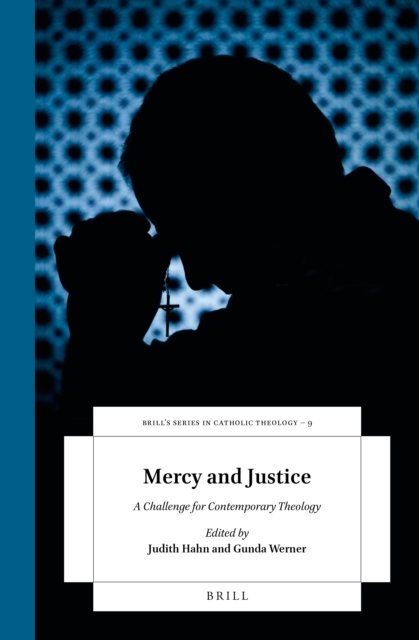
Mercy and Justice
Mercy is omnipresent in Catholic debates. Mercy calls to consider an individual's needs and this conflicts with justice necessitating equal treatment for everyone. This is most apparent in the Sacrament of Penance, and other forms of penitence, forgiveness, and reconciliation where mercy both transcends and undermines justice.
eBook

Proving Woman
Around the year 1215, female mystics and their sacramental devotion were among orthodoxy's most sophisticated weapons in the fight against heresy. Holy women's claims to be in direct communication with God placed them in positions of unprecedented influence. Yet by the end of the Middle Ages female mystics were frequently mistrusted, derided, and in danger of their lives. The witch hunts were just around the corner.
While studies of sanctity and heresy tend to be undertaken separately,Proving Womanbrings these two avenues of inquiry together by associating the downward trajectory of holy women with medieval society's progressive reliance on the inquisitional procedure. Inquisition was soon used for resolving most questions of proof. It was employed for distinguishing saints and heretics; it underwrote the new emphasis on confession in both sacramental and judicial spheres; and it heralded the reintroduction of torture as a mechanism for extracting proof through confession.
As women were progressively subjected to this screening, they became ensnared in the interlocking web of proofs. No aspect of female spirituality remained untouched. Since inquisition determined the need for tangible proofs, it even may have fostered the kind of excruciating illnesses and extraordinary bodily changes associated with female spirituality. In turn, the physical suffering of holy women became tacit support for all kinds of earthly suffering, even validating temporal mechanisms of justice in their most aggressive forms. The widespread adoption of inquisitional mechanisms for assessing female spirituality eventuated in a growing confusion between the saintly and heretical and the ultimate criminalization of female religious expression.
eBook

Conscience on Stage
This study outlines and reiterates the relationship of theatre to casuistry, the Jesuit contributions to Spanish literary theory and practice, and the importance of casuistry for the study of early modern subjectivity.
eBook

Slaves and Slavery in the Late Antique and Early Medieval Penitentials
Abstract
The paper examines the evidence for slavery in the late antique and early medieval penitentials. This body of sources has only recently been rediscovered for the study of slavery. Most of the earliest extant penitentials contain canons that deal in one way or another with slaves (servus or ancilla) or slavery (servitium). These canons can roughly be grouped into three categories according to the aspect under which slavery is considered in them: In the first category of canons, slaves are merely mentioned in the description of a sin in which they are either involved in or the victim of. The second category of canons considers slavery as a penitential punishment. The third category, finally, offers more general rules or laws on slavery. Samples for these three categories and their analysis form the main part of the paper. The presented evidence is then evaluated with regard to the questions what kind of insights the penitentials offer for the study of slavery in general, and the involvement of the Church in slavery in particular.
Journal Article

Ritual Lamentation in the Irish Penitentials
Some of the earliest references to ritual lamentation or keening in the early Irish sources are found in the penitential handbooks dated to around the seventh and eighth centuries. In previous scholarship, these passages have commonly been interpreted as evidence of the continuous attempts of the Church to curb pagan practices among the ‘nominally Christian’ populace, thus assuming that such regulations were primarily used as a means of social control. This article examines the wider theological and intellectual context of these texts, by focusing in particular on the influence of the Old Testament on early Irish ecclesiastical writing. It will be argued that the demonstrable preoccupation of these sources with issues such as ritual purity and proper religious observance suggests that the stipulations pertaining to lamentation were not solely intended to regulate lay behavior.
Journal Article

Mapping Fixed Prayers from the Dead Sea Scrolls onto Second Temple Period Judaism
When situating fixed prayers from the Dead Sea Scrolls corpus within the broader literary horizons of Second Temple period Judaism a number of discernible features emerge that allow us to group together prayers into clusters or streams of tradition according to a coherence and affinity of ideas. This article focuses on two distinct clusters of prayers: the first is influenced by the type of apocalyptic thinking espoused 1 Enoch, particularly the book's views on cosmology and angelology; the second is influenced by a penitential theology inspired by the cycle of national reward and punishment that is illustrated in Deuteronomy and by the priestly laws of reparation in Leviticus.
Journal Article

Saints and Their Miracles in Late Antique Gaul
Saints' cults, with their focus on miraculous healings and pilgrimages, were not only a distinctive feature of Christian religion in fifth-and sixth-century Gaul but also a vital force in political and social life. Here Raymond Van Dam uses accounts of miracles performed by SS. Martin, Julian, and Hilary to provide a vivid and comprehensive depiction of some of the most influential saints' cults. Viewed within the context of ongoing tensions between paganism and Christianity and between Frankish kings and bishops, these cults tell much about the struggle for authority, the forming of communities, and the concept of sin and redemption in late Roman Gaul.
Van Dam begins by describing the origins of the three cults, and discusses the career of Bishop Gregory of Tours, who benefited from the support of various patron saints and in turn promoted their cults. He then treats the political and religious dimensions of healing miracles--including their relation to Catholic theology and their use by bishops to challenge royal authority--and of pilgrimages to saints' shrines. The miracle stories, collected mainly by Gregory of Tours, appear in their first complete English translations.
eBook

Antifascism
A conservative take on the antifascist
movement
Antifascism argues that
current self-described antifascists are not struggling against a
reappearance of interwar fascism, and that the Left that claims to
be opposing fascism has little in common with any earlier Left,
except for some overlap with critical theorists of the Frankfurt
School. Paul Gottfried looks at antifascism from its roots
in early twentieth-century Europe to its American manifestation in
the present. The pivotal development for defining the present
political spectrum, he suggests, has been the replacement of a
recognizably Marxist Left by an intersectional one. Political and
ideological struggles have been configured around this new Left,
which has become a dominant force throughout the Western world.
Gottfried discusses the major changes undergone by antifascist
ideology since the 1960s, fascist and antifascist models of the
state and assumptions about human nature, nationalism versus
globalism, the antifascism of the American conservative
establishment, and Antifa in the United States. Also included is an
excursus on the theory of knowledge presented by Thomas Hobbes in
Leviathan .
In Antifascism Gottfried concludes that promoting a
fear of fascism today serves the interests of the powerful-in
particular, those in positions of political, journalistic, and
educational power who want to bully and isolate political
opponents. He points out the generous support given to the
intersectional Left by multinational capitalists and examines the
movement of the white working class in Europe-including former
members of Communist parties-toward the populist Right, suggesting
this shows a political dynamic that is different from the older
dialectic between Marxists and anti-Marxists.
eBook
The Irish Penitentials and Conscience Formation
As commonly used in its moral sense I will, for the purposes of this paper, take the concept of “conscience” to be the inherent ability of every healthy human being to perceive what is right and what is wrong and, on the strength of this perception, to control, monitor, evaluate and execute their actions. Such values as right or wrong, good or evil, just or unjust, and fair or unfair have existed throughout human history and are also shaped by an individual’s cultural, political and economic environment. The medieval penitential literature offers just one such historical snapshot. These manuals or guides for confessors, including prayers, lists of questions to be asked by the confessor, and penances to be assigned for various sins were an integral part of the practice of private penance which began in the Celtic Church and later spread through Europe with the Celtic and Anglo-Saxon missions. Penitential books for use by confessors in private penance appeared in the sixth through ninth centuries. These texts were not as a rule decreed by episcopal synods. Their authority generally rested on the reputation of their compiler or editor. Public penances were assigned for public sins that caused scandal for the church. Private penances were assigned for private sins or matters of conscience. The Penitentials were generally more flexible than the churches’ ancient canonical penitential system which they largely replaced. While later European Penitentials tended to provide more complete guidance for the confessor instead of mere lists of rules and penalties; such instruction is not entirely absent from the earlier Irish texts and ancillary documents. Thus, the goal of penance in the early middle ages was not only sacramental but also didactic. It would have been an occasion to inculcate Christian beliefs, an opportunity to model proper Christian behaviour and by extension a key part of the formation of conscience. As was the case with later expressions of casuistry (Etym. Latin casus, case, or problem to be solved) the purpose of the penitential literature was thus to adapt and apply the unchangeable norms of Christian morality to the changing and variable circumstances of human life albeit in somewhat rudimentary fashion. As such this literary genre and the pastoral practices stemming from it are a valid and worthy object of any historical study and theological analysis concerning the ‘formation of conscience.’
Journal Article