
Catalogue Search | MBRL


Are you sure you want to remove the book from the shelf?

{{itemTitle}}
66
result(s) for
"People with disabilities United States Biography."
Sort by:


Signifying bodies
Memoirs have enjoyed great popularity in recent years, experiencing significant sales, prominent reviews, and diverse readerships. Signifying Bodies shows that at the heart of the memoir phenomenon is our fascination with writing that focuses on what it means to live in, or be, an anomalous body—in other words, what it means to be disabled. Previous literary accounts of the disabled body have often portrayed it as a stable entity possibly signifying moral deviance or divine disfavor, but contemporary writers with disabilities are defining themselves and depicting their bodies in new ways. Using the insights of disability studies and source material ranging from the Old and New Testaments to the works of authors like Lucy Grealy and Simi Linton and including contemporary films such as Million Dollar Baby, G. Thomas Couser sheds light on a broader cultural phenomenon, exploring topics such as the ethical issues involved in disability memoirs, the rhetorical patterns they frequently employ, and the complex relationship between disability narrative and disability law.
eBook

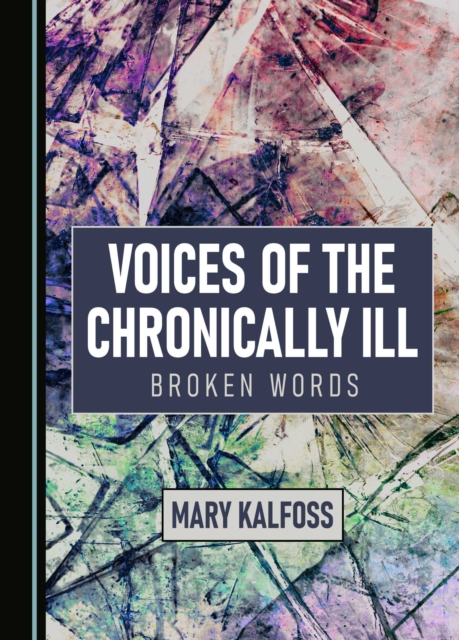
Voices of the Chronically Ill
This book describes what it is like to embody chaos and liminality in living with a physical chronic illness and how these experiences are related to the loss and remaking of one's sense of self. It also encourages readers to listen closely to the figurative language people use in trying to articulate the unspeakable. Focusing upon a wide array of narrative fragments gathered from first-person literary work and research, the author portrays how a conglomerate of sensations, feelings, and thoughts are embodied in the illness experience. The voices present in this text speak of vulnerability, suffering, and brokenness, yet also, endurance and fortitude. The ethics of philosopher Emmanuel Levinas provide the grounds for offering care lovingly. This book makes a significant contribution to helping students, practitioners and carers understand the chaos that is inherent, yet so often silenced, in the illness experience. This text could also be of interest to laypeople who are curious about how subjective illness is experienced, and to those who are ill who may be seeking affirmation for what they are experiencing.
eBook

The country of the blind : a memoir at the end of sight
\"A witty, winning, and revelatory personal narrative of the author's transition from sightedness to blindness and his quest to learn all he can about blindness as a distinct and rich culture all its own We meet Andrew Leland as he's suspended in the strange liminal state of the soon-to-be blind: He's midway through his life with retinitis pigmentosa, a condition that ushers those who live with it from complete sightedness to complete blindness over a period of years, even decades. He grew up with full vision, but starting in his teenage years, his sight began to degrade from the outside in, such that he now sees the world as if through a narrow tube. Soon-but without knowing exactly when-he will likely have no vision left. Full of apprehension but also dogged curiosity, Leland embarks on a sweeping exploration of the state of being that awaits him: not only the physical experience of blindness but also its language, internal debates, politics, and customs. He also negotiates his changing relationships with his wife and son, and with his own sense of self, as he moves from sighted to semi-sighted to blind, from his mainstream, \"typical\" life to one with a disability. Part memoir, part historical and cultural investigation, The Country of the Blind represents Leland's determination not to merely survive this transition, but to grow from it-to seek out and revel in that which makes blindness enlightening. His story reveals essential lessons for all of us, from accepting uncertainty and embracing change to connecting with others across difference. Thought-provoking and brimming with warmth and humor, The Country of the Blind is at once a deeply personal journey and an intellectually exhilarating tour of a way of being that most of us have never paused to consider-and from which we have much to learn\"-- Provided by publisher.
Book

Recovering Bodies
This is a provocative look at writing by and about people with illness or disability—in particular HIV/AIDS, breast cancer, deafness, and paralysis—who challenge the stigmas attached to their conditions by telling their lives in their own ways and on their own terms. Discussing memoirs, diaries, collaborative narratives, photo documentaries, essays, and other forms of life writing, G. Thomas Couser shows that these books are not primarily records of medical conditions; they are a means for individuals to recover their bodies (or those of loved ones) from marginalization and impersonal medical discourse. Responding to the recent growth of illness and disability narratives in the United States—such works as Juliet Wittman’s
Breast Cancer Journal , John Hockenberry’s
Moving Violations , Paul Monette’s
Borrowed Time: An AIDS Memoir , and Lou Ann Walker’s
A Loss for Words: The Story of Deafness in a Family —Couser addresses questions of both poetics and politics. He examines why and under what circumstances individuals choose to write about illness or disability; what role plot plays in such narratives; how and whether closure is achieved; who assumes the prerogative of narration; which conditions are most often represented; and which literary conventions lend themselves to representing particular conditions. By tracing the development of new subgenres of personal narrative in our time, this book explores how explicit consideration of illness and disability has enriched the repertoire of life writing. In addition, Couser’s discussion of medical discourse joins the current debate about whether the biomedical model is entirely conducive to humane care for ill and disabled people. With its sympathetic critique of the testimony of those most affected by these conditions,
Recovering Bodies contributes to an understanding of the relations among bodily dysfunction, cultural conventions, and identity in contemporary America.
eBook

Not fade away : a memoir of senses lost and found
\"Born with a rare genetic mutation called Usher Syndrome type III, Rebecca Alexander has been simultaneously losing both her sight and hearing since she was a child, and was told that she would likely be completely blind and deaf by age 30. Then, at 18, a fall from a window left her athletic body shattered. None of us know what we would do in the face of such devastation. What Rebecca did was rise to every challenge she faced. She refused to lose her drive, her zest for life and--maybe most importantly--her sense of humor. Now, at 35, with only a sliver of sight and significantly deteriorated hearing, she is a psychotherapist with two masters' degrees from Columbia University, and an athlete who teaches spin classes and regularly competes in extreme endurance races. She greets every day with boundless energy, innate curiosity, and a strength of spirit that have led her to places we can't imagine. Here, Rebecca tells her extraordinary story, meditating on what she's lost, and what she's found in return\"--From publisher description.
Book

Body, Remember
In this poetic, introspective memoir, Kenny Fries illustrates his intersecting identities as gay, Jewish, and disabled. While learning about the history of his body through medical records and his physical scars, Fries discovers just how deeply the memories and psychic scars run. As he reflects on his relationships with his family, his compassionate doctor, the brother who resented his disability, and the men who taught him to love, he confronts the challenges of his life.
Body, Remember is a story about connection, a redemptive and passionate testimony to one man’s search for the sources of identity and difference.
eBook

Helen's eyes : a photobiography of Annie Sullivan, Helen Keller's teacher
A biography of Annie Sullivan, Helen Keller's teacher and companion.
BOOK

FDR's body politics : the rhetoric of disability
Franklin Roosevelt instinctively understood that a politician of his era who was unable to control his own body would be perceived as unable to control the body politic. He therefore took great care to hide his polioinduced lameness both visually and verbally. In FDR's Body Politics, Houck and Kiewe analyze the silences surrounding Roosevelt's disability, the words he chose to portray himself and his policies as powerful and healthgiving, and the methods he used to maximize the appearance of physical strength.
eBook