
Catalogue Search | MBRL


Are you sure you want to remove the book from the shelf?

{{itemTitle}}
5,177
result(s) for
"Perfection."
Sort by:


\Correspondence\ in the Yijing
“Properness, correctness and uprightness” (zheng 正) refers to a common and significant concept in Chinese philosophy. In Chinese philosophical discourse, zheng embodies moral ideals. To date, scholarly attention has focused on compound concepts incorporating zheng, such as “central and zheng” (zhongzheng 中正), “the position of zheng” (zhengwei 正位), and “make the family in accordance with zheng” (zhengjia 正家), as their research objects. However, the independent philosophical meaning of zheng in the Yijing 易經 remains underexplored. Through etymological research and textual analysis, this study reveals three philosophical dimensions of the Yijing. First, it distinguishes zheng from “in correspondence to” (dang 當). It shows that dang refers to a judgment about physical alignment with time and position in theoretical situations, lacking strong moral force. Second, it argues that zheng in the Yijing originates from a metaphysical concept of a perfect ideal, broadly referring to the ideal perfect way (zheng dao 正道). The Yijing emphasizes the metaphysical level of zheng (in accordance with the perfect way), and possesses zheng as a strong moral binding force for continuing self-improvement. However, zheng does not directly function as the presupposed rationale for moral judgments and choices. Third, it examines the way of cultivating zheng (yang zheng zhi dao 養正之道) as a theory of moral cultivation (gongfu 工夫). This practical path, articulated through the hexagrams Meng 蒙 and Yi 頤, is interpreted as a form of purifying the heart/mind (xin 心) to align with the cosmic heart/mind. The study demonstrates that the moral source and moral cultivation process in the Yijing refers to a theory of “cultivating one’s heart/mind (xin 心) through practice”. It provides a perspective for understanding the moral perfectness, heart/mind and morality in the Yijing.
Journal Article

On perfection : an artists' symposium
'On Perfection' frames the current social and political condition through the prism of perfection; an idea which has had great historical resonance and mutability, but which has had little attention as a recent area of academic concern or art practice. It provides an accessible reconsideration of contemporary lens-based practices, primarily through the eyes of practitioners.
Book

Affine Grassmannians and the geometric Satake in mixed characteristic
We endow the set of lattices in ${\\mathrm{\\mathbb{Q}}}_{\\mathrm{p}}^{\\mathrm{n}}$ with a reasonable algebro-geometric structure. As a result, we prove the representability of affine Grassmannians and establish the geometric Satake equivalence in mixed characteristic. We also give an application of our theory to the study of Rapoport-Zink spaces.
Journal Article

Flawed
Set in a powerfully realised society where perfection is valued above humanity, with an intense love story at its centre. Good-girl Celestine has always agreed with the system but following an act of kindness towards one of the Flawed is herself excluded and soon she is fighting for her own survival - and for love. Hugely accessible, emotionally resonant and with a character who will seize the hearts of anyone who meets her, this is the ideal book for anyone who has ever felt the pressure to be perfect.
Book
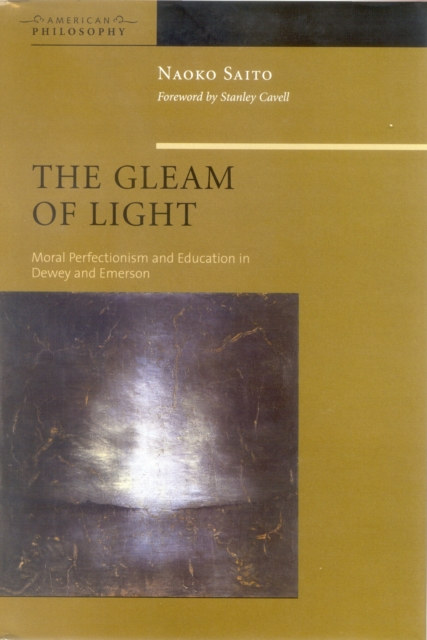
The gleam of light: Dewey, Emerson, and the pursuit of perfection
In the name of efficiency, the practice of education has come to be dominated by neoliberal ideology and procedures of standardization and quantification. Such attempts to make all aspects of practice transparent and subject to systematic accounting lack sensitivity to the invisible and the silent, to something in the human condition that cannot readily be expressed in an either-or form. Seeking alternatives to such trends, Saito reads Dewey's idea of progressive education through the lens of Emersonian moral perfectionism (to borrow a term coined by Stanley Cavell). She elucidates a spiritual and aesthetic dimension to Dewey's notion of growth, one considerably richer than what Dewey alone presents in his typically scientific terminology.
eBook


God’s Moral Perfection as His Beneficent Love. Comment on Craig
William Lane Craig insists that I am wrong in reducing God’s moral goodness to his beneficent aim of drawing all people to himself. For Craig, God’s moral goodness, best conceived in terms of righteousness, must also include God’s retributive justice toward the wicked, who deserve the punishment they receive. My response is that Craig’s argument rests on two assumptions about value, neither of which, I argue, Christian theists have good reason to affirm.
Journal Article

Sin and Perfection in 1 John
Early in 1 John, the author portrays authentic Christian living as involving honest and ongoing acknowledgment of one’s sins, God’s forgiveness of the same, and the cleansing from all unrighteousness (1:8-9). However, later in the same letter, while seeking to distinguish his opponents from those who were the true children of God, he says: ‘No one who abides in him sins; no one who sins has either seen him or known him’ (3:6); and ‘those who have been born of God do not sin, because God’s seed abides in them; they cannot sin, because they have been born of God.’ (3:9). These latter statements stand in tension with his earlier statement which says that anyone claiming to be without sin is a liar. In one place he rejects sinless perfection, in the other he appears to assume it. In this article these apparently contradictory statements are examined and a possible resolution of the tension existing between them is suggested.
Journal Article