
Catalogue Search | MBRL


Are you sure you want to remove the book from the shelf?

{{itemTitle}}
5
result(s) for
"Performance (Kèunste)"
Sort by:

Digital performance : a history of new media in theater, dance, performance art, and installation
In the past decade digital media has been increasingly incorporated into live theater and dance, and forms of interactive performance have emerged in participatory installations, on CD-ROM, and on the Web. This text traces the evolution of these practices, and presents accounts of key practitioners and performances.
Book

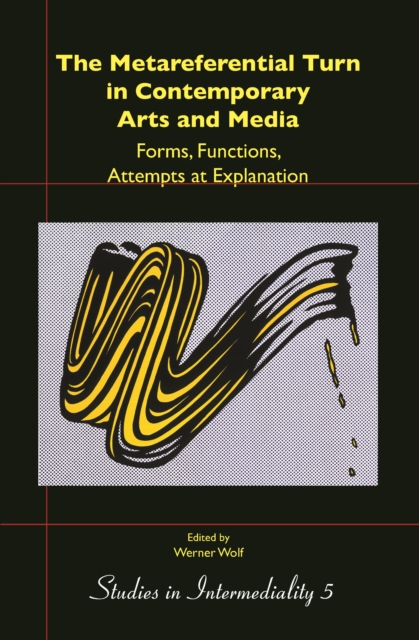
The metareferential turn in contemporary arts and media : forms, functions, attempts at explanation
One possible description of the contemporary medial landscape in Western culture is that it has gone 'meta' to an unprecedented extent, so that a remarkable 'meta-culture' has emerged. Indeed, 'metareference', i.e. self-reflexive comments on, or references to, various kinds of media-related aspects of a given medial artefact or performance, specific media and arts or the media in general is omnipresent and can, nowadays, be encountered in 'high' art and literature as frequently as in their popular counterparts, in the traditional media as well as in new media. From the Simpsons, pop music, children's literature, computer games and pornography to the contemporary visual arts, feature film, postmodern fiction, drama and even architecture - everywhere one can find metareferential explorations, comments on or criticism of representation, medial conventions or modes of production and reception, and related issues. Within individual media and genres, notably in research on postmodernist metafiction, this outspoken tendency towards 'metaization' is known well enough, and various reasons have been given for it. Yet never has there been an attempt to account for what one may aptly term the current 'metareferential turn' on a larger, transmedial scale. This is what The Metareferential Turn in Contemporary Arts and Media: Forms, Functions, Attempts at Explanation undertakes to do as a sequel to its predecessor, the volume Metareference across Media (vol. 4 in the series 'Studies in Intermediality'), which was dedicated to theoretical issues and transhistorical case studies. Coming from diverse disciplinary and methodological backgrounds, the contributors to the present volume propose explanations of impressive subtlety, breadth and depth for the current situation in addition to exploring individual forms and functions of metareference which may be linked
with particular explanations. As expected, there is no monocausal reason to be found for the situation under scrutiny, yet the proposals made have in their compination a remarkable explanatory power which contributes to a better understanding of an important facet of current media production and reception. The essays assembled in the volume, which also contains an introduction with a detailed survey over the possibilities of accounting for the metareferential turn, will be relevant to students and scholars from a wide variety of fields: cultural history at large, intermediality and media studies as well as, more particularly, literary studies, music, film and art history.
eBook

The Decolonized Eye
From the late 1980s to the present, artists of Filipino descent in the United States have produced a challenging and creative movement. In The Decolonized Eye, Sarita Echavez See shows how these artists have engaged with the complex aftermath of U.S. colonialism in the Philippines. By analyzing art, performance, and visual culture, The Decolonized Eye illuminates the unexpected consequences of America’s amnesia over its imperial history.
eBook
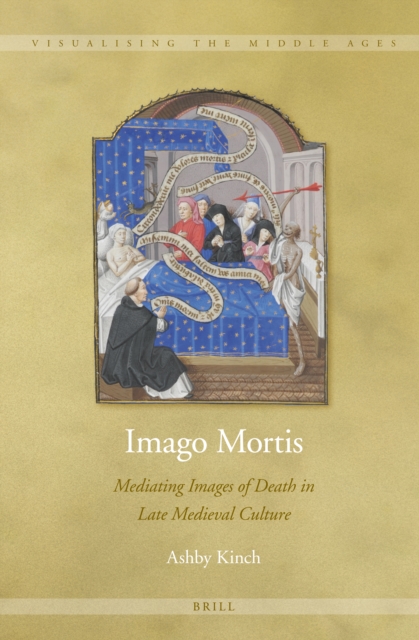
Imago Mortis
In Imago Mortis: Mediating Images of Death in Late Medieval Culture, Ashby Kinch argues that late medieval artists, writers, and patrons creatively adapted conventional death iconography in ways that ultimately affirm theiir artistic, social and political identities.
eBook