
Catalogue Search | MBRL


Are you sure you want to remove the book from the shelf?

{{itemTitle}}
51,387
result(s) for
"Performance in children."
Sort by:

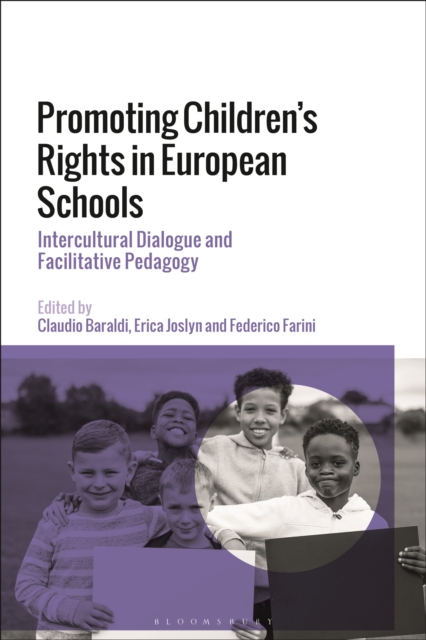
Promoting Children’s Rights in European Schools
Promoting Children’s Rights in European Schools explores how facilitators, teachers and educators can adopt and use a dialogic methodology to solicit children’s active participation in classroom communication. The book draws on a research project, funded by the European Commission (Erasmus +, Key-action 3, innovative education), coordinated by the University of Modena and Reggio Emilia, Italy, with the partnership of the University of Suffolk, UK, and the University of Jena, Germany. The author team bring together the analysis of activities in 48 classes involving at least 1000 children across England, Germany and Italy. These activities have been analysed in relation to the sociocultural context of the involved schools and children, a facilitative methodology and the use of visual materials in the classroom, and engaging children in active participation and the production of their own narratives. Each chapter looks at reflection on practice, outcomes, and reaction to facilitation of both teachers and children, drawing out the complex comparative lessons within and between classrooms across the three countries.
eBook

Lego car race
Familiar toys can be used to scaffold young children's learning about basic physics as well as guide scientific inquiry. Teachers looking for resources to engage young children and develop science inquiry skills need look no further than the toy box. In this two-part activity, children first construct a Lego car and use it to explore the effects of large and small forces on its motion. Second, children engage in a guided investigation to compare the distance travelled by the car with different size wheels.
Journal Article

Learning to understand the effects of feedback through a playful quasi-experimental context
Feedback is an important variable in determining the outcome of a movement performance. Early research on feedback by Thorndyke (1927), established that where the strengthening of a relationship between a stimulus and a response was a pleasant or rewarding one the response tended to be repeated. Where the effect was unpleasant the action tended to be avoided. This became known as the Law of Effect and it was increasingly interpreted as more i.e. feedback, is better. A good coach or teacher was characterized as someone who provided immediate and constant feedback as it would result in better learning i.e., the desired response would be repeated. More recent research (Winstein and Schmidt, 1990), demonstrated that reducing the frequency of feedback resulted in better learning than absolute frequency i.e., feedback on every trial. This type of research also contributed to the debate on the difference between learning and performance. The Winstein and Schmidt research established that during practice session's absolute feedback produced better results than less frequent feedback. However, on delayed post practice tests several days later, without any augmented feedback, those who had practiced under the less frequent feedback conditions outperformed the constant feedback participants. If you measure learning as what you can do at a later date without assistance then clearly less frequent feedback produces better learning. Not surprisingly, these results led to methods of providing feedback that were less constant, e.g. summary and faded feedback.
Journal Article

How to Achieve the Every Child Matters Standards
′Rita Cheminais has, once again, written a practical resource to help educational settings deliver positive outcomes for all pupils.. Settings should consider that working towards the achievement of these standards will complement their existing process of evaluation, review and development′ - Special.
eBook

Development of achievement motivation
This book discusses research and theory on how motivation changes as children progress through school, gender differences in motivation, and motivational differences as an aspect of ethnicity.
eBook
Linking leadership to student learning
\"Leadership is second only to classroom instruction as an influence on student achievement. Strong leadership can potentially unleash latent capacities that already exist in an organization. The authors, after five years of research, could not find a single documented case of a school that managed to turn around its student achievement trajectory in the absence of talented leadership. This thoroughly researched book examines all types of leaders: from the school principal to the teacher leader. The authors also look closely at each organizational level in the school system--school, classroom, community, district, and state.\"-- Provided by publisher.
eBook
Performance and Ancestral Heritage
Through African and Afro-diasporic references, it is proposed a reflexive exercise on Black children and their performances. Based on studies about Bantu-Kongo cosmology, an approach to Bakongo childhood is sought to provide an understanding of the performances of black Brazilian childhood, relating them to the preservation of African civilizational values. It is concluded, considering ancestral heritage and a cosmological notion of circular time, that Brazilian Black children, through performance, are able to bring together past and present, ancestral and living, renewing memory and keeping the values of Afro-Brazilian civilization alive.
Journal Article

Institutional constraints affecting secondary school student performance: A case study of rural communities in Zimbabwe
The study analyses the institutional constraints affecting child performance in secondary schools within rural communities in Zimbabwe. A qualitative approach employing purposive sampling of participants was incorporated in the study. Eight focus group discussions (FDGs), 16 in-depth interviews and four key informant interviews were conducted in eight rural secondary schools located in Seke and Shamva districts. The general systems theory was embraced as the theoretical framework in this study. The principle of theoretical saturation was applied in both the focus group discussion sessions and interviews where they ran up until a clear pattern emerged and subsequent groups produced no new information. Data were analysed using thematic analysis techniques which systematically coded data to discover prevailing trends. The major highlight of the results is that rural learners have to grapple with a lot of challenges in trying to access education. Inadequate resources, long distances to school and demotivated teachers constitute the main highlights of the findings. The study established that there is a need to explore more issues affecting the realisation of equitable and inclusive education systems specifically for learners in rural communities. This article also posits that addressing institutional constraints that are affecting child performance in rural secondary schools is not cast in stone. Thus, this requires a holistic approach through engagement of all stakeholders involved in the drive towards quality education and leaving no one behind.
Journal Article

Performance and Ancestral Heritage: what does Bakongo cosmology teach about black Brazilian childhood?
Through African and Afro-diasporic references, it is proposed a reflexive exercise on Black children and their performances. Based on studies about Bantu-Kongo cosmology, an approach to Bakongo childhood is sought to provide an understanding of the performances of black Brazilian childhood, relating them to the preservation of African civilizational values. It is concluded, considering ancestral heritage and a cosmological notion of circular time, that Brazilian Black children, through performance, are able to bring together past and present, ancestral and living, renewing memory and keeping the values of Afro-Brazilian civilization alive.
Journal Article