
Catalogue Search | MBRL


Are you sure you want to remove the book from the shelf?

{{itemTitle}}
409,176
result(s) for
"Performance technology."
Sort by:


The ETTO Principle: Efficiency-Thoroughness Trade-Off
Accident investigation and risk assessment have for decades focused on the human factor, particularly 'human error'. Countless books and papers have been written about how to identify, classify, eliminate, prevent and compensate for it. This bias towards the study of performance failures, leads to a neglect of normal or 'error-free' performance and the assumption that as failures and successes have different origins there is little to be gained from studying them together. Erik Hollnagel believes this assumption is false and that safety cannot be attained only by eliminating risks and failures.
eBook

Bioenhancement Technologies and the Vulnerable Body
The field of biomedical technology has experienced rapid growth in recent years. New technologies promise to diagnose, treat, and prevent human diseases. Increasingly, however, the ability of these technologies to \"enhance\" normal human functioning beyond what is necessary to restore or sustain health has raised considerable debate about the proper limits of biotechnology. Whereas the public-facing proponents of bioenhancements tend to come from privileged positions in society, Bioenhancement Technologies and the Vulnerable Body seeks to analyze the nuances of bioenhancement from the perspective of those who are often marginalized in bioethical discussions. Any moral assessment of technology must consider its effects on all people, principally those who have not benefited equally from technological advancements. From the premise that minority perspectives yield new insights into biomedical enhancements, this volume centers the bodies of persons who are vulnerable to health disparities--particularly persons with disabilities and persons of color. Contributors critically examine bioenhancement technologies with two key questions in mind: What does it mean to be human? and What does it mean to be vulnerable? Each chapter uses distinct Christian theological methods and ontological suppositions to reflect on the distinctiveness of human creatureliness in relation to technology and what difference bioenhancement might make for our conceptions of vulnerability. Bioenhancement Technologies and the Vulnerable Body is aimed primarily at Christian scholars and graduate students already conversant in bioethics but will also appeal to contextual theologians and others not well-versed in these debates.
eBook

Key Performance Indicators
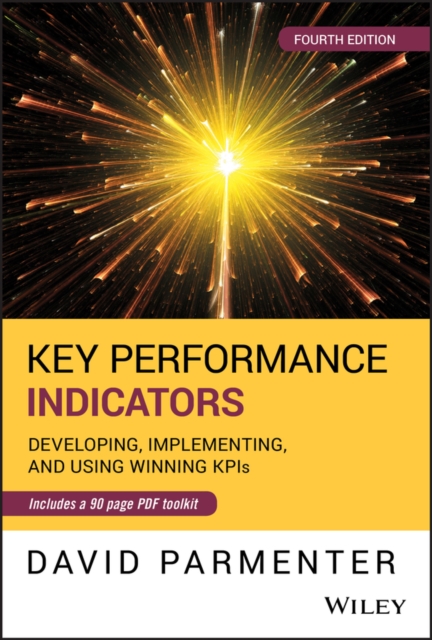
The new edition of the bestselling guide on creating and using key performance indicators—offers significant new and revised content Key Performance Indicators (KPIs) help define and measure the organizational goals which are fundamental to an organization's current and future success. Having solid KPIs is crucial for companies that are implementing performance management systems, such as balanced scorecards, six sigma, or activity-based management. In many organizations, KPIs are often too numerous, randomly assembled, and overly complex—essentially rendering them ineffectual, or at worse, counterproductive. Key Performance Indicators provides a model for simplifying the complex areas of KPIs while helping organizations avoid common mistakes and hazards. Now in its fourth edition, this bestselling guide has been extensively revised and updated to incorporate practical lessons drawn from major implementations. Fresh content includes a more concise KPI methodology with clear implementation guidance, original insights on how other areas of performance management can be corrected, and new in-depth case studies. A revised starter kit is included to identify critical success factors, and the KPI resource kit contains updated worksheets, workshop programs, and questionnaires. Helping readers to better define and measure progress toward goals, this important guide: * Dispels the myths of performance measurement and explains a simple, yet powerful KPI methodology * Explains the 12-step model for developing and using KPIs with guidelines * Helps readers brainstorm performance measures, sell KPI projects to the Board and senior management, and accurately report performance * Features the \"KPI Project Leaders Corner\" which provides readers with essential information and useful exercises * Includes an array of practical tools—templates, checklists, performance measures—and a companion website (www.davidparmenter.com) Key Performance Indicators: Developing, Implementing, and Using Winning KPIs, 4th Edition is important resource for C-suite executives, senior management, project teams, external project facilitators, and team coordinators involved in all aspects of performance management systems.
eBook


Design and Development of an Advising Chatbot as a Student Support Intervention in a University System
The purpose of this study was to share the design and development case of Advising Virtual Assistant (AVA), a chatbot created to provide support in academic advising in higher education. By analyzing participants’ usage data and chatbot performance, we attempted to understand how students engage with AVA to fulfill their advising needs. AVA effectively delegated repetitive and prescriptive advising services thus enabling efficient utilization of human resources. Students’ usage data and chatbot performance data showed increased engagement with academic advising and faster, readily available access to academic advising resources. Additionally, this study presented insights gained from the challenges faced during the integration of the chatbot and suggested directions for future research. The findings of this study are expected to aid academic advisors and university leadership in developing more efficient communication channels via a chatbot that can support the university’s goals.
Journal Article

The Process of Developing a Digital Repository for Online Teaching Using Design-Based Research
The Purdue Repository for Online Teaching and Learning (PoRTAL) was developed as an Open Educational Resource (OER) for graduate students and faculty in higher education settings to enhance their online teaching skills and strategies. The PoRTAL team used a design-based research approach (DBR; Wang & Hannafin, Educational Technology Research and Development, 53(4), 5–23, 2005). In this study context, we used Van Tiem et al.’s (2012) model to identify problems faced by instructors who struggled with or were new to online teaching from a Human Performance Technology (HPT) standpoint. To address the identified needs, we created resources for online teaching and embedded our research within practical activities to further study our design process. Our efforts resulted in an HPT-OER Model for Designing Digital Repositories. The purpose of this paper is to share the DBR process that we used to develop an OER repository within an HPT model.
Journal Article