
Catalogue Search | MBRL


Are you sure you want to remove the book from the shelf?

{{itemTitle}}
10,332
result(s) for
"Performing arts Audiences."
Sort by:


No innocent bystanders : performance art and audience
The changing role of the spectator in contemporary performance art
At a moment when performance art and performance generally are at the center of the international art world, Frazer Ward offers us insightful readings of major performance pieces by the likes of Acconci, Burden, Abramović, and Hsieh, and confronts the twisting and troubled relationship that performance art has had with the spectator and the public sphere. Ward contends that the ethical challenges with which performance art confronts its viewers speak to the reimagining of the audience, in terms that suggest the collapse of notions like “public” and “community.”
A thoughtful, even urgent discussion of the relationship between art and the audience that will appeal to a broad range of art historians, artists, and others interested in constructions of the public sphere.
eBook


The audience experience
The Audience Experience identifies a momentous change in what it means to be part of an audience for a live arts performance. Together, new communication technologies and new kinds of audiences have transformed the expectations of performance, and The Audience Experience explores key trends in the contemporary presentation of performing arts. The book also presents case studies of audience engagement and methodology, reviewing both conventional and innovative ways of collecting and using audience feedback data. Directed to performing arts companies, sponsors, stakeholders and scholars, this collection of essays moves beyond the conventional arts marketing paradigm to offer new knowledge about how audiences experience the performing arts.
eBook

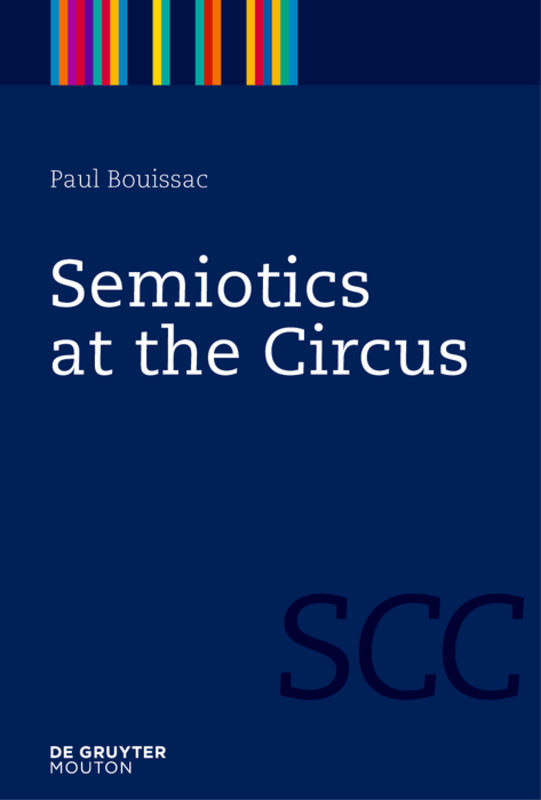
Semiotics at the Circus
Semiotics is long on theoretical, often obscure discourses, but short on applications that demonstrate with clarity the applicability of its methods. This book confronts a challenging object, the circus, and endeavors to describe its performances in ways that explain how circus acts produce meaning and cause a deep emotional involvement for their audiences. The approach is not top-down, such as would be a method that would dogmatically apply a particular theory to fully explain the phenomena in terms of this theory alone. Epistemologically, this book is an example of the bottom-up strategy, which consists of considering first the objects and heuristically calling upon methodological resources in a broad theoretical array to come to grips with the problems that are encountered. Any circus act is a complex event that has cognitive and emotional dimensions. It is also a part of a history and an institution, and cannot be abstracted from its cultural and sociological contexts. Thus the range of relevant theoretical and methodological approaches must include structural semiotics, biosemiotics, pragmatics, socio-semiotics, cultural anthropology, the cognitive sciences, the psychology and sociology of emotions, to name only the most important. But the ultimate focus of this book is to enable the readers to better understand the meaning of circus performances and to appreciate the skills and creativity of this traditional popular art, which constantly renews itself from generation to generation.
eBook


Audiences : a sociological theory of performance and imagination
Audiences are problematic and the study of audiences has represented a key site of activity in the social sciences and humanities. Offering a timely review of the past 50 years of theoretical and methodological debate Audiences argues the case for a paradigmatic shift in audience research. This shift, argue the authors, is necessitated by the emergence of the `diffused audience'. Audience experience can no longer be simply classified as `simple' or `mass', for in modern advanced capitalist societies, people are members of an audience all the time. Being a member of an audience is no longer an exceptional event, nor even an everyday event, rather it is constitutive of everyday life. This book offers an invaluable rev
eBook


Who Tells the Story? Challenging Audiences through Performer Embodiment
Visualising a character in a narrative is a highly individual act; cognitive narratology suggests that individuals may construct character models depending on the information (frames) available to them. However, many of these frames are formed from knowledge defined by positivist historical criticism, meaning that construction tends to follow broadly similar patterns. Performing and therefore embodying a character shifts the role of interpretation from audience to performer; an audience engages with the nuances of each performer’s embodiment of a character in a shared experience of a temporal performance event. This shift of interpretive responsibility to the performer allows them to challenge audiences in ways that an author may not be able to. Embodiment of a character through performance will inevitably challenge readers’ cognitive constructions of the same character to different degrees—for example, gender, ethnicity, bearing, tone, or even action may differ—potentially creating dissonance for audiences. This dissonance may help interpreters to discover their own assumptions about the performed texts, in doing so creating new avenues for interpretation. Such is the promise of performance: by viewing embodied narratives, audiences are challenged to view alternative interpretations and subsequently reconcile differences between their constructions and those of the performers.
Journal Article