
Catalogue Search | MBRL


Are you sure you want to remove the book from the shelf?

{{itemTitle}}
414
result(s) for
"Permaculture."
Sort by:

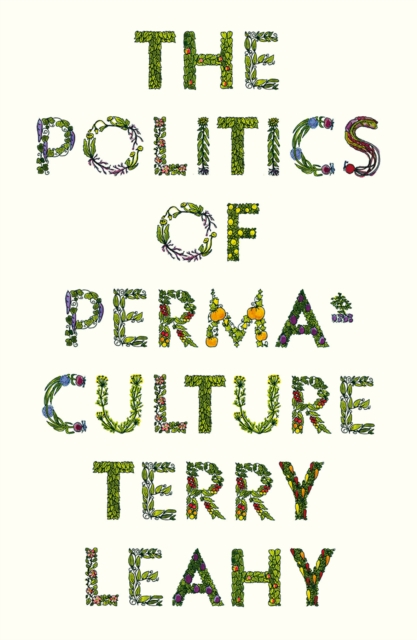
The Politics of Permaculture
'Inspiring. [...] Crammed with lively interviews and grounded examples' Ashish Kothari, founder of Kalpavriksh Permaculture is an environmental movement that makes us reevaluate what it means to be sustainable. Through innovative agriculture and settlement design, the movement creates new communities that are harmonious with nature. It has grown from humble origins on a farm in 1970s Australia and flourished into a worldwide movement that confronts industrial capitalism. The Politics of Permaculture is one of the first books to unpack the theory and practice of this social movement that looks to challenge the status quo. Drawing upon the rich seam of publications and online communities from the movement as well as extensive interviews with permaculture practitioners and organisations from around the world, Leahy explains the ways permaculture is understood and practiced in different contexts. In the face of extreme environmental degradation and catastrophic climate change, we urgently need a new way of living.
eBook


Regenerative agriculture and integrative permaculture for sustainable and technology driven global food production and security
A growing world population and increases in food and energy consumption have placed production agriculture in a difficult situation. The rapid growth in food production through specialized operations such as monoculture cropping systems has aligned to satisfy increases in demand for food and fiber. However, its adverse impacts on natural resources pose huge challenges for the sustainability of food production. The situation is direr for developing countries or rural regions of the world due to the limited resources available to farming communities in these regions. To avoid production agriculture being at the proverbial crossroads we suggest an alternate approach. One that involves the sustainable use of natural resources without adverse environmental impacts by relying less on production inputs whether it be agrochemicals or machineries. We examined the extent to which regenerative agriculture, permaculture, and smart technology have evolved in response to sustainable agricultural production, agricultural decision support system, and overall global food security. Collectively, regenerative agriculture and permaculture are semi‐closed holistic systems approach designed to reduce or eliminate dependence on external inputs (e.g., chemicals) which restores and maintains natural systems (e.g., soil quality, biodiversity, and ecosystem services). We suggest that fully embracing modern regenerative agriculture as well as integrated permaculture will improve soil health, ecosystem biodiversity, land and resource conservation, agricultural sustainability, and food security. Identifying and implementing practices towards regenerative agriculture, integrated permaculture, digital agriculture, and sustainable agricultural management utilizing modern agricultural technologies infused with data science (artificial intelligence [AI] or machine learning [ML]) is critical. Core Ideas Intensive agriculture can cause a loss in biodiversity and concerns for global food security. Regenerative agriculture and integrative permaculture are keys to address food security. Digital agricultural tools can aid in attaining agricultural and environmental sustainability. Precision agriculture should be implemented as an agricultural decision support system. Artificial intelligence and machine learning can guide integrated agricultural input management.
Journal Article


Increasing human dominance of tropical forests
Tropical forests house over half of Earth's biodiversity and are an important influence on the climate system. These forests are experiencing escalating human influence, altering their health and the provision of important ecosystem functions and services. Impacts started with hunting and millennia-old megafaunal extinctions (phase I), continuing via low-intensity shifting cultivation (phase II), to today's global integration, dominated by intensive permanent agriculture, industrial logging, and attendant fires and fragmentation (phase III). Such ongoing pressures, together with an intensification of global environmental change, may severely degrade forests in the future (phase IV, global simplification) unless new \"development without destruction\" pathways are established alongside climate change–resilient landscape designs.
Journal Article


Permaculture inclusion in the planning of “Sansheng Space” - taking Pu Ran Farm as an example
Achieving sustainable development is not only the need for our country’s current development, but also a common challenge for all countries in the world. Therefore, Permaculture based on the concept of sustainability is of great significance to my country’s land planning, and “Sansheng Space” is also the guidepost of the spatial development of China’s national land. In this paper, we study the concept of Permaculture and the “Sansheng Space”, and use the Pu Ran Farm as a real case to combine the concept of Permaculture with the “Sansheng Space”, and apply the design principles of Permaculture to the “Sansheng Space” planning. The strategy of Permaculture suitable for the planning of “Sansheng Space” of leisure farms is analyzed and summarized, which can provide some reference for rural land planning.
Journal Article


The Multi-Level Perspective in Research on Sustainability Transitions in Agriculture and Food Systems: A Systematic Review
The multi-level perspective (MLP) is a prominent transition framework. The MLP posits that transitions come about through interaction processes within and among three analytical levels: niches, socio-technical regimes and a socio-technical landscape. This systematic review provides an overview on the use of the MLP in research on agro-food sustainability transitions. In particular, it analyses the understanding, conceptualisation and operationalisation of niches, regimes and landscapes. Niches considered in the selected papers include agro-ecology, organic agriculture, permaculture, conservation agriculture, integrated farming, and alternative food networks. Regime refers to industrial, conventional agriculture. The researched regime is often not clearly described and its operationalisation is a matter of deliberation. Landscape level is generally overlooked; when it is considered it refers to international trends and developments. Many scholars highlight the inadequacy of transition pathways in the MLP for the agro-food sector. Moreover, transition impacts are rarely addressed and the research field generally overlooks the analysis of the sustainability of niches and, consequently, of transitions. Research on transitions in the agro-food sector borrows from the MLP its generalizability and poor empirical operationalisation of niche, regime and landscape concepts. Therefore, integrative conceptualisation and operationalisation of the MLP elements is required to accommodate the complexity of sustainability transition processes and the peculiarities of the agro-food system.
Journal Article