
Catalogue Search | MBRL


Are you sure you want to remove the book from the shelf?

{{itemTitle}}
9
result(s) for
"Persian Gulf Region Foreign relations Congresses"
Sort by:
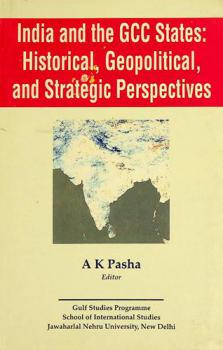
India and the GCC states : historical, geopolitical, and strategic perspectives
Most of the papers presented at the international seminar on Gulf and Emerging Asia : Defining Regional Architecture, international seminar on People, Culture and Goods in Motion : India-Arab Maritime Historical Relations & on Contemporary UAE and the Emerging Indo-UAE Relations and Contemporary Iraq and Indo-Iraq Relations, organized by Gulf Studies Programme, Jawaharlal Nehru University during 24-26 March 2009, 3-4 March 2010 & 15-16 March 2012 respectively.
Book

The Road to Iraq
Despite all that has been written on it, the Iraq war - its causes, agency and execution - has been shrouded in an ideological mist. Now, Muhammad Idrees Ahmad dispels the myths surrounding the war, taking a sociological approach to establish the war's causes, identify its agents and describe how it was sold. Ahmad presents a social history of the war's leading agents - the neoconservatives - and shows how this ideologically coherent group of determined political agents used the contingency of 9/11 to overwhelm a sceptical foreign policy establishment, military brass and intelligence apparatus, propelling the US into a war that a significant portion of the public opposed. The book includes an historical exploration of American militarism and of the increased post-WWII US role in the Middle East, as well as a reconsideration of the debates that John Mearsheimer and Stephen Walt sparked after the publication of The Israel lobby and US Foreign Policy.
eBook
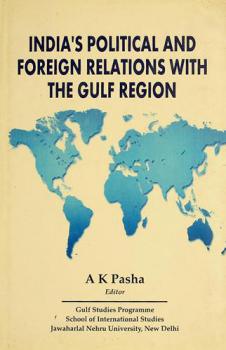
India's political and foreign relations with the Gulf region
Most of the papers presented at the international seminars on Gulf and Emerging Asia : Defining Regional Architecture, on People, Culture and Goods in Motion : India-Arab Maritime Historical Relations & on Contemporary UAE and the Emerging Indo-UAE Relations and Contemporary Iraq and Indo-Iraq Relations, organized by Gulf Studies Programme, Jawaharlal Nehru University during 24-26 March 2009, 3-4 March 2010 & 15-16 March 2012 respectively.
Book

The Arab Gulf States and Japan
During the 1970s and ‘80s economic relations between the Arab Gulf States and Japan grew enormously. Approximately 65% of Japan’s oil requirements were met from Arab Gulf resources. However, although Japanese imports of Arab oil comprise the major component of trade, Arab imports of Japanese goods are also increasing sharply. The seven Arab Gulf countries, represented by the Petroleum Information Committee accounted for 8% of Japan’s total exports. This book explores the various avenues of economic co-operation that have developed between Japan and the Gulf States both in energy and other areas. It considers the measures that have been taken to protect the security of oil supply. It reports Japan’s co-operation in the development of the petroleum industry in the Arab Gulf States. The book also examines the future prospects for economic, technological and political co-operation between Japan and the Arab Gulf States.
1. Short-term and Medium-term Oil Price Movements Abdullah El-Kuwaiz 2. Energy Policy in Japan: Security of Oil Supply Toyoaki Ikuta 3. The Security of Oil Supplies: Prevalent Views Among Oil Consumers and Producers Abdulaziz Al-Sowayegh and Walid Sharif 4. Oil Price and Economics/Market Competition in Japan K Takahashi 5. The Role of Arab Gulf States in International Development Assistance Bader Al-Humaidhi 6. The Role of Scientific Research in the Development of the Gulf States Adnan Shihab-Eldin 7. Recent R&D Activities in Japan for the Refining and Utilisation of Residues Chisato Takeuchi 8. Japan’s Co-operation for Petroleum Industry Development in the Arab Gulf States Keiji Natori 9. Energy and Development Problems: Prospects for Co-operation between Arab Gulf Countries and Japan Adnan Y Almeer 10. Economics of Petrochemical Industries in Japan Tokuji Watanabe 11 Future Prospects for Alternative Sources of Energy M A Hassanain 12. Energy in Japan: The Outlook for Nuclear, Gas and Coal as Sources of Energy Susumu Yoda 13. The Development of New Energy in Japan Shigeo Tagawa 14. The GCC and Japan: Past, Present and Future Relations: An Overview H A Al-Ebraheem 15 Economic co-operation by the Oil Consuming Countries Toshio Shishido
eBook

The Middle East in the Shadow of Afghanistan and Iraq
On May 5-6, 2003, RAND and the Geneva Centre for Security Policy held a two-day conference in Geneva that examined the impact of the Iraq war on the security of the Middle EastThis document summarizes the main issues and points of discussion at the conference.
eBook
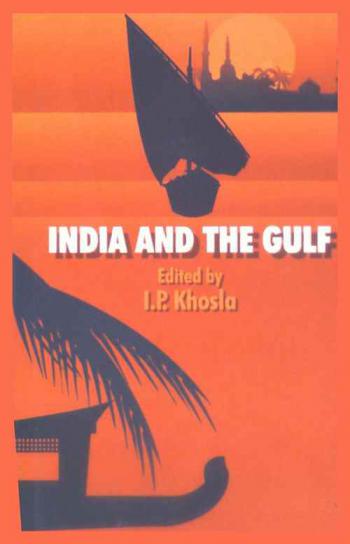
India and the Gulf
Papers presented at a seminar organized by the Association of Indian Diplomats in collaboration with the Indian International Centre in February 2008 at the Centre.
Book
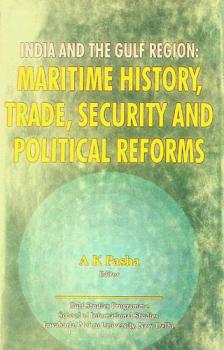
India and the Gulf region : maritime history, trade, security and political reforms
Most of the papers presented at the international seminars on Gulf and Emerging Asia : Defining Regional Architecture, on People, Culture and Goods in Motion : India-Arab Maritime Historical Relations & on Contemporary UAE and the Emerging Indo-UAE Relations and Contemporary Iraq and Indo-Iraq Relations, organized by Gulf Studies Programme, Jawaharlal Nehru University during 24-26 March 2009, 3-4 March 2010 & 15-16 March 2012 respectively.
Book
