
Catalogue Search | MBRL


Are you sure you want to remove the book from the shelf?

{{itemTitle}}
12
result(s) for
"Persian Gulf States -- Economic conditions -- 21st century"
Sort by:

Economic diversification in the Gulf States : public expenditure and non-oil economic growth in Bahrain, Oman and Qatar
Over the last decades, GCC governments fostered the development of non-oil economies through large-scale public investments in the stocks of human and physical capital. This book takes a new look at economic diversification efforts by examining the impact of different public expenditure categories (capital, education, health) on non-oil GDP and labour productivity developments in the three GCC countries Bahrain, Oman and Qatar since the 1970s. Building both on an econometric analysis and detailed country studies, this book analyses not only whether public expenditure has been an important driver of overall non-oil economic growth but also how public expenditure impacted different potential sources of non-oil economic growth such as economy-wide investment or productivity levels. By elaborating the channels through which public expenditure tends to impact non-oil economic growth in Bahrain, Oman and Qatar, this book contributes to the academic and public debate about the effectiveness of ongoing diversification strategies in the GCC countries. -- Publisher description.
Book

The Transformation of the Gulf
This book examines the political, economic and social transformation of the six member-states of the Gulf Cooperation Council (GCC) and the ways in which these states are both shaping, and being reshaped by, the processes of globalisation. Adopting a multidisciplinary approach, the volume combines thematic chapters focusing on issues such as globalisation, nationalism and identity, political thinking, and economic diversification and redistributive policymaking with empirical chapters studying specific aspects of reform and change:
the emergence of governing markets
the rise of Sovereign Wealth Funds
Islamic Finance
the relationship between energy and sustainability
trends in foreign aid donorship, strategic and foreign policy formulation.
Contributions from experts in the field provide cutting-edge snapshots of a region in flux and collectively offer a roadmap of its repositioning in the global order, examining the interaction between global processes and internal dynamics of change and resistance that inject new dimensions into debates over the loci of local and global transformations and the manner in which each plays off the other.
Situating the Gulf States firmly within their global twenty-first century context, this book will hold particular appeal to theorists of globalisation as well as to scholars of comparative politics, international political economy and area studies.
eBook


After the Sheikhs
Noted Gulf expert Christopher Davidson contends that the collapse of these kings, emirs, and sultans is going to happen, and was always going to.
eBook
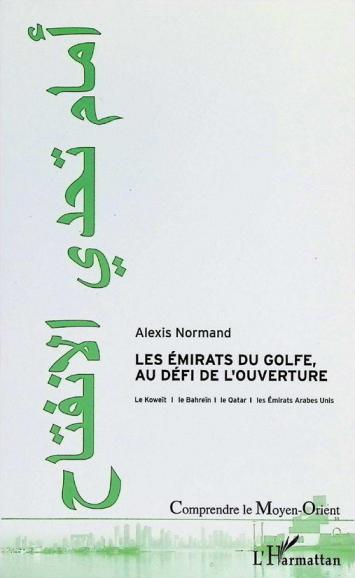
Les Emirats du Golfe, au défi de l'ouverture : le Koweït, le Bahreïn, le Qatar et les Emirats Arabes Unis
\"Les Émirats du Golfe, au défi de l'ouverture\" is a comprehensive synthesis of the rapid modernization and strategic shifts within Kuwait, Bahrain, Qatar, and the United Arab Emirates. Authored by Alexis Normand, a specialist in public policy within the Gulf, the work challenges the reductive \"rentier state\" cliché. It argues that the transformation of these desert economies into ultra-modern City-States is driven not just by oil, but by deliberate choices favoring market economics, social tolerance, and global integration. The volume provides a critical look at how these monarchies navigate the \"paradox of openness\"—attempting to adopt Western-style modernity and liberal markets while preserving their traditional political structures and Islamic identity.
BOOK

Cultural Cleansing in Iraq
Why did the invasion of Iraq result in cultural destruction and killings of intellectuals? Convention sees accidents of war and poor planning in a campaign to liberate Iraqis. The authors argue instead that the invasion aimed to dismantle the Iraqi state to remake it as a client regime. Post-invasion chaos created conditions under which the cultural foundations of the state could be undermined. The authors painstakingly document the consequences of the occupiers' willful inaction and worse, which led to the ravaging of one of the world's oldest recorded cultures. Targeted assassination of over 400 academics, kidnapping and the forced flight of thousands of doctors, lawyers, artists and other intellectuals add up to cultural cleansing. This important work lays to rest claims that the invasion aimed to free an educated population to develop its own culture of democracy.
eBook


Whither Al-Anbar Province?
As U.S. forces withdraw from Iraq, significant changes can be expected throughout al-Anbar Province in security, political, economic, and even cultural relationships. RAND convened a series of three one-day workshops at which participants identified five relatively distinct futures, or scenarios, for al-Anbar that provide plausible but alternative trajectories for the province between early 2009 and the end of 2011.
eBook


U.S. policy options for Iraq : a reassessment
Iraq is the most pressing national security issue facing the United States today. This book evaluates the costs and benefits of five alternative strategies the United States could pursue in Iraq. The authors argue that, as long as the United States remains in Iraq, policy actions must focus on improving the security of Iraq's population by reducing violence. They offer recommendations for ways in which U.S. political, security, and economic policies in Iraq could be better geared to support this goal, though they emphasize the challenges inherent in this endeavor. Specific recommendations focus on embedding and vetting efforts for both forces and government structures and on targeting economic assistance more effectively. The authors also suggest policies that might be implemented if violence subsides-but that should not be undertaken unless and until it does. The book concludes with a discussion of next steps if the United States decides to withdraw from Iraq, arguing that the United States needs to prepare now to mitigate the effects of failure.
eBook