
Catalogue Search | MBRL


Are you sure you want to remove the book from the shelf?

{{itemTitle}}
68
result(s) for
"Persian Gulf States Social life and customs"
Sort by:
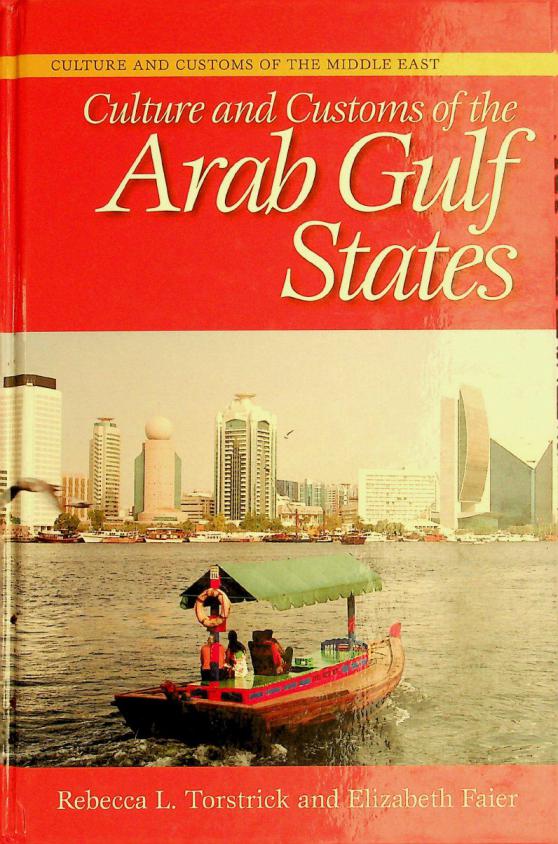
Culture and customs of the Arab Gulf States
From the Publisher: Names such as Dubai and Abu Dhabi have been emerging in the world's eye over the past decade as exotic hotspots, wealthy from oil production and advanced in the means of technology. However, at the same time, the Arab Gulf States have managed to maintain their traditional culture, adapting it to modern life. With complete coverage on Oman, Qatar, Bahrain, Kuwait, and the United Arab Emirates, Culture and Customs of the Arab Gulf States is a must-have for every high school and public library shelf. Clear and vivid descriptions of contemporary life in the Arab Gulf help students discover how traditions of the past have evolved into customs today. This exhaustive volume covers topics such as religion, festivals, cuisine, fashion, family life, literature, the media, and music, among many others. Up-to-date and comprehensive, this volume offers a unique and contemporary depiction of culture in some of the world's wealthiest, up-and-coming nations. Exciting, exhaustive, and essential coverage on the Arab Gulf States, this work is ideal for high school students and general readers.
Book

Tribal modern
In the 1970s, one of the most torrid and forbidding regions in the world burst on to the international stage. The discovery and subsequent exploitation of oil allowed tribal rulers of the U.A.E, Qatar, Bahrain, and Kuwait to dream big. How could fishermen, pearl divers and pastoral nomads catch up with the rest of the modernized world? Even today, society is skeptical about the clash between the modern and the archaic in the Gulf. But could tribal and modern be intertwined rather than mutually exclusive? Exploring everything from fantasy architecture to neo-tribal sports and from Emirati dress codes to neo-Bedouin poetry contests, Tribal Modern explodes the idea that the tribal is primitive and argues instead that it is an elite, exclusive, racist, and modern instrument for branding new nations and shaping Gulf citizenship and identity—an image used for projecting prestige at home and power abroad.
eBook

War as Popular Culture: The Gulf Conflict and the Technology of Illusionary Entertainment
Ebo argues that since the Gulf War was presented to the American public with simulations of the technology of illusionary entertainment, the public was \"entertained\" by the war. The popularity of the Gulf War is an illustration of the influence of the technology of illusionary entertainment on public conceptualization of reality.
Journal Article

Researching and working on the Arabian Peninsula : creating effective interactions
Using first-person accounts, as well as scholarly research from the fields of history, anthropology, political science, travel writing and literature, this book gives clear advice for expats wanting to create successful interactions with people from Arabian Peninsula societies. By discussing how the practicalities of work and research intersect with cultural norms, this book fills the gap between tourist guides aimed at the causal tourists and academic texts on narrowly defined topics. The text outlines strategies for current or soon-to-be business professionals, government employees, researchers and teachers to communicate, study and work effectively on the Arabian Peninsula.
BOOK

The Arab business code
\"The Gulf Cooperation Council (GCC) countries are some of the richest and most dynamic emerging markets in the world. But it's a tough market! International companies must think seriously if they want to do business there - the barriers can be numerous and difficult. But the opportunities are phenomenal and rewarding. The key to success is to plan and take the right steps. This book shows how to do this by decoding, using case studies, and suggesting relevant solutions. For Judith Hornok, it's not about dry theories or mind games. Instead this book is based on numerous case studies drawn from the lives of well-known Arab and international business people. The reader can grasp the opportunities and avoid the pitfalls by knowing and understanding the Arab Business Code (ABC): \"learning the A-B-Cs.\" This book offers a study with practical measures, a toolkit of easy-to-learn and simple-to-use techniques that pave the way for business success in the Gulf. Over fifteen years of research boiled down into a clearly structured, compact book. Judith Hornok presents the insights of her studies by decoding the behaviour of Arab business people in the Gulf using innovative techniques and new approaches, which can be easily implemented by the reader. For the first time Judith also presents her creations - the figures of The Seven Emotional Hinderers\"-- Provided by publisher.
Book