
Catalogue Search | MBRL


Are you sure you want to remove the book from the shelf?

{{itemTitle}}
1,958
result(s) for
"Persian Literature"
Sort by:
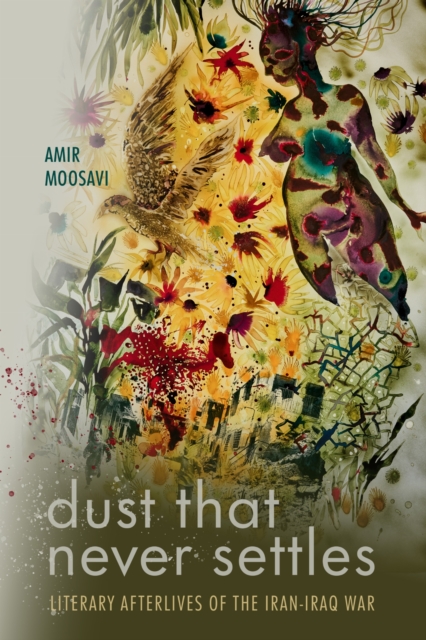
Dust that never settles : literary afterlives of the Iran-Iraq war
\"Lasting from September 1980 to August 1988, the Iran-Iraq War was the longest conventional war fought between two states in the twentieth century. It marked a period that began just after a revolutionary government in Iran became an Islamic Republic and Saddam Hussein consolidated power in Iraq. It ended with both wartime governments still in power, borders unchanged, yet hundreds of thousands of dead. Neither side emerged as a clear victor, but both sides would eventually claim victory in some form. Dust That Never Settles considers how Iraqi and Iranian writers have wrestled with representing the Iran-Iraq War and its legacy, from wartime to the present. It demonstrates how writers from both countries have transformed once militarized, officially sanctioned war literatures into literatures of mourning, and eventually, into vehicles of protest that presented powerful counternarratives to the official state narratives. In writing the f
eBook


Alexander the Great in the Persian tradition : history, myth and legend in medieval Iran
Alexander the Great (356-333 BC) was transformed into a legend by all those he met, leaving an enduring tradition of romances across the world.Aside from its penetration into every language of medieval Europe, the Alexander romance arguably had its greatest impact in the Persian language.Haila Manteghi here offers a complete survey of that deep.
eBook

Writing Self, Writing Empire
Writing Self, Writing Empireexamines the life, career, and writings of the Mughal state secretary, or munshi, Chandar Bhan \"Brahman\" (d. c.1670), one of the great Indo-Persian poets and prose stylists of early modern South Asia. Chandar Bhan's life spanned the reigns of four different emperors, Akbar (1556-1605), Jahangir (1605-1627), Shah Jahan (1628-1658), and Aurangzeb Alamgir (1658-1707), the last of the Great Mughals whose courts dominated the culture and politics of the subcontinent at the height of the empire's power, territorial reach, and global influence. As a high-caste Hindu who worked for a series of Muslim monarchs and other officials, forming powerful friendships along the way, Chandar Bhan's experience bears vivid testimony to the pluralistic atmosphere of the Mughal court, particularly during the reign of Shah Jahan, the celebrated builder of the Taj Mahal. But his widely circulated and emulated works also touch on a range of topics central to our understanding of the court's literary, mystical, administrative, and ethical cultures, while his letters and autobiographical writings provide tantalizing examples of early modern Indo-Persian modes of self-fashioning. Chandar Bhan's oeuvre is a valuable window onto a crucial, though surprisingly neglected, period of Mughal cultural and political history.
eBook

Subjectivity in ʿAttār, Persian Sufism, and European Mysticism
Adopting an empirical and systematic approach, this interdisciplinary study of medieval Persian Sufi tradition and ʿAttār (1145-1221) opens up a new space of comparison for reading and understanding medieval Persian and European literatures. The book invites us on an intellectual journey that reveals exciting intersections that redefine the hierarchies and terms of comparison. While the primary focus of the book is on reassessing the significance of the concept of transgression and construction of subjectivity within select works of ʿAttār within Persian Sufi tradition, the author also creates a bridge between medieval and modern, literature and theory, and European and Middle Eastern cultures through reading these works alongside one another. Of significance to the author is ʿAttār's treatment of enlightenment with regard to class, religious, gender, and sexuality transgressions. In this book, the relation between transgression and the limit is not viewed as one of liberation from oppressive restrictions, but of undoing the structures that produce constraining binaries; it allows for alternatives and possibilities. In conjunction with the concepts of transgression and the limit, the presence of society's marginalized pariahs, outcasts, and untouchables are central to the book's main argument about construction of subjectivity, which the author believes is framed within ʿAttār's notion of mystical love and human diversity. The book addresses the question of whether concepts such as transgression, limit, and subjectivity are solely applicable to modern times, or they can shed light on our understanding of transgression and subjectivity from the past. The author's comparative inquiries aim to intensify our understanding of these notions advanced in both the medieval and the modern world. Through summoning works from various genres, disciplines, cultures, and times, the author posits that medieval literary works are living texts that can reveal as much about our present selves as they do about the past.
eBook
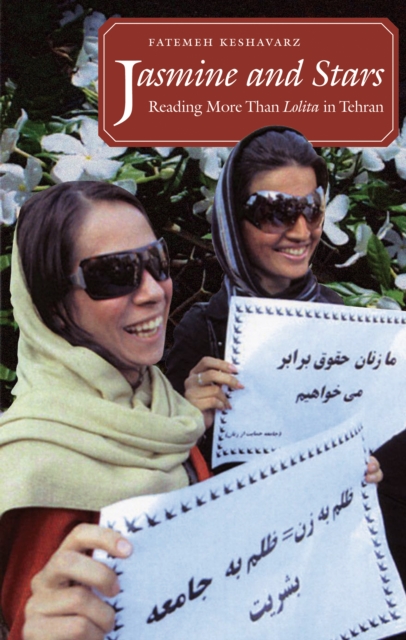
Jasmine and Stars
In a direct, frank, and intimate exploration of Iranian literature and society, scholar, teacher, and poet Fatemeh Keshavarz challenges popular perceptions of Iran as a society bereft of vitality and joy. Her fresh perspective on present-day Iran provides a rare insight into this rich culture alive with artistic expression but virtually unknown to most Americans. Keshavarz introduces readers to two modern Iranian women writers whose strong and articulate voices belie the stereotypical perception of Iranian women as voiceless victims in a country of villains. She follows with a lively critique of the recent best-seller Reading Lolita in Tehran: A Memoir in Books, which epitomizes what Keshavarz calls the \"New Orientalist narrative,\" a view marred by stereotype and prejudice more often tied to current geopolitical conflicts than to an understanding of Iran. Blending in firsthand glimpses of her own life--from childhood memories in 1960s Shiraz to her present life as a professor in America--Keshavarz paints a portrait of Iran depicting both cultural depth and intellectual complexity. With a scholar's expertise and a poet's hand, she helps amplify the powerful voices of contemporary Iranians and leads readers toward a deeper understanding of the country's past and present.In a direct, frank, and intimate exploration of Iranian literature and society, scholar, teacher, and poet Fatemeh Keshavarz challenges popular perceptions of Iran as a society bereft of vitality and joy. Her fresh perspective on present day Iran provides a rare insight into this rich culture alive with artistic expression but virtually unknown to most Americans. She warns against the rise of what she calls the \"New Orientalist narrative,\" which thrives on stereotype and prejudice and is often tied to current geopolitical conflict rather than an understanding of Iran. Keshavarz
offers a lively critique of the best-seller Reading Lolita in Tehran, which she says epitomizes this New Orientalist attitude. Blending in firsthand glimpses of her own life, Keshavarz paints a portrait of Iran depicting both cultural depth and intellectual complexity.-->.
eBook