
Catalogue Search | MBRL


Are you sure you want to remove the book from the shelf?

{{itemTitle}}
6,101
result(s) for
"Persian language"
Sort by:
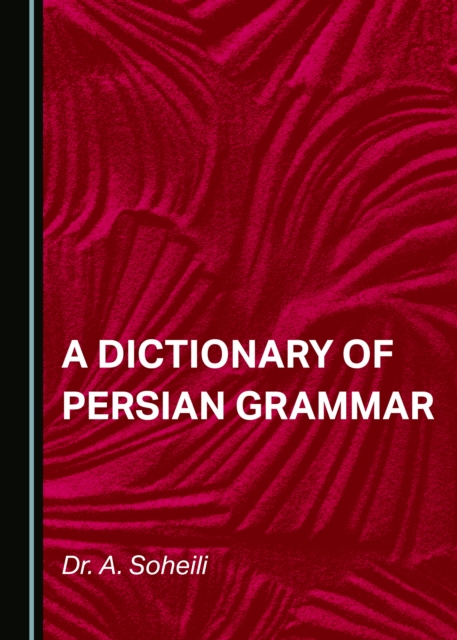
A Dictionary of Persian Grammar
This dictionary of Persian grammar has certain distinctive features that make it more informative and attractive than other sources on Persian grammar. Every entry here begins with a thorough linguistic analysis, according to the latest developments in the field, followed by its literary usage, which is an integral part of the language and culture. The final part of the book deals with the developmental stages of acquiring Persian, as clear evidence for the origins of the linguistic descriptions. The value of this dictionary lies in its use as a three tiered compilation that meets the needs and demands of both instructors of Persian and students of Persian language and linguistics.
eBook
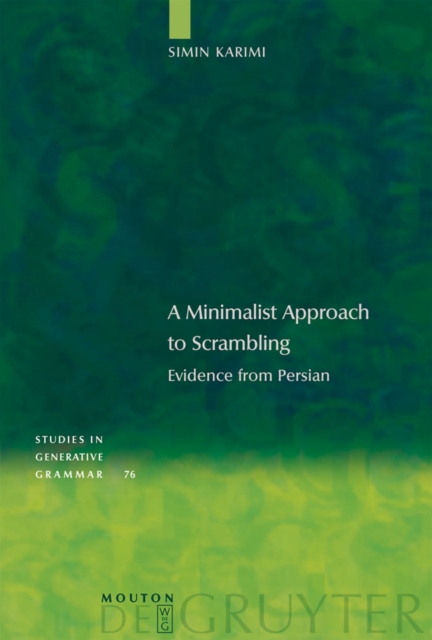
A Minimalist Approach to Scrambling
This study addresses the problems scrambling langauges provide for the existing syntactic theories by analyzing the interaction of semantic and discourse functional factors with syntactic properties of word order in this type of languages, and by discussing the implications of this interaction for Universal Grammar. Three interrelated goals are carefully followed in this work. The first is to analyze the syntactic structure of Persian, a language which exhibits free word order. With this analysis, the author has accounted for the relative order of categorized expressions, the motivation for their possible rearrangements, and the grammatical results of those reorderings. In this respect, a broad range of major syntactic phenomena, including object shift, Case, Extended Projection Principle (EPP), binding, and scope interpretation of quantifiers, interrogative phrases, adverbial phrases, and negative elements are examined. This monograph is the first major theoretical work ever published on Persian, and therefore fills the existing gap by providing insight into the syntactic structure of this language. The second goal is to connect these insights to similar linguistic properties in languages in which scrambling occurs (e.g. German, Dutch, Hindi, Russian, Japanese, and Korean), and to provide a deeper understanding of this group of genetically diverse, but typologically related languages. The final and principal goal is to situate the results of this work within the framework of the Minimalist Program (MP). The investigations in this study indicate that scrambling is not an optional rule, and that certain principles of MP, such as the Minimal Link Condition, are only seemingly violated in these languages. Furthermore, it is shown that careful analysis of scrambling with respect to binding and scope relations, and a reanalysis of the properties of A and A' movements, cast some doubts on the relevance of a typology of movement in natural language.
eBook
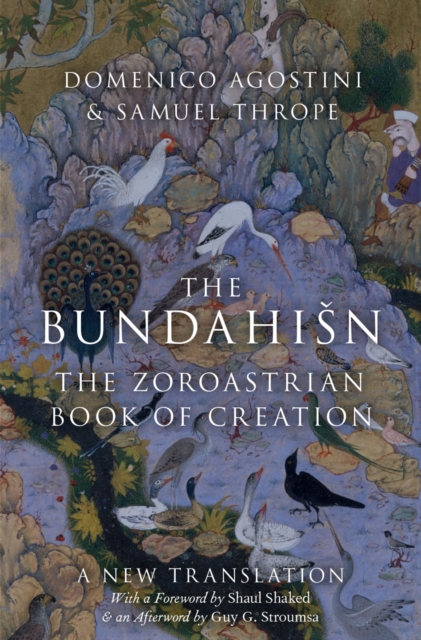
The Bundahišn : the Zoroastrian book of Creation
The Bundahišn, meaning primal or foundational creation, is the central Zoroastrian account of creation, cosmology, and eschatology and one of the most important of the surviving testaments to Zoroastrian literature and pre-Islamic Iranian culture. Touching on geography, cosmogony, anthropology, zoology, astronomy, medicine, legend, and myth, the Bundahišn can be considered a concise compendium of Zoroastrian knowledge.
The Bundahišn is well known in the field as an essential primary source for the study of ancient Iranian history, religions, literature, and languages. It is one of the most important texts composed in Zoroastrian Middle Persian, also known as Zoroastrian Book Pahlavi, in the centuries after the fall of the Sasanian Empire to the invading Arab and Islamic forces in the mid seventh century. The Bundahišn provides scholars with a particularly profitable window on Zoroastrianism’s intellectual and religious history at a crucial transitional moment: centuries after the composition of the Avesta, the Zoroastrian sacred scriptures, and before the transformation of Zoroastrianism into a minority religion within Iran and adherents’ dispersion throughout Central and South Asia. However, the Bundahišn is not only a scholarly tract. It is also a great work of literature in its own right and ranks alongside the creation myths of other ancient traditions: Genesis, the Babylonian Emunah Elish, Hesiod’s Theogony, and others. Informed by the latest research in Iranian Studies, this translation aims to bring to the fore the aesthetic quality, literary style, and complexity of this important work.
eBook

Intent detection and slot filling for Persian: Cross-lingual training for low-resource languages
Intent detection and slot filling are two necessary tasks for natural language understanding. Deep neural models have already shown great ability facing sequence labeling and sentence classification tasks, but they require a large amount of training data to achieve accurate results. However, in many low-resource languages, creating accurate training data is problematic. Consequently, in most of the language processing tasks, low-resource languages have significantly lower accuracy than rich-resource languages. Hence, training models in low-resource languages with data from a richer-resource language can be advantageous. To solve this problem, in this paper, we used pretrained language models, namely multilingual BERT (mBERT) and XLM-RoBERTa, in different cross-lingual and monolingual scenarios. To evaluate our proposed model, we translated a small part of the Airline Travel Information System (ATIS) dataset into Persian. Furthermore, we repeated the experiments on the MASSIVE dataset to increase our results’ reliability. Experimental results on both datasets show that the cross-lingual scenarios significantly outperform monolinguals ones.
Journal Article

Assessing the content typicality and construct of Persian language proficiency test (PLPT) for non-Persian speakers: a corpus-informed study
Drawing on a growing body of research on the interface between corpus linguistics and second/foreign language testing and assessment, we adopted Peykare, a large-scale, annotated, Persian written language resource to evaluate the content (i.e., coverage and typicality) and construct validity of a Persian language proficiency test developed for certification of proficiency in Persian as a foreign language (PFL) of non-native speakers. Designed at the Research Center for Intelligent Signal Processing (RCISP), Peykare contains 35,058 text files over five linguistic varieties and 24 different registers of contemporary Persian. This study addresses how corpora, as rich database resources, can practically be applied to test validation purposes and insightfully inform the test life cycle. The results of content validity phase revealed evidence supporting content representativeness, relevance, and typicality of the test. The linkage between the corpus-extracted criterial features or parameters and those covered by the test was not, however, strongly evidenced by items measuring ezafeh constructions, homographs/homophones, PRO (proposition), and POST (postposition). The analysis of content typicality indicated chunks that did not closely conform to the corpus typical output. The construct validity phase, assessing the test hypothesized factor structure (i.e., hierarchical, unitary, correlated, and uncorrelated models) in two randomly split samples of PFL learners from Asian and European countries (N=121), showed that the correlated model fit the data best in both samples. The results supported the presence of distinctive factors of receptive skills, providing empirical evidence for score interpretations of the corpus-based test.
Journal Article