
Catalogue Search | MBRL


Are you sure you want to remove the book from the shelf?

{{itemTitle}}
77
result(s) for
"Persisch."
Sort by:

Catalog of Judeo-Persian Manuscripts in the Library of the Jewish Theological Seminary of America
The Judeo-Persian manuscripts that Iranian Jews produced between the fifteenth and nineteenth centuries provide a thorough description of their intellectual parameters. They demonstrates the Jews' deep attachment to Judaism as well as their profound acculturation in Iran.
eBook

The Routledge Handbook of Second Language Acquisition and Pedagogy of Persian
The Routledge Handbook of Second Language Acquisition and Pedagogy of Persian offers a detailed overview of the field of Persian second language acquisition and pedagogy.
The Handbook discusses its development and captures critical accounts of cutting-edge research within the major subfields of Persian second language acquisition and pedagogy, as well as current debates and problems, and goes on to suggest productive lines of future research.
The book is divided into the following four parts: I) Theory-driven research on second language acquisition of Persian, II) Language skills in second language acquisition of Persian, III) Classroom research in second language acquisition and pedagogy of Persian, and IV) Social aspects of second language acquisition and pedagogy of Persian.
The Routledge Handbook of Second Language Acquisition and Pedagogy of Persian is an essential reference for scholars and students of Persian SLA and pedagogy as well as those researching in related areas.
eBook

Writing Self, Writing Empire
Writing Self, Writing Empireexamines the life, career, and writings of the Mughal state secretary, or munshi, Chandar Bhan \"Brahman\" (d. c.1670), one of the great Indo-Persian poets and prose stylists of early modern South Asia. Chandar Bhan's life spanned the reigns of four different emperors, Akbar (1556-1605), Jahangir (1605-1627), Shah Jahan (1628-1658), and Aurangzeb Alamgir (1658-1707), the last of the Great Mughals whose courts dominated the culture and politics of the subcontinent at the height of the empire's power, territorial reach, and global influence. As a high-caste Hindu who worked for a series of Muslim monarchs and other officials, forming powerful friendships along the way, Chandar Bhan's experience bears vivid testimony to the pluralistic atmosphere of the Mughal court, particularly during the reign of Shah Jahan, the celebrated builder of the Taj Mahal. But his widely circulated and emulated works also touch on a range of topics central to our understanding of the court's literary, mystical, administrative, and ethical cultures, while his letters and autobiographical writings provide tantalizing examples of early modern Indo-Persian modes of self-fashioning. Chandar Bhan's oeuvre is a valuable window onto a crucial, though surprisingly neglected, period of Mughal cultural and political history.
eBook

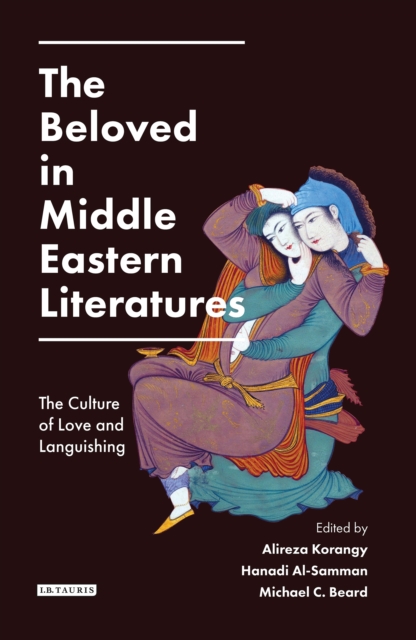
The Beloved in Middle Eastern Literatures
In the long literary history of the Middle East, the notion of 'the beloved' has been a central trope in both the poetry and prose of the region. This book explores the concept of the beloved in a cross-cultural and interdisciplinary manner, revealing how shared ideas on the subject supersede geographical and temporal boundaries, and ideas of nationhood. The book considers the beloved in its classical, modern and postmodern manifestations, taking into account the different sexual orientations and forms of desire expressed. From the pre-Islamic 'Udhri (romantic unrequited love), to the erotic same-sex love in thirteenth century poetry and prose, the divine Sufi reflections on the topic, and post-revolutionary love encounters in Iran, Egypt and Saudi Arabia, The Beloved in Middle Eastern Literatures connects the affective and cultural with the political and the obscene. In focusing on the diverse manifestations of love and tropes of the lover/beloved binary, this book is unique in foregrounding what is often regarded as a 'taboo subject' in the region. The multi-faceted outlook reveals the variety of philological, philosophical, poetic and literary forms that treat this significant motif.
eBook

Jawanmardi
This text is composed of translations of three representative medieval Persian texts, displaying the diversity of jawanmardi, each of which is contextualised by a short introduction, providing some background on the author, and the distinctive features of the text.
eBook
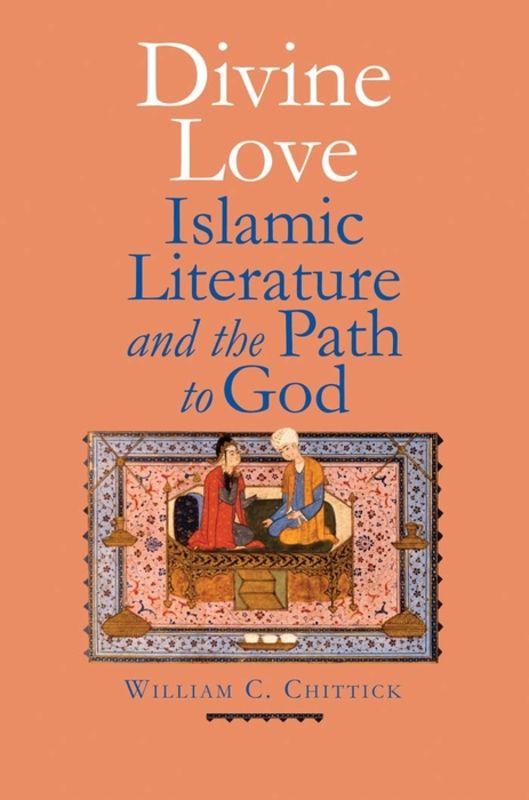
Divine Love
The very heart of the Islamic tradition is love; no other word adequately captures the quest for transformation that lies at this tradition's center. So argues esteemed professor of medieval Islam William C. Chittick in this survey of the extensive Arabic and Persian literature on topics ranging from the Qur'an up through the twelfth century. Bringing to light extensive foundational Persian sources never before presented, Chittick draws on more than a thousand pages of newly translated material to depict the rich prose literature at the center of Islamic thought.
eBook
