
Catalogue Search | MBRL


Are you sure you want to remove the book from the shelf?

{{itemTitle}}
156
result(s) for
"Personal unconscious"
Sort by:

Is intuition associated with ethical decision-making?
The relationship between intuition and ethical decision-making has been researched extensively during the past two decades. This study aimed at exploring empirically observable associations between intuition and the moral intensity of ethical decision-making processes. A scenario-based quantitative approach was used to collect data from 157 practising professional spirit mediums. It was found that only collective universal intuition had a significant positive association with the moral intensity of ethical decision-making processes. Personal experience intuition and collective archetype intuition were not significantly associated with moral intensity. This may explain why previous studies were unable to gauge the effects of intuition on ethical decision-making. The results suggest that a pure mind can improve one’s ability to make decisions. Thus, decision-makers would benefit by being more attuned to their sense of morality.
Journal Article

Primordial Soup
Creative and destructive impulses might emerge, and I may question my own creation and even want to destroy it if I feel what I have created is ugly, flawed, imperfect. For a brief moment, I am Lord Shiva, creator and destroyer.
Journal Article
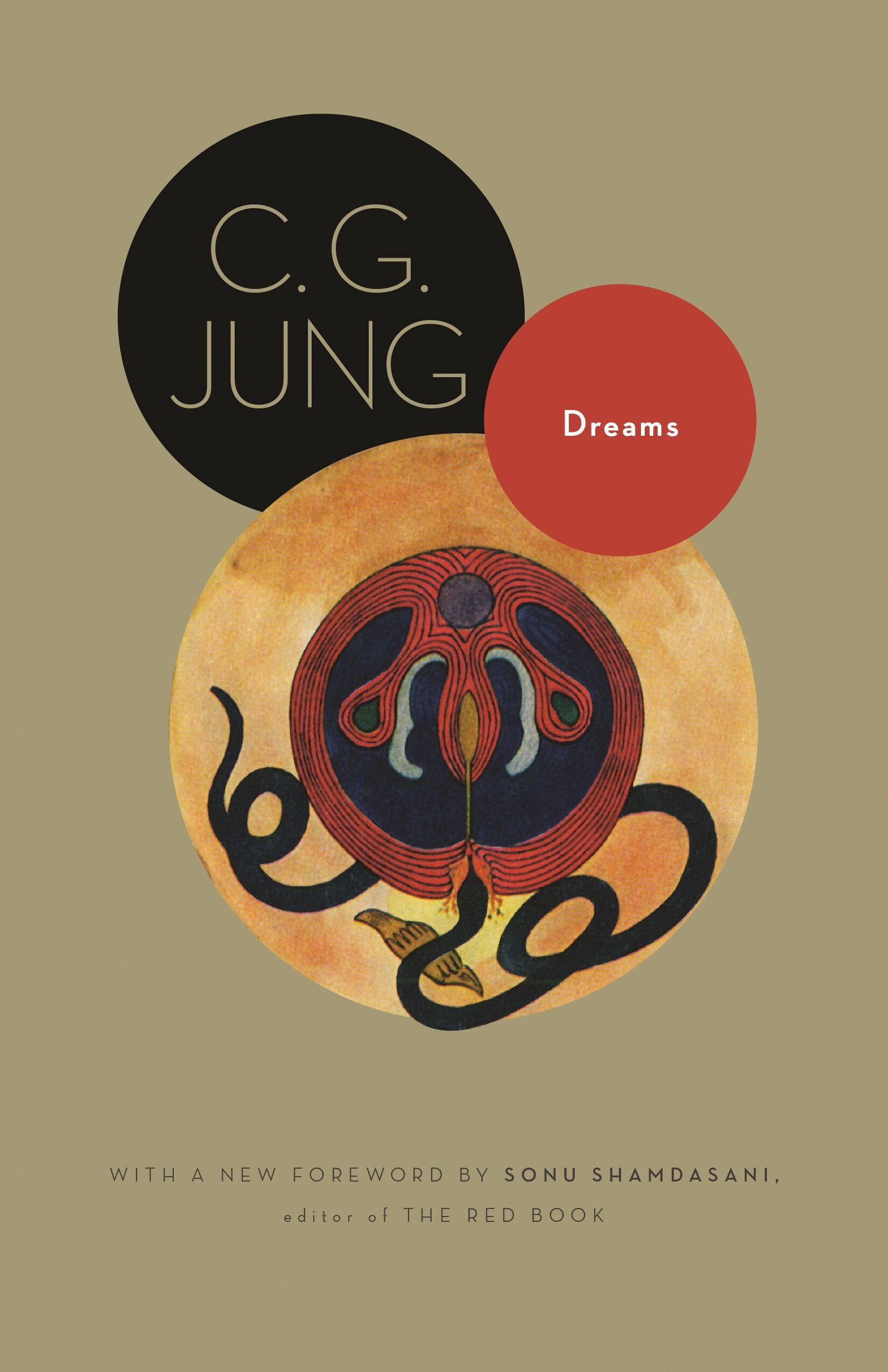
Dreams
Dream analysis is a distinctive and foundational part of analytical psychology, the school of psychology founded by C. G. Jung and his successors. This volume collects Jung's most insightful contributions to the study of dreams and their meaning. The essays in this volume, written by Jung between 1909 and 1945, reveal Jung's most essential views about dreaming--especially regarding the relationship between language and dream. Through these studies, Jung grew to understand that dreams are themselves a language, a language through which the soul communicates with the body. The essays included are \"The Analysis of Dreams,\" \"On the Significance of Number Dreams,\" \"General Aspects of Dream Psychology,\" \"On the Nature of Dreams,\" \"The Practical Use of Dream Analysis,\" and \"Individual Dream Symbolism in Relation to Alchemy\" (complete with illustrations).
New to this edition is a foreword by Sonu Shamdasani, Philemon Professor of Jung History at University College London.
eBook

Four Archetypes
One of Jung's most influential ideas has been his view, presented here, that primordial images, or archetypes, dwell deep within the unconscious of every human being. The essays in this volume gather together Jung's most important statements on the archetypes, beginning with the introduction of the concept in \"Archetypes and the Collective Unconscious.\" In separate essays, he elaborates and explores the archetypes of the Mother and the Trickster, considers the psychological meaning of the myths of Rebirth, and contrasts the idea of Spirits seen in dreams to those recounted in fairy tales.
This paperback edition of Jung's classic work includes a new foreword by Sonu Shamdasani, Philemon Professor of Jung History at University College London.
eBook

Children’s dreams
In the 1930s C. G. Jung embarked upon a bold investigation into childhood dreams as remembered by adults to better understand their significance to the lives of the dreamers. Jung presented his findings in a four-year seminar series at the Swiss Federal Institute of Technology in Zurich.Children's Dreamsmarks their first publication in English, and fills a critical gap in Jung's collected works.
Here we witness Jung the clinician more vividly than ever before--and he is witty, impatient, sometimes authoritarian, always wise and intellectually daring, but also a teacher who, though brilliant, could be vulnerable, uncertain, and humbled by life's great mysteries. These seminars represent the most penetrating account of Jung's insights into children's dreams and the psychology of childhood. At the same time they offer the best example of group supervision by Jung, presenting his most detailed and thorough exposition of Jungian dream analysis and providing a picture of how he taught others to interpret dreams. Presented here in an inspired English translation commissioned by the Philemon Foundation, these seminars reveal Jung as an impassioned educator in dialogue with his students and developing the practice of analytical psychology.
An invaluable document of perhaps the most important psychologist of the twentieth century at work, this splendid volume is the fullest representation of Jung's views on the interpretation of children's dreams, and signals a new wave in the publication of Jung's collected works as well as a renaissance in contemporary Jung studies.
eBook

Unconscious transformative experience
According to L.A. Paul, conscious experiences can be transformative. But can unconscious experiences also be transformative? After a preliminary clarification of what it means to have an unconscious experience, we marshal three cases of unconscious experiences to support the idea that unconscious experiences can be transformative: one inspired by Anna Karenina, another by a case of Freud’s, and a third by the medical condition hemispatial neglect. Such examples, we argue, suggest not only that you may have had more transformative experiences than you are aware of, but also that the sphere of the authentic subject, from a first-person perspective, outstrips what is in her consciousness at any time. A full account of transformative decision making, we suggest, must take this into consideration.
Journal Article

Conscious Intra-Personal Development: The Experience Counts
The future of mankind will depend on the ability of the individual to acquire Self-knowledge. The preservation of autonomy of the individual is supported by learning to fathom one's own unconscious and inner being, the undiscovered self. By consciously developing Self-knowledge the possibility originates for the individual to make his own conscious choices and to understand an other human being. It often takes a great deal of effort from an individual to consciously open up to his inner being. Gaining experiences related to intra-personal development and consciously reflecting on those experiences, is essential to keep the conscious intra-personal development process in motion. Education can lend a helping hand during this process, from the start of the school career of children, by making room in the curriculum for affective and experiential education. Theory disturbs the experiential orientation and the focus on emotions. Offer affective and experiential education to children from an early age, with plenty of personal room, and continuing this form of education until they leave school, supports young people to become more and more self-directing. The way in which this form of education is taken care for is crucial for its success.
Journal Article

Unconscious Bias: Definition and Significance
This study aims to address current developments and debates on unconscious bias, depending on the psychology, social psychology and partly sociology literature on the concept of unconscious bias. As the concept’s name suggests, unconscious bias is a negative concept that most people are unaware of. This aspect has negative effects on interpersonal relationships and relationships in social life. Therefore, this study also aims to raise awareness of unconscious bias and contribute to more objective views. Unconscious bias is defined as the systematic error experienced in decision-making. In most cases, one may become biased as they try to make sense of the available information. Besides, some people are oblivious of their bias. It is referred to as unconscious bias, which has prevailed despite the fast-changing environment. In the current complex world, human beings are exposed to a lot of information they cannot process at once. Therefore, they are naturally inclined to take mental shortcuts when making decisions. Implicit bias is explained in different theoretical explanations. System 1 and 2 show how the brain makes slow and fast decisions. On the other hand, the model of dual attitudes shows how people develop both implicit and explicit attitudes on the same issue. Lastly, the social identity theory shows how individuals associate positive traits with their in-groups and link negative stereotypes with out-groups. Unconscious bias is evident in different sectors. The discussion shows how the negative associations and stereotypes purport discrimination in schools, workplaces, healthcare, politics, and the legal sector.
Journal Article

A Personal Perspective: Is Bullying Still a Problem in Medicine?
Bullying of whatever form should have no place in the Medical Profession. Reforms to junior doctor training and reduction in working hours have helped to control most of the individual bullying which may have existed in the past. However, the complexities of institutional bullying still exist. In the United Kingdom, centralised monitoring systems, such as Athena SWAN, are designed to reward academic and medical institutions for positive steps to introduce equality and mitigate bullying. However, the reality is that such processes may be conducted in healthcare or educational establishments that have little intention to address the problem thoroughly. We report the personal experience of both individual and institutional bullying in the medical career of a medically-qualified interviewee and reflect on ways to mitigate the problem. We also consider whether unconscious bias affects our relationships with patients. In a caring medical profession, there should be no room for intolerance, unconscious bias or bullying.
Journal Article

Of Two Minds: Forming and Changing Valence-Inconsistent Implicit and Explicit Attitudes
Because different processes underlie implicit and explicit attitudes, we hypothesized that they are differentially sensitive to different kinds of information. We measured implicit and explicit attitudes over time, as different types of attitude-relevant information about a single attitude object were presented. As expected, explicit attitudes formed and changed in response to the valence of consciously accessible, verbally presented behavioral information about the target. In contrast, implicit attitudes formed and changed in response to the valence of subliminally presented primes, reflecting the progressive accretion of attitude object-evaluation pairings. As a consequence, when subliminal primes and behavioral information were of opposite valence, people formed implicit and explicit attitudes of conflicting valence.
Journal Article