
Catalogue Search | MBRL


Are you sure you want to remove the book from the shelf?

{{itemTitle}}
1,164
result(s) for
"Personnel Direction."
Sort by:

Creepy analytics : avoid crossing the line and establish ethical HR analytics for smarter workforce decisions
Discover how to develop and implement an HR analytics system that benefits employees, as well as your organization The potential of HR analytics is a major discussion among scholars, practitioners, thought leaders, and technology vendors, with companies like Amazon, Apple, Google, and Meta digging deeply into HR research and analytics practices that extend beyond simple metrics, scorecards, and reporting. Additionally, ethical questions have begun to arise about the potential abuses of HR analytics with respect to technological advancements and the \"datafication\" of personal--and often trivial--characteristics, preferences, and behaviors that have little relevance to job performance. As a former chief human resources officer, head of Global HR Research and Analytics at a Fortune 100, and thought leader on this subject, Salvatore Falletta has witnessed first-hand the emergence of \"creepy analytics\" as a hot-button issue. In this one-of-a-kind guide, Falletta delivers a proven step-by-step process for establishing HR analytics capabilities that serve employees and organizations alike. You'll learn how to rethink and redefine HR analytics, determine stakeholder requirements, gather and transform data, communicate intelligence results, and establish an ethical ecosystem to ensure HR analytics remains a force for good.
Book

Inventing equal opportunity
Equal opportunity in the workplace is thought to be the direct legacy of the civil rights and feminist movements and the landmark Civil Rights Act of 1964. Yet, as Frank Dobbin demonstrates, corporate personnel experts--not Congress or the courts--were the ones who determined what equal opportunity meant in practice, designing changes in how employers hire, promote, and fire workers, and ultimately defining what discrimination is, and is not, in the American imagination.
Dobbin shows how Congress and the courts merely endorsed programs devised by corporate personnel. He traces how the first measures were adopted by military contractors worried that the Kennedy administration would cancel their contracts if they didn't take \"affirmative action\" to end discrimination. These measures built on existing personnel programs, many designed to prevent bias against unionists. Dobbin follows the changes in the law as personnel experts invented one wave after another of equal opportunity programs. He examines how corporate personnel formalized hiring and promotion practices in the 1970s to eradicate bias by managers; how in the 1980s they answered Ronald Reagan's threat to end affirmative action by recasting their efforts as diversity-management programs; and how the growing presence of women in the newly named human resources profession has contributed to a focus on sexual harassment and work/life issues.
Inventing Equal Opportunityreveals how the personnel profession devised--and ultimately transformed--our understanding of discrimination.
eBook

A creative approach to the employee engagement dilemma : larger cultural influences and new theoretical insights
\"Fisher employs a symbolic interactionist lens and other theoretical tools to make visible foundational cultural assumptions delimiting our thinking about and undermining employee engagement before it even begins in organizational settings\"-- Provided by publisher.
Book
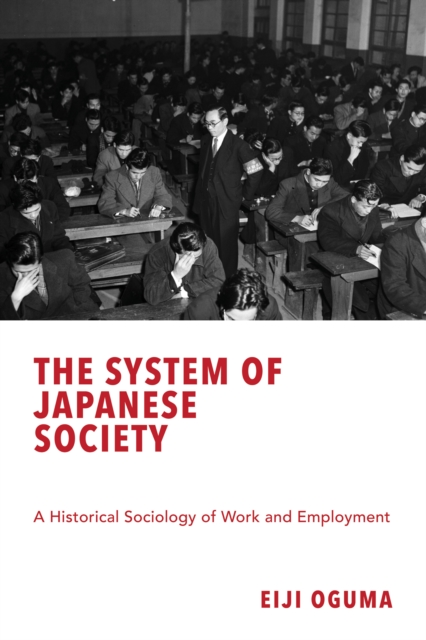
The System of Japanese Society
In developed countries, non-regular employment in the labor market is increasing and the gap between rich and poor is widening. Gender inequality in employment is also often an issue. Japan is no exception. In recent years, the dual structure of the employment market has become problematic. A unique systemic rigidity has created an employment environment that is so different between regular and non-regular employment, and between large and small enterprises, that it is difficult for employees to move up the hierarchy. This book has two main themes: first, statistically revealing the dual structure of employment that has been created by the Japanese-style employment system; and second, tracing the historical process to the formation of Japan' s unique employment practices under the influence of governmental bureaucracy and military culture. This process is compared with the history of employment systems in the US and Europe. Through this book, readers will gain a deeper understanding of the issues facing Japan by learning how the system of Japanese society, including employment, education, social security and welfare, and gender inequality, was established historically.
eBook

HRM in mission driven organizations : managing people in the not for profit sector
This edited collection examines human resource management in organizations other than those that are set up to make a profit. Covering human resource management in a number of different kinds of mission-driven organizations, the book explores organizations in sectors and industries such as the governmental and intergovernmental public sector, volunteer organizations and charities, religious organizations, cultural organizations, sports organizations and B-corporations. Recognizing the reality of management practice in the (many small) organizations covered by the book, the chapters deal with the way that people are actually managed whether or not there is an HRM department present. Students of business management and human resource management will find this book invaluable as a source of knowledge on not for profit organizations, as many of the chapters include detailed examples and case studies.
Book

Managing the Human Factor
Human resource departments are key components in the people management system of nearly every medium-to-large organization in the industrial world. They provide a wide range of essential services relating to employees, including recruitment, compensation, benefits, training, and labor relations. A century ago, however, before the concept of human resource management had been invented, the supervision and care of employees at even the largest companies were conducted without written policies or formal planning, and often in harsh, arbitrary, and counterproductive ways.
How did companies such as United States Steel manage a workforce of 160,000 employees at dozens of plants without a specialized personnel or industrial relations department? What led some of these organizations to introduce human resources practices at the end of the nineteenth century? How were the earliest personnel departments structured and what were their responsibilities? And how did the theory and implementation of human resources management evolve, both within industry and as an academic field of research and teaching?
InManaging the Human Factor, Bruce E. Kaufman chronicles the origins and early development of human resource management (HRM) in the United States from the 1870s, when the Labor Problem emerged as the nation's primary domestic policy concern, to 1933 and the start of the New Deal. Through new archival research, an extensive review and synthesis of the historical and contemporary literatures, and case studies illustrating best (and worst) practices during this period, Kaufman identifies the fourteen ideas, events, and movements that led to the creation of specialized HRM departments in the late 1910s, as well as their further growth and development into strategic business units in the welfare capitalism period of the 1920s.
The research presented in this book not only uncovers many new aspects of the early development of personnel and industrial relations but also challenges central parts of the contemporary interpretation of the concept and evolution of HRM. Rich with insights on both the present and past of human resource management,Managing the Human Factorwill be widely regarded as the definitive account of the early history of employee management in American companies and a must-read for all those interested in the indispensable function of managing people in organizations.
eBook

HBR guide to delivering effective feedback
\"To help your employees meet their goals and fulfill their potential, you need to provide them with regular feedback. But the prospect of sharing potentially negative news can be overwhelming. How do you construct your message so that it's not only well received but also expressed in a way that encourages change? Whether you're commending exemplary work or addressing problem behavior, the HBR Guide to Delivering Effective Feedback provides you with practical advice and tips to transform any performance discussion--from weekly check-ins to annual reviews--into an opportunity for growth and development. You'll learn to: Establish trust with your direct reports; Assess their performance fairly; Emphasize improvement, even in criticism; React calmly to a defensive feedback recipient; Recognize and motivate star performers; and Create individualized development plans. Arm yourself with the advice you need to succeed on the job, from a source you trust. Packed with how-to essentials from leading experts, the HBR Guides provide smart answers to your most pressing work challenges.\"--! From Amazon.com.
Book

Assessment Centres
COVER -- TITLE PAGE -- ENDORSEMENTS -- COPYRIGHT PAGE -- TRIBUTE -- TABLE OF CONTENTS -- LIST OF FIGURES -- LIST OF TABLES -- SUMMARY OF CHAPTERS AND AUTHORS -- ABOUT THE EDITORS -- ABOUT THE CONTRIBUTORS -- PREFACE -- ACKNOWLEDGEMENTS -- CHAPTER 1 INTRODUCTION TO ASSESSMENT CENTRES Sandra Schlebusch and Gert Roodt -- 1. INTRODUCTION - WHAT ARE ASSESSMENT CENTRES (ACs)? -- 2. WHAT IS AN AC? -- 2.1 Demarcation of Terminology -- 3. TYPES OF ACs -- 3.1 Traditional ACs -- 3.2 Assessment ACs -- 3.3 Diagnostic ACs (DCs) -- 3.4 Learning ACs -- 3.5 Development ACs (DACs) -- 3.6 Collaborative ACs -- 3.7 Coaching Development Centres (CDCs) -- 3.8 Functional ACs -- 4. FEATURES OF ACs -- 4.1 Job analysis -- 4.2 Use of simulations -- 4.3 Multiple assessments -- 4.4 Link between AC assessments and the AC focal constructs -- 4.5 Multiple observers -- 4.6 Competent observers and role players -- 4.7 Behavioural observation and noting -- 4.8 Classifying and evaluating behaviour -- 4.9 Data integration -- 4.10 Standardisation -- 4.11 Feedback -- 4.12 Deliverables of an AC -- 5. STAKEHOLDERS OF ACs -- 5.1 Stakeholders directly involved in ACs -- 5.2 Stakeholders indirectly involved in ACs -- 6. AC APPLICATIONS -- 6.1 Selecting in -- 6.2 Selecting out -- 6.3 Development -- 6.4 Diagnostic purposes -- 7. THE DESIGN MODEL -- 7.1 Steps and stages -- 8. THE RATIONALE FOR USING A DESIGN MODEL -- 8.1 Following a systematic approach -- 8.2 Keeping the focus on the initial design objectives of the AC -- 8.3 Following an integrated process -- 8.4 Adding marketing value -- 8.5 Ensuring validity, reliability and fairness -- 9. CONCLUSION -- CHAPTER 2: ASSESSMENT CENTRES IN SOUTH AFRICAN HISTORY by Deon Meiring -- 1. A BRIEF HISTORY OF ASSESSMENT CENTRES (ACs) IN SOUTH AFRICA -- 2. FOUNDING OF THE ASSESSMENT CENTRE STUDY GROUP -- 3. AIMS AND OBJECTIVES OF THE ACSG.
eBook

Flawed : why perfectionism is a challenge for management
Step into a world where perfectionism isn't a virtue but can be a disruption to management in Greg Chasson's compelling book, Flawed: Why Perfectionism is a Challenge for Management, a powerful addition to the realm of leadership books. As a renowned psychologist and expert in cognitive-behavioral therapy, Chasson unravels the complexities of perfectionism, making this book an essential read for those seeking self-growth, effective leadership, and successful team building.
BOOK
