
Catalogue Search | MBRL


Are you sure you want to remove the book from the shelf?

{{itemTitle}}
22,178
result(s) for
"Personnel Management methods."
Sort by:

Creepy analytics : avoid crossing the line and establish ethical HR analytics for smarter workforce decisions
Discover how to develop and implement an HR analytics system that benefits employees, as well as your organization The potential of HR analytics is a major discussion among scholars, practitioners, thought leaders, and technology vendors, with companies like Amazon, Apple, Google, and Meta digging deeply into HR research and analytics practices that extend beyond simple metrics, scorecards, and reporting. Additionally, ethical questions have begun to arise about the potential abuses of HR analytics with respect to technological advancements and the \"datafication\" of personal--and often trivial--characteristics, preferences, and behaviors that have little relevance to job performance. As a former chief human resources officer, head of Global HR Research and Analytics at a Fortune 100, and thought leader on this subject, Salvatore Falletta has witnessed first-hand the emergence of \"creepy analytics\" as a hot-button issue. In this one-of-a-kind guide, Falletta delivers a proven step-by-step process for establishing HR analytics capabilities that serve employees and organizations alike. You'll learn how to rethink and redefine HR analytics, determine stakeholder requirements, gather and transform data, communicate intelligence results, and establish an ethical ecosystem to ensure HR analytics remains a force for good.
Book

The impact of a supportive supervision intervention on health workers in Niassa, Mozambique: a cluster-controlled trial
Background
Regular supportive supervision is critical to retaining and motivating staff in resource-constrained settings. Previous studies have shown the particular contribution that supportive supervision can make to improving job satisfaction amongst over-stretched health workers in such settings.
Methods
The Support, Train and Empower Managers (STEM) study designed and implemented a supportive supervision intervention and measured its’ impact on health workers using a controlled trial design with a three-arm pre- and post-study in Niassa Province in Mozambique. Post-intervention interviews with a small sample of health workers were also conducted.
Results
The quantitative measurements of job satisfaction, emotional exhaustion and work engagement showed no statistically significant differences between end-line and baseline. The qualitative data collected from health workers post the intervention showed many positive impacts on health workers not captured by this quantitative survey.
Conclusions
Health workers perceived an improvement in their performance and attributed this to the supportive supervision they had received from their supervisors following the intervention. Reports of increased motivation were also common. An unexpected, yet important consequence of the intervention, which participants directly attributed to the supervision intervention, was the increase in participation and voice amongst health workers in intervention facilities.
Journal Article


Safety in Numbers
Legally mandated nurse-to-patient ratios are one of the most controversial topics in health care today. Ratio advocates believe that minimum staffing levels are essential for quality care, better working conditions, and higher rates of RN recruitment and retention that would alleviate the current global nursing shortage. Opponents claim that ratios will unfairly burden hospital budgets, while reducing management flexibility in addressing patient needs.
Safety in Numbersis the first book to examine the arguments for and against ratios. Utilizing survey data, interviews, and other original research, Suzanne Gordon, John Buchanan, and Tanya Bretherton weigh the cost, benefits, and effectiveness of ratios in California and the state of Victoria in Australia, the two places where RN staffing levels have been mandated the longest. They show how hospital cost cutting and layoffs in the 1990s created larger workloads and deteriorating conditions for both nurses and their patients-leading nursing organizations to embrace staffing level regulation. The authors provide an in-depth account of the difficult but ultimately successful campaigns waged by nurses and their allies to win mandated ratios.Safety in Numbersthen reports on how nurses, hospital administrators, and health care policymakers handled ratio implementation.
With at least fourteen states in the United States and several other countries now considering staffing level regulation, this balanced assessment of the impact of ratios on patient outcomes and RN job performance and satisfaction could not be timelier. The authors' history and analysis of the nurse-to-patient ratios debate will be welcomed as an invaluable guide for patient advocates, nurses, health care managers, public officials, and anyone else concerned about the quality of patient care in the United States and the world.
eBook

Can digital communication technology reduce health system personnel time? An evaluation of personnel requirements and costs in a randomized controlled trial
Abstract
Use of digital communication technologies (DCT) shows promise for enhancing outcomes and efficiencies in asthma care management. However, little is known about the impact of DCT interventions on healthcare personnel requirements and costs, thus making it difficult for providers and health systems to understand the value of these interventions.
This study evaluated the differences in healthcare personnel requirements and costs between usual asthma care (UC) and a DCT intervention (Breathewell) aimed at maintaining guidelines-based asthma care while reducing health care staffing requirements. We used data from a pragmatic, randomized controlled trial conducted in a large integrated health system involving 14,978 patients diagnosed with asthma. To evaluate differences in staffing requirements and cost between Breathewell and UC needed to deliver guideline-based care we used electronic health record (EHR) events, provider time tracking surveys, and invoicing. Differences in cost were reported at the patient and health system level. The Breathewell intervention significantly reduced personnel requirements with a larger percentage of participants requiring no personnel time (45% vs. 5%, p < .001) and smaller percentage of participants requiring follow-up outreach (44% vs. 68%, p < .001). Extrapolated to the total health system, cost for the Breathewell intervention was $16,278 less than usual care. The intervention became cost savings at a sample size of at least 957 patients diagnosed with asthma. At the population level, using DCT to compliment current asthma care practice presents an opportunity to reduce healthcare personnel requirements while maintaining population-based asthma control measures.
A new program was implemented in a healthcare system to identify patients in need of further clinical evaluation for asthma using an automated system instead of through nurse outreach. This study identified the cost and staff requirements of this new program compared to what was normally done by the staff. We collected information from the electronic health record on patients use of the system and we asked staff to complete surveys to identify how much time they spent reaching out to patients. Almost half (45%) of patients did not need clinical evaluation reducing staff evaluation. Overall, the automated outreach program is just over $16,000 less than what is normally done. If this was done in a different health system, it would require at least 957 patients diagnosed with asthma to be cost savings. Using automated outreach can provide a way to reduce the time required of clinic staff without negatively impacting patients.
Journal Article

A protocol for the HeadCoach trial: the development and evaluation of an online mental health training program for workplace managers
Background
Within high income countries, mental health is now the leading cause of long term sickness absence in the workplace. Managers are in a position to make changes and decisions that have a positive effect on the wellbeing of staff, the recovery of employees with mental ill health, and potentially prevent future mental health problems. However, managers report addressing workplace mental health issues as challenging. The aim of the
HeadCoach
trial is to evaluate the effectiveness of a newly developed online training intervention to determine whether it is able to build managers’ confidence to better support individuals within their teams who are experiencing mental ill health, and the confidence to promote manager behaviour likely to result in a more mentally healthy workplace.
Methods/Design
We will conduct a cluster randomised control trial (RCT) to evaluate the effect of
HeadCoach
, an online training intervention for managers with a focus on the mental health of their employees, compared to a waitlist control. The target sample is 168 managers, and their direct employees. Managers and employees will be assessed at baseline and at 4-month follow up. Managers will have an additional, intermediate assessment 6-weeks post-baseline. The primary outcome is change from baseline in managers’ self-reported confidence when dealing with mental health issues within their team and promoting a mentally healthy workplace. The difference between the intervention and waitlist control groups will be assessed using linear mixed effects repeated measures (MMRM) analysis of variance (ANOVA). Secondary managerial outcomes include mental health literacy, attitudes towards mental health issues in the workplace and managerial behaviour in dealing with mental health matters with their staff. Employee outcomes will be perceived level of manager support, engagement, psychological distress, and rates of sickness absence and presenteeism.
Discussion
To our knowledge this will be the first RCT of a purely online training intervention developed specifically for managers that promotes confidence to both support staff experiencing mental ill health and create a mentally healthy work environment. If successful, this intervention has the potential to provide an effective and efficient method of training managers in workplace mental health and to enhance employee wellbeing.
Trial Registration
Australian and New Zealand Clinical Trials Registry
ACTRN12617000279325
Journal Article

Implementation of the Participatory Approach for Supervisors to Increase Self-Efficacy in Addressing Risk of Sick Leave of Employees: Results of a Cluster-Randomized Controlled Trial
Purpose
To study the effectiveness of a multifaceted strategy to implement the participatory approach (PA) for supervisors to increase their self-efficacy in addressing risk of sick leave of employees.
Methods
Supervisors from three organizations were invited to participate. Randomization was performed at department level. Supervisors (n = 61) in the intervention departments received the implementation strategy consisting of a working group meeting, supervisor training in PA application, and optional supervisor coaching. Supervisors in the control departments (n = 55) received written information on PA. The primary outcome was supervisors’ self-efficacy to apply the PA, measured at baseline and 6 months’ follow-up. The number of employees with whom supervisors discussed work functioning problems or (risk of) sick leave was also assessed. Effects were tested using multilevel analyses.
Results
The strategy did not increase self-efficacy to apply the PA. Subgroup analyses showed that self-efficacy increased for supervisors who at baseline reported to have discussed (risk of) sick leave with less than three employees during the last 6 months (B = 1.42, 95 % CI 0.34–2.50). Furthermore, the implementation strategy increased the number of employees with whom supervisors discussed work functioning problems or risk of sick leave (B = 1.26, 95 % CI 0.04–2.48).
Conclusion
Although the implementation strategy cannot be recommended for all supervisors, for supervisors who less frequently discuss (risk of) sick leave with employees the implementation strategy might be helpful.
Trial registration
NTR3733.
Journal Article
The impact of a human resource management intervention on the capacity of supervisors to support and supervise their staff at health facility level
Background
A systematic and structured approach to the support and supervision of health workers can strengthen the human resource management function at the district and health facility levels and may help address the current crisis in human resources for health in sub-Saharan Africa by improving health workers’ motivation and retention.
Methods
A supportive supervision programme including (a) a workshop, (b) intensive training and (c) action learning sets was designed to improve human resource management in districts and health facilities in Tanzania. We conducted a randomised experimental design to evaluate the impact of the intervention. Data on the same measures were collected pre and post the intervention in order to identify any changes that occurred (between baseline and end of project) in the capacity of supervisors in intervention a + b and intervention a + b + c to support and supervise their staff. These were compared to supervisors in a control group in each of Tanga, Iringa and Tabora regions (
n
= 9). A quantitative survey of 95 and 108 supervisors and 196 and 187 health workers sampled at baseline and end-line, respectively, also contained open-ended responses which were analysed separately.
Results
Supervisors assessed their own competency levels pre- and post-intervention. End-line samples generally scored higher compared to the corresponding baseline in both intervention groups for competence activities. Significant differences between baseline and end-line were observed in the total scores on ‘maintaining high levels of performance’, ‘dealing with performance problems’, ‘counselling a troubled employee’ and ‘time management’ in intervention a + b. In contrast, for intervention a + b + c, a significant difference in distribution of scores was only found on ‘counselling a troubled employee’, although the end-line mean scores were higher than their corresponding baseline mean scores in all cases. Similar trends to those in the supervisors’ reports are seen in health workers data in terms of more efficient supervision processes, although the increases are not as marked.
Conclusion
A number of different indicators were measured to assess the impact of the supportive supervision intervention on the a + b and a + b + c intervention sites. The average frequency of supervision visits and the supervisors’ competency levels across the facilities increased in both intervention types. This would suggest that the intervention proved effective in raising awareness of the importance of supervision and this understanding led to action in the form of more supportive supervision.
Journal Article
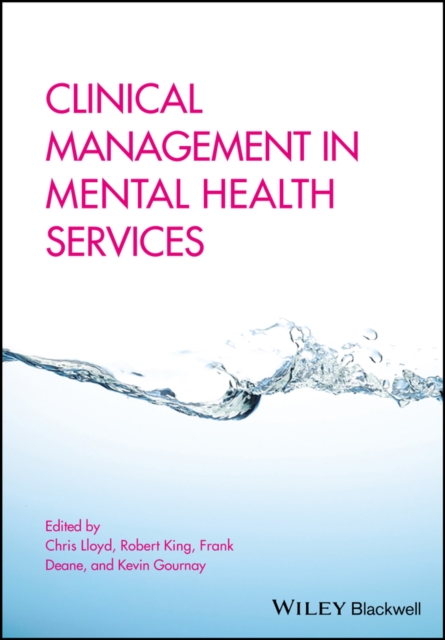
Clinical Management in Mental Health Services
Clinical Management in Mental Health Services is a practical guide to the day to day operational management of mental health teams.It explores both the theoretical aspects of management plus strategies for dealing with the wide range of management issues faced by managers working in mental health.
eBook

Strengthening Care Delivery in Primary Care Facilities: Perspectives of Facility Managers on the Immunization Program in Kenya
Primary healthcare facility managers (PHFMs) occupy a unique position in the primary healthcare system, as the only cadre combining frontline clinical activities with managerial responsibilities. Often serving as 'street-level bureaucrats,' their perspectives can provide contextually relevant information about interventions for strengthening primary healthcare delivery, yet such perspectives are under-represented in the literature on primary healthcare strengthening. Our objective in this study was to explore perspectives of PHFMs in western Kenya regarding how to leverage human resource factors to improve immunization programs, in order to draw lessons for strengthening of primary healthcare delivery.
We employed a sequential mixed methods approach. We conducted in-depth interviews with key informants in Kakamega County. Emergent themes guided questionnaire development for a cross-sectional survey. We randomly selected 94 facility managers for the survey which included questions about workload, effects of workload on immunization program, and appropriate measures to address workload effects. Participants provided self-assessment of their general motivation at work, their specific motivation to ensure that all children in their catchment areas were fully immunized, and recommendations to improve motivation. Participants were asked about frequency of supervisory visits, supervisor activities during those visits, and how to improve supervision.
The most frequently reported consequences of high workload were reduced accuracy of vaccination records (47%) and poor client counseling (47%). Hiring more clinical staff was identified as an effective remedy to high workload (69%). Few respondents (20%) felt highly motivated to ensure full immunization coverage and only 13% reported being very motivated to execute their role as a health worker generally. Increasing frequency of supervisory visits and acting on the feedback received during those visits were mostly perceived as important measures to improve program effectiveness.
Besides increasing the number of staff providing clinical care, PHFMs endorsed introducing some financial incentives contingent on specified targets and making supervisory visits meaningful with action on feedback as strategies to increase program effectiveness in primary healthcare facilities in Kenya. Targeting health worker motivation and promoting supportive supervision may reduce missed opportunities and poor client counseling in primary healthcare facilities in Kenya.
Journal Article