
Catalogue Search | MBRL


Are you sure you want to remove the book from the shelf?

{{itemTitle}}
1,362
result(s) for
"Personnel management Japan."
Sort by:


Changes in Japanese Employment Practices
Japan’s employment practices were long considered a cornerstone to its economic success. However, the reversal in economic performance during the 1990s altered the positive perception and inspired major adaptations like the rise in performance-related pay (‘seikashugi’) and non-regular employment. This book presents case-studies of the adaptations in personnel management by major Japanese firms. It highlights the diversity, the stability and the considerations behind the adaptations that are implemented by these firms. Drawing on insights from institutional theory, it shows how factors such as legitimacy and institutional interlock have guaranteed an important continuity in employment practices. It discusses how the adaptations have not actually replaced the existing practices but have been shaped by them and, as a consequence, the result may not be as revolutionary as once expected but is likely to last. Furthermore, it argues that the employment practices remain specifically Japanese and that expectations of convergence have so far proved misplaced.
Overall, this book is a valuable contribution to the study of employment issues. It provides an effective framework to analyse the ongoing developments in Japanese employment practices and demonstrates that Japanese developments continue to offer important insights for human resource management and labour market institutionalisation in general.
\"All in all, Keizer has done an excellent job in presenting...a balanced set of conclusions, skilfully avoiding the overblown rhetoric of previous studies that have hailed a complete transformation or collapse in lifetime employment in Japan. The book deserves to be read by scholars from the fields of management studies, economics, and sociology who are interested in contemporary employment practices in developed countries, and is an excellent example for graduate students who are themselves engaged in firm level field work. In short, this book is a welcome dose of good sense on a subject that routinely requires a grounding in real world data analysis in order to retain balance. I look forward to reading more from Keizer as he deepens and extends this research.\" -- Peter Matanle, Relations industrielles / Industrial Relations – 66-4, 2011
Arjan B. Keizer is a Lecturer in International Human Ressource Management and Comparative Industrial Relations at Manchester Business School, UK.
1. Reconsidering Japanese Employment Practices 2. The Dialectics of Change 3. The Logic of Japanese Employment Practices 4. Adjustment of Employment and Employment Practices 5. The Automobile Industry 6. The Electronics Industry 7. The Construction Industry 8. The Retail Industry 9. Seikashugi: Change within the Internal Labour Market 10. Non-Regular Employment: Change beyond the Internal Labour Market 11. Institutional Change in Japanese Employment Practices References
eBook

Challenges of Human Resource Management in Japan
Human resource management systems differ across corporations around the world. Japan has unique characteristics that create specific challenges for HRM and there is currently a lack of research focusing on Japanese HR issues available to westerners. This book examines the major challenges and dilemmas in human resource management as Japan's industrial society continues its resurgence in the global arena. The first part of the book deals with Japanese HRM from an international perspective, analysing the overall structure of Japanese HRM systems and comparing these with current international systems. The second part of this book looks at Japanese HRM from a domestic perspective and as such covers the micro issues of HRM practice in Japan.
Written by a leading team of HRM experts from Japan, the UK, France, Australia and Canada, this book will be of interest to anyone interested in HRM in Japan, and international HRM more generally.
\"This book should be of keen interest to those who teach international HRM: several chapters offer a reliable guide to researchers embarking on HRM research in Japan. Furthermore, and in line with many of the insights presented in this book, this book should inform researchers whose focus is on HRM and the management of change in contexts influenced by the decisions made by HRM practitioners in Japan – contexts that are and remain global. Correspondingly, this book should attract an equally global readership.\" - Keith Jackson, SOAS; dialogin – The Delta Intercultural Academy, January 2012
Introduction Ralf Bebenroth and Toshihiro Kanai Part 1: Japanese HRM from an International Perspective 2. Taking Stock of the Research on Evolving Relationships between Japanese Human Resource: Management Practices and Firm Performance Sue Neila Bruning 3. Japanese Human Resource Management: Inspirations from Abroad and Current Trends of Change Markus Pudelko and Anne Will Harzing 4. Expatriation and Performance Ralf Bebenroth and Li Donghao 5. Human Resource Management and Employment Systems in Asia: Directions of Change and New Challenges Philippe Debroux 6. Demystifying the relationship between intercultural adjustment and effectiveness in international assignments: reflections on Japanese expatriate managers Beatriz Maria Braga and Edson Kubo 7. Global Talent Management and Learning for the Future: Pressing Concerns and Opportunities for Growth for Japanese Multinationals Mary Yoko Part 2: Japanese HRM from a Domestic Perspective 8. Strategic Human Resource Management Research in the Japanese Context: Unique Opportunities for Theory Advancement Sekiguchi, Tomoki, Takeuchi, Norihiko and Takeuchi, Tomokazu 9. Psychological Contract in Japanese Companies: An Explorative Study on Contents, Fulfillment, and Breach of Contracts Yasuhiro Hattori 10. Cognitive framework for performance appraisal: An empirical study of narrative evaluations in a Japanese auto-company Kiyoshi Takahashi 11. Diversification of Employment Categories in Japanese Firms and its Funcitonality: A study based on the Human Resource Portfolio System Mitsutoshi Hirano 12. Quantum Leap Experiences for Leadership Development: Stories and Lessons of Japanese Top and Middle Managers Toshihiro Kanai and Yoichi Furano
Ralf Bebenroth is Professor of Economics and Business at Kobe University, Japan. Toshihiro Kanai is Professor of Organizational Behaviour at Kobe University, Japan.
eBook
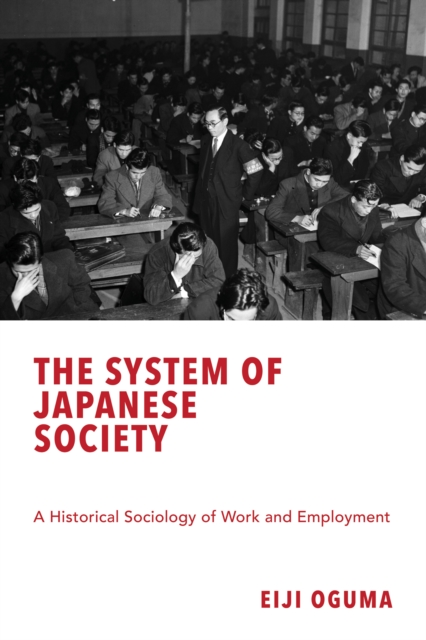
The System of Japanese Society
In developed countries, non-regular employment in the labor market is increasing and the gap between rich and poor is widening. Gender inequality in employment is also often an issue. Japan is no exception. In recent years, the dual structure of the employment market has become problematic. A unique systemic rigidity has created an employment environment that is so different between regular and non-regular employment, and between large and small enterprises, that it is difficult for employees to move up the hierarchy. This book has two main themes: first, statistically revealing the dual structure of employment that has been created by the Japanese-style employment system; and second, tracing the historical process to the formation of Japan' s unique employment practices under the influence of governmental bureaucracy and military culture. This process is compared with the history of employment systems in the US and Europe. Through this book, readers will gain a deeper understanding of the issues facing Japan by learning how the system of Japanese society, including employment, education, social security and welfare, and gender inequality, was established historically.
eBook

Foreign Competition in Japan
The Japanese market is an attractive and challenging one. It is essential for foreign companies wanting to establish a growing presence to build operations which are suited to the Japanese. This book focuses on three particular areas: the labour market, the workplace and the market-place. The management of human resources plays an important part in a company’s image in the market. A strong corporate presence is vital to inspire confidence among consumers and the career opportunities and job stability offered by a company reflect its strength. Using case studies and covering topics such as the labour market, corporate organization, decision making and business transactions, this book outlines the way the Japanese organize their companies; it analyzes the approach of foreign firms and stresses the strategies they should adopt to enhance their competitive image. The comprehensive analysis of the Japanese work environment together with its focus on foreign competition will make the book essential reading for all those interested in international business, human resources, marketing and Japanese studies.
Part 1: The Labour Market 1. Society and Economy 2. Employment and Hiring 3. Work and its Environment Part 2: The Workplace 4. Work Compensation 5. Corporate Organization 6. Career in Management 7. Decision-making Part 4:The Marketplace 8. Business Transactions 9. Competitive Quality 10. Corporate Presence and the Foreign Firm
eBook

Changes in Japanese employment practices
Examines changing employment practices in Japan, focusing on the position of the Japanese firm that is confronted with the need to address the changing economic circumstances while also maintaining some fit with the wider set of institutions that govern the Japanese labour market
Book

Internal Labour Markets in Japan
Japanese labour market practices have attracted considerable attention in the West for two reasons. Firstly, innovative human resource management (HRM) is responsible for the development of competitive industrial sectors. Secondly, inner flexibility of the labour market has produced low unemployment and wage flexibility. This study, originally published in 2000, provides a thorough investigation of the distinctive features of Japanese internal labour markets (ILM) and occupational labour markets (OLM), closely analyses important changes in ILM and considers future developments. It combines a mixture both of descriptive and of theoretical and econometric work and builds on the authors' wel- known previous research in this area. Also contains a detailed case study and the econometric analysis of HRM policies used by a large Japanese firm. Although the focus is on Japanese ILM, international comparisons are made throughout, mainly with reference to Europe and the United States.
eBook


Changes in Japanese employment practices : beyond the Japanese model
1. Reconsidering Japanese employment practices -- 2. The dialectics of change -- 3. The logic of Japanese employment practices -- 4. Adjustment of employment and employment practices -- 5. The automobile industry -- 6. The electronics industry -- 7. The construction industry -- 8. The retail industry -- 9. Seikashugi -- 10. Non-regular employment -- 11. Institutional change in Japanese employment practices.
Book

Challenges of human resource management in Japan
Human resource management systems differ across corporations around the world. Japan has unique characteristics that create specific challenges for HRM and there is currently a lack of research focusing on Japanese HR issues available to westerners. This book examines the major challenges and dilemmas in human resource management as Japan's industrial society continues its resurgence in the global arena. The first part of the book deals with Japanese HRM from an international perspective, analysing the overall structure of Japanese HRM systems and comparing these with current international sys
Book