
Catalogue Search | MBRL


Are you sure you want to remove the book from the shelf?

{{itemTitle}}
3,028
result(s) for
"Pet owners."
Sort by:


The Concerns, Difficulties, and Stressors of Caring for Pets during COVID-19: Results from a Large Survey of U.S. Pet Owners
Pets may be a positive presence for their owners during the Coronavirus Disease 2019 (COVID-19) pandemic. However, it is pertinent to identify the hardships associated with pet ownership. We conducted a large-scale survey of U.S. pet owners (n = 2254) in spring and summer 2020 to assess the ways that relationships with pets impacted life during COVID-19. We used thematic analysis to analyze 3671 open-ended responses to three prompts. Reported concerns fell into three major categories: (1) pet-focused (meeting needs of pets; procuring supplies; accessing veterinary care; new and emerging behavioral issues; fate of the pet if owner becomes ill; general safety and well-being), (2) human-focused (issues with working from home; well-being and mental health; balancing responsibilities), and (3) household-focused (disease spread; economic issues). Quantitative analyses showed that the owner’s strength of attachment to their pet, economic resources, and relationship status were associated with the types of concerns expressed. Results from this study indicate that pet owners experienced unique hardships related to changes in everyday life from the COVID-19 pandemic. These hardships should be considered alongside the potential benefits found in other studies in order to manage pet owner expectations, prevent pet relinquishment, and more fully understand multifaceted human-companion animal relationships.
Journal Article

Support your local pug
When a break-in at the Pet Palace robs Sue Patrick of more than her beauty sleep, she intends to tidy her ransacked doggy daycare and spa before making any rash decisions. But after Sue abandons her better instincts to rescue a petrified pug stranded at a lighthouse in the Delaware Bay later that morning, shes lured off mainland Lewes long enough for a freshly murdered body to get dumped in her driveway . . . Aided by Lady Anthea Fitzwalter, her practically royal business partner from across the pond, Sue sniffs out clues about the yappy pug with a complicated history and the old car spotted at both crime scenes in hopes of IDing the culprit. As the investigation leads them back to the bay, the ladies soon find themselves immersed in a case trickier than a canine agility course and chasing after a well-groomed killer who will do anything to maintain a perfect reputation . . . \" -- publisher.
Book

Advancing pet care through technology: An evaluation of the LINE-based VET PROMPT notification system
Objective: This study evaluated the effectiveness of the VET PROMPT notification, accessed via the LINE Application Official Account (LAOA). Materials and Methods: In enhancing communication between veterinarians and pet owners. By leveraging pets online, it offers a convenient and cost-effective solution for pet owners to receive timely and pertinent veterinary information, appointment notifications, and disease prevention guidance for their pets. The research involved administering a satisfaction questionnaire to pet owners who subscribed to the LAOA–VET PROMPT group and analyzing responses using statistical measures such as percentage, mean, standard deviation, and one-way ANOVA. Results: Findings revealed high levels of satisfaction among users, particularly with the system’s responsiveness and the completeness and accessibility of online pet healthcare. Furthermore, the study discovered significant variations in satisfaction levels based on the type of pet owned, indicating that the specific needs and preferences of different pet owner groups uniquely influence their satisfaction with the VET PROMPT. Conclusion: Overall, the integration of automatic notifications into pet owners’ mobile devices significantly enhanced the management and care of pets through streamlined communication.
Journal Article

Lost in the storm
\"Ella's kitten, Fluff loves to play outside especially when it's snowing. Suddenly, a blizzard sets in, and Fluff can't find her way home. Will Ella ever be reunited with her kitten?\"--Page [4] of cover.
Book

A cross-sectional study of owner-reported health in Canadian and American cats fed meat- and plant-based diets
Background
Cats, being obligate carnivores, have unique dietary requirements for nutrients most commonly found in dietary ingredients of animal origin. As such, feeding a diet devoid of animal-derived ingredients has been postulated as a possible cause of nutrient imbalances and adverse health outcomes. A small proportion of cat owners feed strictly plant-based diets to the cats in their care, yet the health and wellness of cats fed these diets has not been well documented.
Results
A total of 1325 questionnaires were complete enough for inclusion. The only exclusion criterion was failure to answer all questions. Most cats, 65% (667/1026), represented in the survey were fed a meat-based diet and 18.2% (187/1026) were fed a plant-based diet, with the rest fed either a combination of plant-based with meat-based (69/1026, 6.7%) or indeterminable (103/1026, 10%). Cat age ranged from 4 months to 23 years, with a median of 7 years, and was not associated with diet type. No differences in reported lifespan were detected between diet types. Fewer cats fed plant-based diets reported to have gastrointestinal and hepatic disorders. Cats fed plant-based diets were reported to have more ideal body condition scores than cats fed a meat-based diet. More owners of cats fed plant-based diets reported their cat to be in very good health.
Conclusions
Cat owner perception of the health and wellness of cats does not appear to be adversely affected by being fed a plant-based diet. Contrary to expectations, owners perceived no body system or disorder to be at particular risk when feeding a plant-based diet to cats. This study collected information from cat owners and is subject to bias, as well as methodological limitations. Further research is warranted to determine if these results are replicable in a prospective investigation.
Journal Article

Norman, speak!
After a family adopts a dog from a local shelter, they cannot understand why he doesn't respond to commands, until a chance encounter in the dog park reveals that their new dog only understands Chinese.
Book
The Relationship Between Attachment to Pets and Mental Health and Wellbeing: A Systematic Review
While pet ownership is sometimes associated with better mental health, research on this relationship has been inconsistent. Some researchers have considered what factors may impact this relationship, such as owners’ attachment to their pets. The aim of this systematic review was to investigate how attachment to pets relates to owner mental health and wellbeing. This review followed PRISMA guidelines. Searches were conducted using PsychInfo, Scopus and Google Scholar. Any peer-reviewed empirical studies, in English, investigating attachment to pets and mental health and wellbeing outcomes, were included. Of the 116 included studies, 15 studies found that higher attachment was associated with better mental health, 22 studies found that higher attachment was associated with worse mental health, 36 studies found mixed results and 33 studies found no significant relationship. Having a stronger attachment to one’s pet tended to be associated with better mental health when investigating outcomes in children, and when investigating outcomes related to wellbeing. Stronger attachment tended to be associated with worse mental health when investigating mental health symptomology (e.g., depression and anxiety). It may also be influenced by the owner’s relationships with other people. Due to the cross-sectional design used by studies in this review, we cannot infer the direction of causality for the relationship between attachment to pets and mental health. Results indicate that having a strong attachment to one’s pet is not necessarily associated with better mental health and wellbeing. Future longitudinal research is needed to better understand how attachment to pets affects mental health, and what factors may influence this relationship.
Journal Article

The trouble with mistletoe
\"Willa Davis is wrangling puppies when Keane Winters stalks into her pet shop with frustration in his chocolate-brown eyes and a pink bedazzled cat carrier in his hand. He needs a kitty sitter, stat. But the last thing Willa needs is to rescue a guy who doesn'�t even remember her\"--Page 4 of cover.
Book
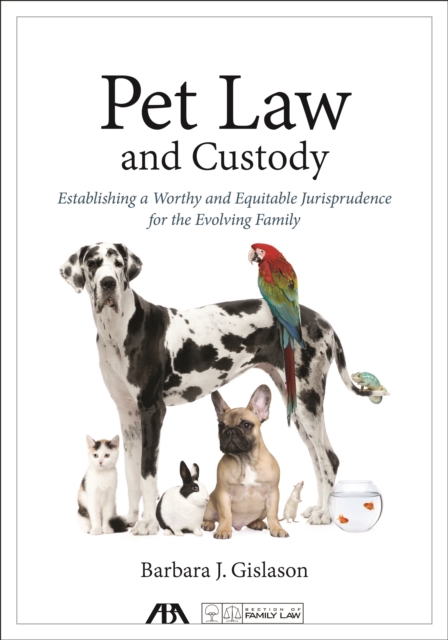
Pet Law and Custody
A valuable contribution to legal jurisprudence, this book examines in detail the progression of law that affects animal law in general, and the various aspects that particularly impacts pets and companion animals.
eBook