
Catalogue Search | MBRL


Are you sure you want to remove the book from the shelf?

{{itemTitle}}
82
result(s) for
"Peterborough"
Sort by:


Earning Respect
Earning Respect examines the lives of white and blue-collar women workers in Peterborough during this period and notes the emerging changes in their work lives, as working daughters gradually became working mothers.
eBook
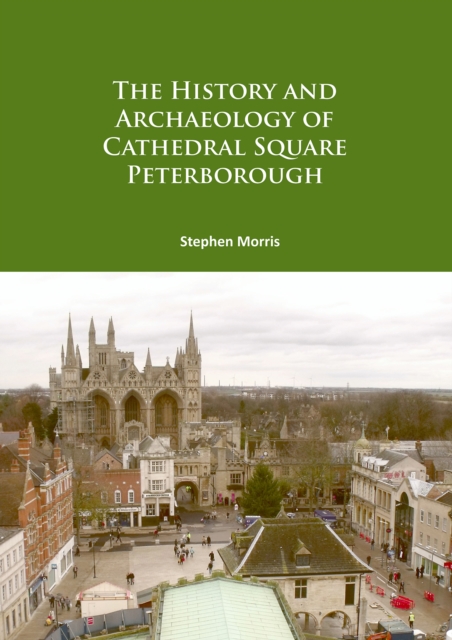
The History and Archaeology of Cathedral Square Peterborough
Reports on archaeological work undertaken ahead of an improvement scheme centred on Cathedral Square, the historic centre of Peterborough, by Northamptonshire Archaeology, now MOLA Northampton, commissioned by Opportunity Peterborough (Peterborough City Council).
eBook

Excavations at Stanground South, Peterborough
This volume is a report of archaeological excavations at Stanground South undertaken by MOLA between September 2007 and November 2009 on behalf of Persimmon Homes (East Midlands) Ltd and in accordance with a programme of works overseen by CgMs Heritage. The work involved five areas of set-piece excavation and a series of strip map and record areas.
eBook

Sustainable Banking: New Forms of Investing under the Umbrella of the 2030 Agenda
(1) Social Impact Bonds (SIBs) foster the relationships between public and private sectors while adding value to new forms of investment that are closely linked to Socially Responsible Investments (SRIs). In this context, Sustainable Developments Goals (SDGs) aim to strengthen global partnerships in order to achieve the 2030 Agenda. Sustainable banking should consider its role in both new responsible investment products and the 2030 Agenda. This study aims to: (i) estimate the ROI of SIBS, (ii) define a financial formulation and a measurement system, and (iii) explain the relationship between SIBs and SDGs. (2) This research analyzes SIBs from an SDG approach, and proposes a valuation model based on a financial options valuation methodology that clarifies the financial value of the world’s first SIB (Peterborough Prison, UK). (3) Findings suggest that investors expect to have a negative return of 16.48%, and that this expected loss may be compensated for by the short- and long-term positive impact of an intervention in society. (4) It is shown that SIBs provide an opportunity to reach SDG 17 and improve sustainable investment portfolios, while providing an opportunity to strengthen a company’s Corporate Social Responsibility policy and its corporate reputation.
Journal Article

Activity Fields and the Dynamics of Crime
Our current understanding of the role of the social environment in crime causation is at best rudimentary. Guided by the theoretical framework of Situational Action Theory, and using data from the ESRC financed Peterborough Adolescent and Young Adult Development Study (PADS+), this paper aims to propose how we can better theorise and study the role of the social environment, particularly the person and place interaction, in crime causation. We will introduce, and illustrate the usefulness of, a space-time budget methodology as a means of capturing people's exposure to settings and describing their activity fields. We will suggest and demonstrate that, combined with a small area community survey and psychometric measures of individual characteristics, a space-time budget is a powerful tool for advancing our knowledge about the role of the social environment, and its interaction with people's crime propensity, in crime causation. Our unique data allows us to study the convergence in time and space of crime propensity, criminogenic exposure and crime events. As far as we are aware, such an analysis has never before been carried out. The findings show that there are (a) clear associations between young people's activity fields and their exposure to criminogenic settings, (b) clear associations between their exposure to criminogenic settings and their crime involvement, and, crucially, (c) that the influence of criminogenic exposure depends on a person's crime propensity. Having a crime-averse morality and strong ability to exercise self-control appears to make young people practically situationally immune to the influences of criminogenic settings, while having a crime-prone morality and poor ability to exercise self-control appears to make young people situationally vulnerable to the influences of criminogenic settings. Adapted from the source document.
Journal Article

The Greater Peterborough City Centre Plan. Gordon Cullen and the cinematics of British Townscape
Gordon Cullen (1914−1994) was a key figure in 20th-century urban design. If Cullen's contribution in promoting the Townscape's Architectural Review agenda is well known, his career as a private consultant and his involvement in innumerable British redevelopment plans has not still been sufficiently investigated. Furthermore, his archive at the University of Westminster is almost entirely unstudied, leaving a significant gap in understanding his broader influence on urban development. This paper addresses this omission focusing on The Greater Peterborough City Plan (1971). The research employs archival investigation of Cullen's reports, sketches, and drawings, alongside site visits, photographic documentation, and visual analysis of present-day urban spaces. The findings highlight Cullen's distinctive ability to capture lived experience through sequential sketches. His Peterborough project demonstrates that modernisation and new buildings can coexist with historic character, showing that urban development, when thoughtfully conceived, can reinforce a sense of place.
Journal Article
Activity Fields and the Dynamics of Crime: Advancing Knowledge About the Role of the Environment in Crime Causation
Our current understanding of the role of the social environment in crime causation is at best rudimentary. Guided by the theoretical framework of Situational Action Theory, and using data from the ESRC financed Peterborough Adolescent and Young Adult Development Study (PADS+), this paper aims to propose how we can better theorise and study the role of the social environment, particularly the person and place interaction, in crime causation. We will introduce, and illustrate the usefulness of, a space—time budget methodology as a means of capturing people's exposure to settings and describing their activity fields. We will suggest and demonstrate that, combined with a small area community survey and psychometric measures of individual characteristics, a space—time budget is a powerful tool for advancing our knowledge about the role of the social environment, and its interaction with people's crime propensity, in crime causation. Our unique data allows us to study the convergence in time and space of crime propensity, criminogenic exposure and crime events. As far as we are aware, such an analysis has never before been carried out. The findings show that there are (a) clear associations between young people's activity fields and their exposure to criminogenic settings, (b) clear associations between their exposure to criminogenic settings and their crime involvement, and, crucially, (c) that the influence of criminogenic exposure depends on a person's crime propensity. Having a crime-averse morality and strong ability to exercise self-control appears to make young people practically situationally immune to the influences of criminogenic settings, while having a crime-prone morality and poor ability to exercise self-control appears to make young people situationally vulnerable to the influences of criminogenic settings.
Journal Article

Quantitative geomorphological analysis of drumlins in the peterborough drumlin field, ontario, canada
Drumlins are enigmatic subglacial landforms that have been interpreted to form by a number of processes, including incremental accumulation of till, erosion of previously deposited sediment, catastrophic meltwater floods, and sediment deformation. However, relatively little is known about the controls on drumlin formation, such as spatially variable glacial processes or substrate characteristics, and how these controls may be identified from variations in drumlin morphology within a single drumlin field. This paper explores a computational method that allows identification of drumlins and extraction of their morphological characteristics from existing topographic digital data for a portion of the eterborough drumlin field in ntario, anada. Spatial and non-spatial analysis of the form and distribution of drumlins across the study area identifies drumlin characteristics such as size, elongation ratio, symmetry and long axis orientation and shows that drumlins are not randomly distributed across the region and their form characteristics have distinct regional trends. Kernel density analysis is used to identify the regional trends in drumlin characteristics. Factors that appear to influence the form and distribution of drumlins in the study area include sediment thickness, length of time beneath the ice, ice velocity and direction of ice movement. The distribution of particularly well developed asymmetric and elongate drumlins coincides with the location of a broad bedrock low and is interpreted to identify the former location of a fast-flowing ice stream.
Journal Article

EXCEPTIONAL ACCUMULATIONS OF STATOLITHS IN ASSOCIATION WITH THE CHRISTIAN MALFORD LAGERSTÄTTE (CALLOVIAN, JURASSIC) IN WILTSHIRE, UNITED KINGDOM
In the shell-rich, laminated clays of the Phaeinum Subzone (Athleta Zone, upper Callovian, Middle Jurassic) of the Peterborough Member of the Oxford Clay Formation, large numbers of statoliths and otoliths have been recovered. This apparent mass mortality is associated with the Christian Malford Lagerstätte in which there is exceptional, soft-bodied preservation of coleoid fossils. Statoliths are the aragonitic ‘stones' that are found in the fluid-filled cavities (or statocysts) within the cartilaginous head of all modern and probably many fossil coleoids. Jurassic statoliths are largely undescribed and there are no known genera or species available to aid their classification. Otoliths, which may be of somewhat similar appearance, are the aragonitic stato-acoustic organs of bony (teleost) fish. These are more familiar to micropaleontologists and have a better known, though limited, fossil record. The abundance of statoliths in the Phaeinum Subzone at Christian Malford may indicate a mass mortality of squid that extends over some 3 m of strata and, therefore, a considerable interval of time. This has been tentatively interpreted as a record of a breeding area (and subsequent death) of squid-like cephalopods over an extended period of time rather than a small number of catastrophic events.
Journal Article