
Catalogue Search | MBRL


Are you sure you want to remove the book from the shelf?

{{itemTitle}}
309
result(s) for
"Petroleum industry and trade Persian Gulf States."
Sort by:


Oil, Industrialization & Development in the Arab Gulf States
Were oil supplies everlasting and the demand for oil strong and continuous, economic diversification in the Gulf would be pointless. However oil reserves are finite and non-renewable and the world demand for oil from the Gulf region is simply not stable. Collectively the countries of the Gulf face the striking prospect that unless priorities and plans are set with care the gestation period of their economic development may be longer than the expected life of their hydrocarbon resources. This book examines just that threat. It considers the opportunities available to the Gulf states for accumulating sufficient productive capital in the non-oil sectors of their economy to offset the drawing down of oil reserves. The book pays particular attention to the possibilities of development through cooperation not only within the Gulf Cooperation Council but also within the larger Arab region and the Third World as a whole. It concludes with a critical review of the main challenges that these economies are facing and are likely to face in the near future with special emphasis on their major problems and failures.
First published in 1984.
eBook


Challenged Hegemony: The United States, China, and Russia in the Persian Gulf
Few issues in international affairs and energy security animate thinkers more than the classic topic of hegemony, and the case of the Persian Gulf presents particularly fertile ground for considering this concept. Since the 1970s, the region has undergone tumultuous changes, with dramatic shifts in the diplomatic, military, and economic roles of the United States, China, and Russia. In this book, Steve A. Yetiv and Katerina Oskarsson offer a panoramic study of hegemony and foreign powers in the Persian Gulf, offering the most comprehensive, data-driven portrait to date of their evolving relations. The authors argue that the United States has become hegemonic in the Persian Gulf, ultimately protecting oil security for the entire global economy. Through an analysis of official and unofficial diplomatic relations, trade statistics, military records, and more, they provide a detailed account of how U.S. hegemony and oil security have grown in tandem, as, simultaneously, China and Russia have increased their political and economic presence. The book sheds light on hegemony's complexities, and challenges and reveals how local variations in power will continue to shape the Persian Gulf in the future.
eBook

Collaborative colonialism : the political economy of oil in the Persian Gulf
This book is an analysis of how oil has affected governance and human, political, and economic development in the countries of the Persian Gulf and shaped these countries' relations with the rest of the world.
eBook

Les Emirats du Golfe, au défi de l'ouverture : le Koweït, le Bahreïn, le Qatar et les Emirats Arabes Unis
\"Les Émirats du Golfe, au défi de l'ouverture\" is a comprehensive synthesis of the rapid modernization and strategic shifts within Kuwait, Bahrain, Qatar, and the United Arab Emirates. Authored by Alexis Normand, a specialist in public policy within the Gulf, the work challenges the reductive \"rentier state\" cliché. It argues that the transformation of these desert economies into ultra-modern City-States is driven not just by oil, but by deliberate choices favoring market economics, social tolerance, and global integration. The volume provides a critical look at how these monarchies navigate the \"paradox of openness\"—attempting to adopt Western-style modernity and liberal markets while preserving their traditional political structures and Islamic identity.
BOOK

The Arab Gulf States and Japan
During the 1970s and ‘80s economic relations between the Arab Gulf States and Japan grew enormously. Approximately 65% of Japan’s oil requirements were met from Arab Gulf resources. However, although Japanese imports of Arab oil comprise the major component of trade, Arab imports of Japanese goods are also increasing sharply. The seven Arab Gulf countries, represented by the Petroleum Information Committee accounted for 8% of Japan’s total exports. This book explores the various avenues of economic co-operation that have developed between Japan and the Gulf States both in energy and other areas. It considers the measures that have been taken to protect the security of oil supply. It reports Japan’s co-operation in the development of the petroleum industry in the Arab Gulf States. The book also examines the future prospects for economic, technological and political co-operation between Japan and the Arab Gulf States.
1. Short-term and Medium-term Oil Price Movements Abdullah El-Kuwaiz 2. Energy Policy in Japan: Security of Oil Supply Toyoaki Ikuta 3. The Security of Oil Supplies: Prevalent Views Among Oil Consumers and Producers Abdulaziz Al-Sowayegh and Walid Sharif 4. Oil Price and Economics/Market Competition in Japan K Takahashi 5. The Role of Arab Gulf States in International Development Assistance Bader Al-Humaidhi 6. The Role of Scientific Research in the Development of the Gulf States Adnan Shihab-Eldin 7. Recent R&D Activities in Japan for the Refining and Utilisation of Residues Chisato Takeuchi 8. Japan’s Co-operation for Petroleum Industry Development in the Arab Gulf States Keiji Natori 9. Energy and Development Problems: Prospects for Co-operation between Arab Gulf Countries and Japan Adnan Y Almeer 10. Economics of Petrochemical Industries in Japan Tokuji Watanabe 11 Future Prospects for Alternative Sources of Energy M A Hassanain 12. Energy in Japan: The Outlook for Nuclear, Gas and Coal as Sources of Energy Susumu Yoda 13. The Development of New Energy in Japan Shigeo Tagawa 14. The GCC and Japan: Past, Present and Future Relations: An Overview H A Al-Ebraheem 15 Economic co-operation by the Oil Consuming Countries Toshio Shishido
eBook
Geostrategic solutions to oil vulnerabilities in the Gulf Region
For the foreseeable future, oil and gas will continue to be major determining geostrategic factors in the process of maintaining security and stability in the Arabian Gulf region. Oil vulnerabilities will continue to be a source of concern both in the region and abroad as long as fossil fuel sources occupy the largest share of the global energy mix. What is apparent, however, is that the largest international consumer of oil (the United States) has yet to devise a comprehensive solution to these vulnerabilities, and other countries are facing their own challenges in finding viable alternative options. This paper intends to explore new models of global governance in producer{u2013}consumer relations to ameliorate the adverse effects of oil vulnerabilities such as supply disruptions or peak oil scenarios. The paper will also seek to answer some vital questions regarding energy security, encompassing oil resource availability, reliability, affordability, and sustainability. In particular, it seeks to address the following questions, issues and concerns: Is there a clear strategic vision for overcoming oil vulnerabilities in the Arab Gulf? And if not, is there a need for one? How might major oil vulnerabilities involving transportation {u2018}choke points{u2019} and critical infra-structure be overcome (i.e. operational mechanisms)? To what extent do current geo-political strategies or alternative energy options represent realistic propositions? This requires a cost{u2013}benefit analysis: if fossil fuel sources are affordable, will there be viable long-term opportunities to achieve the energy diversification called for in strategic planning? What innovative strategies may be employed to overcome oil vulnerabilities in the region? Such strategies should be based on global governance and a well-structured protocol of inter-dependent partnerships between producers and consumers. Owing to the unpredictability of geopolitical events in general, and in the Middle East in particular, it is difficult to envision the creation of a sustainable energy security strategy to suit both producers and consumers. Nonetheless, it is vital that a dynamic and pragmatic strategy be formulated to avert or mitigate oil vulnerabilities{u2014}be it on a multilateral, bilateral or national level.
Book
America's Oil Wars
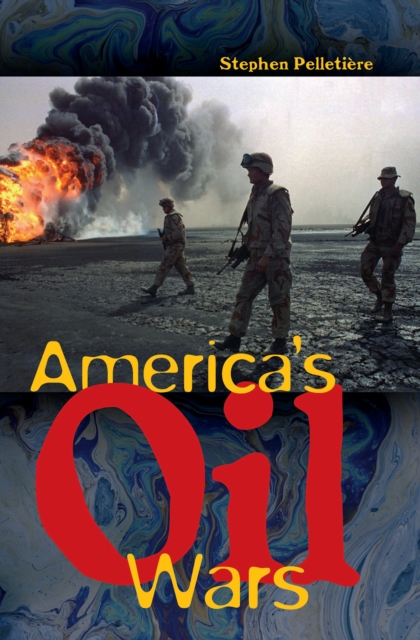
Why has the United States become involved in so many wars in the Middle East, and why just now? What explains the extraordinary disconnect between pre-war statements by the Bush Administration and the post-war reality? How much of U.S. intelligence was wrong, and why? Why did the Bush Administration ignore warnings by senior military commanders about the difficulties they would confront in trying to occupy Iraq? Why was there virtually no pre-war planning for administering Iraq once the war was successfully concluded? Pelletiere argues that, in going to war twice against Iraq and once against Afghanistan, the United States was seeking to put a lock on its future energy supplies. In neglecting diplomacy for so long in dealing with the Gulf States, Washington was practically compelled to use force to get what it wanted. Pelletiere explores the context of events that produced the attacks of September 11, 2001, the pretext for the United States' military move into the region. He debunks the Bush Administration's claim that the United States was beset by Islamic terrorists bent on destroying western civilization and set the stage for an examination of other possible motives. Next, he details the history of U.S. involvement in the region, beginning with the discovery of oil and the pioneering efforts of American and British companies to open the region to exploration. After the OPEC Revolution, he argues, the United States would allow itself to be drawn into an arms-supplying relationship with the Shah of Iran and the military-industrial complex would become hooked on subsidies from the Gulf monarchs. Finally, after discussing the First Gulf War and recent events in Afghanistan, Pelletiere contends that these conflicts and the current war in Iraq are really part of a greater struggle between North and South, a struggle that will have significant consequences for the future of the United States.
eBook