
Catalogue Search | MBRL


Are you sure you want to remove the book from the shelf?

{{itemTitle}}
614
result(s) for
"Petroleum pipelines Political aspects."
Sort by:


Material Politics
In Material Politics, author Andrew Barry reveals that as we are beginning to attend to the importance of materials in political life, materials has become increasingly bound up with the production of information about their performance, origins, and impact.
* Presents an original theoretical approach to political geography by revealing the paradoxical relationship between materials and politics
* Explores how political disputes have come to revolve not around objects in isolation, but objects that are entangled in ever growing quantities of information about their performance, origins, and impact
* Studies the example of the Baku-Tbilisi-Ceyhan oil pipeline – a fascinating experiment in transparency and corporate social responsibility – and its wide-spread negative political impact
* Capitalizes on the growing interdisciplinary interest, especially within geography and social theory, about the critical role of material artefacts in political life
eBook

The oil man and the sea : navigating the Northern Gateway
Kopecky relates his travels through the Great Bear Rainforest and into the controversy surrounding the building of the Northern Gateway pipeline.
Book

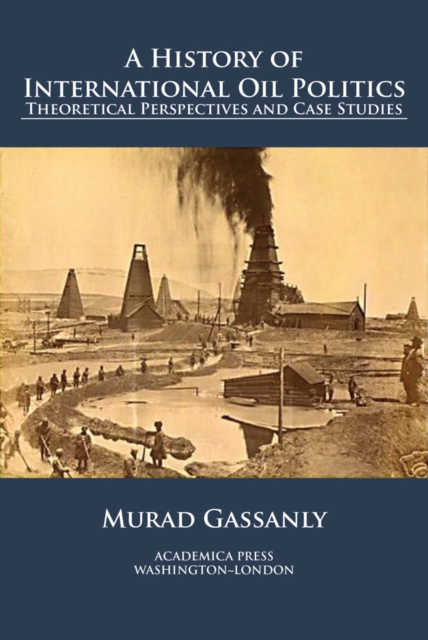
A history of international oil politics
A History of International Oil Politicsis both an argument for multi-theoretical pluralism and a proposal for a theory-synergetic approach in international relations. Murad Gassanly, a distinguished international relations scholar and rising British politician, explores how international relations paradigms could be utilized in approaching the vital field of international oil politics, specifically historical issues of international energy politics and comparative case studies of energy transmission networks – the Baku-Tbilisi-Ceyhan Pipeline and the Southern Gas Corridor. This highly original study explores the historical timeline of global energy to demonstrate how a theory-synergetic analysis might offer a deeper and more holistic understanding. As an academic discipline, international relations now offers a maelstrom of competing epistemological, ontological, and normative contestations. Gassanly, however, argues that theoretical diversity has knowledge-producing and maximizing potential and that pluralism does not impede academic progress. Applying different theoretical models to oil politics reveals different realities, but the synergetic whole is greater than the sum of its constituent paradigmatic parts. Empirical convergences between theoretical accounts provides a broad analytical framework for active theoretical synergy.
eBook

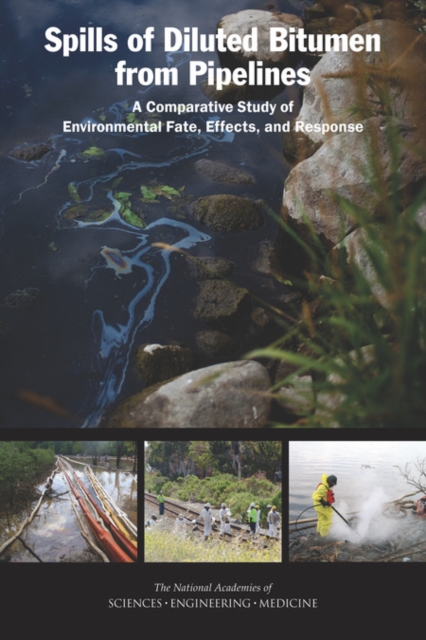
Spills of Diluted Bitumen from Pipelines
Diluted bitumen has been transported by pipeline in the United States for more than 40 years, with the amount increasing recently as a result of improved extraction technologies and resulting increases in production and exportation of Canadian diluted bitumen. The increased importation of Canadian diluted bitumen to the United States has strained the existing pipeline capacity and contributed to the expansion of pipeline mileage over the past 5 years. Although rising North American crude oil production has resulted in greater transport of crude oil by rail or tanker, oil pipelines continue to deliver the vast majority of crude oil supplies to U.S. refineries.
Spills of Diluted Bitumen from Pipelines examines the current state of knowledge and identifies the relevant properties and characteristics of the transport, fate, and effects of diluted bitumen and commonly transported crude oils when spilled in the environment. This report assesses whether the differences between properties of diluted bitumen and those of other commonly transported crude oils warrant modifications to the regulations governing spill response plans and cleanup. Given the nature of pipeline operations, response planning, and the oil industry, the recommendations outlined in this study are broadly applicable to other modes of transportation as well.
eBook

Export pipelines from the CIS region : geopolitics, securitization, and political decision-making
This timely collection offers fresh perspectives to the analysis of the 'New Great Game' the fight for access to the Caspian Sea region's energy resources. To date, the export of the Caspian crude oil and natural gas has only been assessed geopolitically, which oversimplifies the political dynamics of the region and neglects to acknowledge the Caspian countries as actors in their own right.
eBook

The Battle Over Oil Sands Access to Tidewater: A Political Risk Analysis of Pipeline Alternatives
La possibilité d'accroître, sur les marchés, l'offre de pétrole canadien provenant de sables bitumineux est de plus en plus contestée, les projets de nouveaux pipelines suscitant beaucoup de controverse. Dans cet article, je conçois un cadre d'analyse du risque politique dans ce domaine, et je l'applique à cinq projets de pipelines. Le risque politique lié aux projets d'infrastructures majeures est ainsi fonction : du nombre de droits de veto des institutions; du fait que les groupes d'opposition ont ou non un droit de veto; du fait qu'un projet peut ou non être réalisé grâce à l'utilisation d'infrastructures existantes; de l'importance des risques environnementaux; et de la répartition des risques et des avantages entre différents gouvernements. Mes résultats montrent qu'un risque politique considérable est lié à chacun des cinq projets étudiés, mais que le type et l'ampleur de ce risque varient selon les projets. Market access for Canada's oil sands has been increasingly contested as proposals for new pipelines have become so controversial. This article develops a framework for political risk analysis and applies it to five pipeline proposals. The political risk to major infrastructure projects is a function of the number of institutional veto points; whether opposition groups have access to veto points; whether the project can take advantage of existing infrastructure; the salience of concentrated environmental risks; and the jurisdictional separation of risks and benefits. Each of the projects faces formidable political risks, but the risks vary in type and magnitude by project.
Journal Article

US turmoil, oil pipelines and a treason arrest
The week in science: 27 January–2 February 2017.
Journal Article