Catalogue Search | MBRL


Are you sure you want to remove the book from the shelf?

{{itemTitle}}
734
result(s) for
"Petroleum reserves Forecasting."
Sort by:


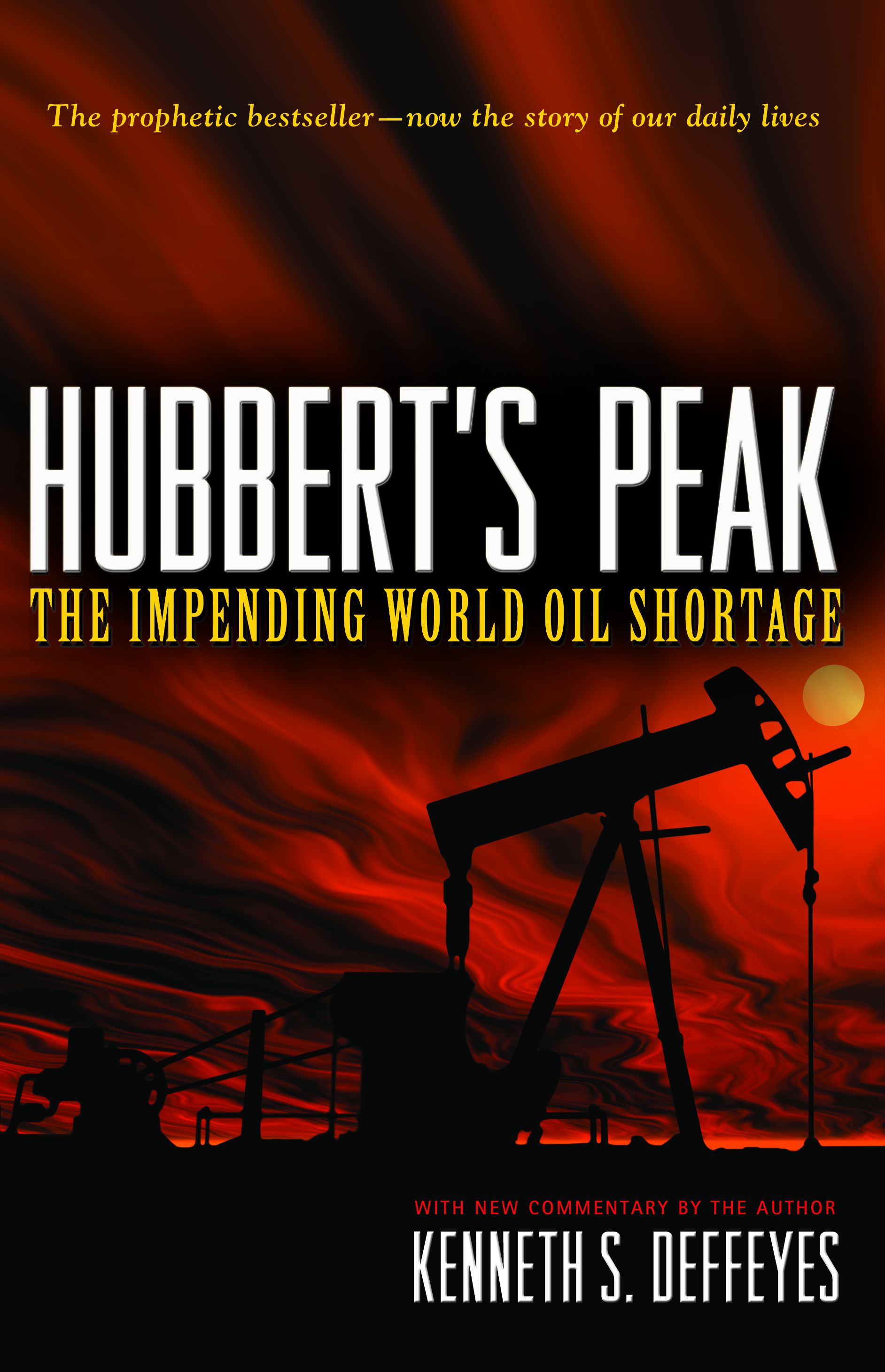
Hubbert’s peak
In 2001, Kenneth Deffeyes made a grim prediction: world oil production would reach a peak within the next decade--and there was nothing anyone could do to stop it. Deffeyes's claim echoed the work of geophysicist M. King Hubbert, who in 1956 predicted that U.S. oil production would reach its highest level in the early 1970s. Though roundly criticized by oil experts and economists, Hubbert's prediction came true in 1970.
In this updated edition ofHubbert's Peak, Deffeyes explains the crisis that few now deny we are headed toward. Using geology and economics, he shows how everything from the rising price of groceries to the subprime mortgage crisis has been exacerbated by the shrinking supply--and growing price--of oil. Although there is no easy solution to these problems, Deffeyes argues that the first step is understanding the trouble that we are in.
eBook

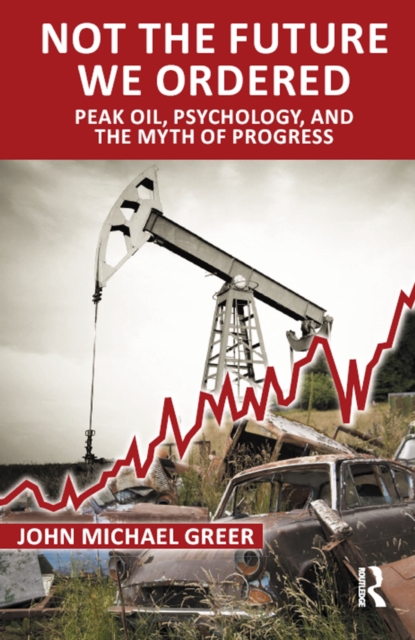
Not the Future we Ordered
For well over half a century, since the first credible warnings of petroleum depletion were raised in the 1950s, contemporary industrial civilization has been caught in a remarkable paradox: a culture more focused on problem solving than any other has repeatedly failed to deal with, or even consider, the problem most likely to bring its own history to a full stop. The coming of peak oil-the peaking and irreversible decline of world petroleum production-poses an existential threat to societies in which every sector of the economy depends on petroleum-based transport, and no known energy source can scale up extensively or quickly enough to replace dwindling oil supplies. Not The Future We Ordered is the first study of the psychological dimensions of that decision and its consequences, as a case study in the social psychology of collective failure, and as an issue with which psychologists and therapists will be confronted repeatedly in the years ahead.
eBook

The future of fossil fuels
As debates about the effects of fossil fuels on our climate and foreign policy intensify, the question of just how much longer we can depend on this finite source of energy becomes more and more pressing. This selection from Hubbert's Peak, the leading book on the limits of our oil supply, forecasts what the future will bring for fossil fuels and what the alternatives are likely to be.
eBook
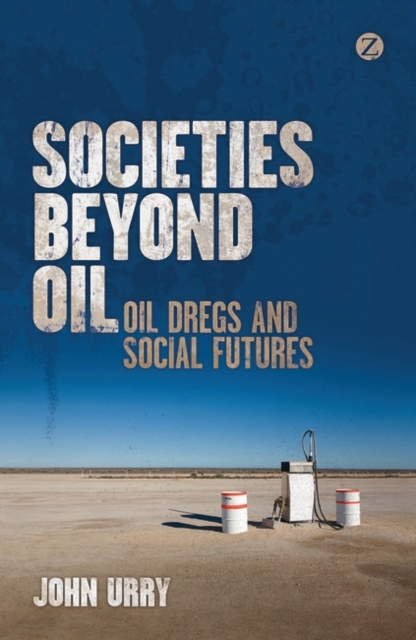
Societies beyond oil
In this groundbreaking book, John Urry envisions the future of an oil-dependent world facing energy descent. Without a large-scale plan B, how can the energizing of society possibly be going into reverse?.
eBook
Advanced Production Decline Analysis and Application
In recent years, production decline-curve analysis has become the most widely used tool in the industry for oil and gas reservoir production analysis. However, most curve analysis is done by computer today, promoting a \"black-box\" approach to engineering and leaving engineers with little background in the fundamentals of decline analysis. This book starts from the basic concept of advanced production decline analysis, and thoroughly discusses several decline methods, such as Arps, Fetkovich, Blasingame, Agarwal-Gardner, NPI, transient, long linear flow, and FMB. A practical systematic introduction to each method helps the reservoir engineer understand the physical and mathematical models, solve the type curves and match up analysis, analyze the processes and examples, and reconstruct all the examples by hand, giving way to master the fundamentals behind the software. An appendix explains the nomenclature and major equations, and as an added bonus, online computer programs are available for download.
eBook