
Catalogue Search | MBRL


Are you sure you want to remove the book from the shelf?

{{itemTitle}}
1,045
result(s) for
"Pharaohs."
Sort by:


The real King Tut
Provides little-known details about the life and accomplishments of Egypt's King Tut, including the fact that he had a clubfoot and cleft palate, among other health problems.
BOOK
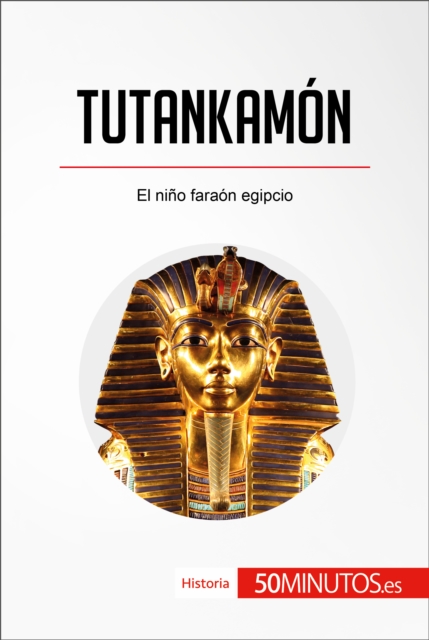
Tutankamón
Este libro es una guía práctica y accesible para saber más sobre Tutankamón, que le aportará la información esencial y le permitirá ganar tiempo. En tan solo 50 minutos, usted podrá: •Descubrir cómo transcurre la vida de Tutankamón, un niño de salud frágil que se convierte en faraón antes de cumplir los diez años y cuya corta vida se ve afectada por numerosas enfermedades
•Profundizar en sus principales logros, como la restauración de la religión politeísta en Egipto tras el reinado de culto monoteísta al rey Atón que impone su padre Akenatón
•Analizar las repercusiones que tiene para la historia y la arqueología el hallazgo de la tumba de Tutankamón, que se convierte en una figura célebre muy presente en la cultura popular SOBRE 50MINUTOS.ES | Historia 50MINUTOS.ES le ofrece las claves para entender rápidamente los principales acontecimientos históricos que cambiaron el mundo.Nuestras obras narran de forma rápida y eficaz una gran variedad de acontecimientos históricos clave de distintas épocas, desde la Antigua Grecia hasta la caída del muro de Berlín. ¡Descubra en un tiempo récord la historia que ha marcado el rumbo del mundo!
eBook

The Last Pharaohs
The history of Ptolemaic Egypt has usually been doubly isolated--separated both from the history of other Hellenistic states and from the history of ancient Egypt.The Last Pharaohs, the first detailed history of Ptolemaic Egypt as a state, departs radically from previous studies by putting the Ptolemaic state firmly in the context of both Hellenistic and Egyptian history. More broadly still, J. G. Manning examines the Ptolemaic dynasty in the context of the study of authoritarian and premodern states, shifting the focus of study away from modern European nation-states and toward ancient Asian ones. By analyzing Ptolemaic reforms of Egyptian economic and legal structures,The Last Pharaohsgauges the impact of Ptolemaic rule on Egypt and the relationships that the Ptolemaic kings formed with Egyptian society. Manning argues that the Ptolemies sought to rule through--rather than over--Egyptian society. He tells how the Ptolemies, adopting a pharaonic model of governance, shaped Egyptian society and in turn were shaped by it. Neither fully Greek nor wholly Egyptian, the Ptolemaic state within its core Egyptian territory was a hybrid that departed from but did not break with Egyptian history. Integrating the latest research on archaeology, papyrology, theories of the state, and legal history, as well as Hellenistic and Egyptian history,The Last Pharaohsdraws a dramatically new picture of Egypt's last ancient state.
eBook

There's a Pharaoh in our bath!
Ancient Egyptian Pharaoh Sennapod is woken from his 4,000 year sleep by dastardly Egyptologists, Grimstone and Jelly, searching for his hidden treasure map. But Sennapod and his friends the Lightspeed family have plans of their own!

Killing Pharaohs in Exodus: The Anonymity of the Egyptian Kings, the Deconstruction of Their Individuality, and the Egyptian Practice of IDamnatio Memoriae/I
Scholars have understood the anonymity of the Egyptian kings in Exodus in various ways. Some argue that the Israelite author intentionally anonymized the foreign kings for possible rhetorical effects. Others believe that the anonymity was a simple case of inadvertent forgetting. Although these approaches have merit in contributing to a more robust understanding of the anonymity of Pharaohs, a different approach may also have something to offer in grasping a fuller understanding of the absence of the Pharaonic names. In this regard, this article seeks to examine the anonymity in conversation with the Egyptian practice of damnatio memoriae (i.e., damnation of memory). According to this method, the proto-Israelite transmitters of the Exodus traditions deliberately obliterated the names of the Egyptian kings for the purpose of terminating their existence and memory from the proto-Israelite community.
Journal Article

Who was King Tut?
Explains the life and times of the Egyptian ruler King Tut, covering the story of the tomb's discovery, as well as myths and stories of mummy curses.
BOOK
Killing Pharaohs in Exodus: The Anonymity of the Egyptian Kings, the Deconstruction of Their Individuality, and the Egyptian Practice of Damnatio Memoriae
Scholars have understood the anonymity of the Egyptian kings in Exodus in various ways. Some argue that the Israelite author intentionally anonymized the foreign kings for possible rhetorical effects. Others believe that the anonymity was a simple case of inadvertent forgetting. Although these approaches have merit in contributing to a more robust understanding of the anonymity of Pharaohs, a different approach may also have something to offer in grasping a fuller understanding of the absence of the Pharaonic names. In this regard, this article seeks to examine the anonymity in conversation with the Egyptian practice of damnatio memoriae (i.e., damnation of memory). According to this method, the proto-Israelite transmitters of the Exodus traditions deliberately obliterated the names of the Egyptian kings for the purpose of terminating their existence and memory from the proto-Israelite community.
Journal Article