
Catalogue Search | MBRL


Are you sure you want to remove the book from the shelf?

{{itemTitle}}
5,259
result(s) for
"Pharmacology history."
Sort by:


How does pharmacological and toxicological knowledge evolve? A case study on hydrogen cyanide in German pharmacology and toxicology textbooks from 1878 to 2020
Little is known about how pharmacological and toxicological knowledge evolves. The aim of this study was to investigate the changes in the presentation of the poison hydrogen cyanide in sixteen German-language pharmacology and toxicology textbooks from 1878 to 2020. The categories of structure, molecular mechanism of action, occurrence, effects, resorption, areas of application, lethal dose, acute symptoms of intoxication, treatment of hydrogen cyanide poisoning, and recommended therapeutic preparations were evaluated. The knowledge on the structure, lethal dosage, and occurrence of hydrogen cyanide has remained constant. In contrast, knowledge on molecular mechanism of action and recommended preparations of the poison has changed dramatically. Until 1944, the binding of hydrogen cyanide to hemoglobin was considered the mechanism of action, whereas from 1951 onwards, the interaction of hydrogen cyanide with the Fe
3+
of cytochrome oxidase was described. The number of preparations containing hydrogen cyanide decreased into obsolescence until 1951. The areas of application of hydrogen cyanide also show a change, as from 1919 onwards, mainly industrial areas of application of the poison are described instead of medical ones, and from 1951 onwards, criminalistic areas of application are also mentioned. Thus, pharmacological and toxicological knowledge develops non-linearly, molecular mechanism and uses being the most dynamic areas, whereas the knowledge about hydrogen cyanide’s chemical structure, lethal dose, and occurrence remained constant. Older pharmacology and toxicology textbooks were better than newer ones at discussing changes in scientific concepts. Pharmacology and toxicology textbooks also mostly failed to discuss the misuse of hydrogen cyanide (Zyklon B) during the Nazi regime, missing an important opportunity to showcase the ethical responsibility of pharmacology and toxicology. Thus, future pharmacology and toxicology textbooks should improve on discussing the development of pharmacological and toxicological concepts and the ethical responsibility of the discipline.
Journal Article
Bibliometric analysis of Naunyn–Schmiedeberg’s Archives of Pharmacology (1947–1974)
Naunyn–Schmiedeberg’s Archives of Pharmacology is the oldest pharmacological journal, founded in 1873. This bibliometric analysis examines the pivotal transformations within Naunyn–Schmiedeberg’s Archives of Pharmacology from 1947 to 1974, identifying significant shifts from a national focus to a period of extensive internationalization and English-language adoption. Employing Python and Beautiful Soup for data extraction from SpringerLink, the study maps the journal’s trajectory through post-World War II development, highlighting the decline in publication rates due to its initial emphasis on German-language articles predominantly from Germany. The transition towards English publications in the late 1960s is marked as a turning point, catalyzing an increase in global citations, publications, and recognition. This period witnesses the journal broadening its scientific horizon, with a notable emphasis on the cholinergic, adrenergic, and dopaminergic systems, reflecting their central role in the journal’s scientific discourse and citation prominence. The analysis demonstrates how shifting to English for academic publishing played a crucial role in revitalizing the journal’s impact and visibility on the international stage.
Journal Article
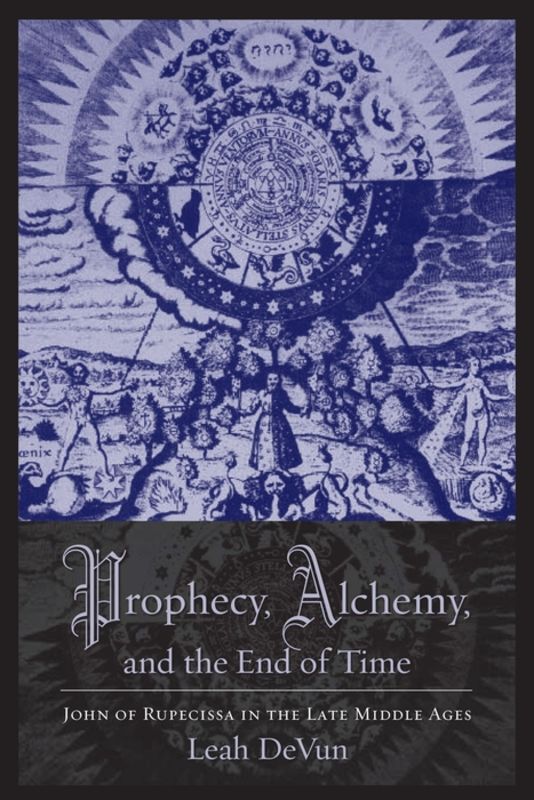
Prophecy, alchemy, and the end of time : John of Rupescissa in the late Middle Ages
In the middle of the fourteenth century, the Franciscan friar John of Rupescissa sent a dramatic warning to his followers: the last days were coming; the apocalypse was near. Deemed insane by the Christian church, Rupescissa had spent more than a decade confined to prisons—in one case wrapped in chains and locked under a staircase—yet ill treatment could not silence the friar's apocalyptic message.
Religious figures who preached the end times were hardly rare in the late Middle Ages, but Rupescissa's teachings were unique. He claimed that knowledge of the natural world, and alchemy in particular, could act as a defense against the plagues and wars of the last days. His melding of apocalyptic prophecy and quasi-scientific inquiry gave rise to a new genre of alchemical writing and a novel cosmology of heaven and earth. Most important, the friar's research represented a remarkable convergence between science and religion.
In order to understand scientific knowledge today, Leah DeVun asks that we revisit Rupescissa's life and the critical events of his age—the Black Death, the Hundred Years' War, the Avignon Papacy—through his eyes. Rupescissa treated alchemy as medicine (his work was the conceptual forerunner of pharmacology) and represented the emerging technologies and views that sought to combat famine, plague, religious persecution, and war. The advances he pioneered, along with the exciting strides made by his contemporaries, shed critical light on later developments in medicine, pharmacology, and chemistry.
eBook

Origin and evolution of high throughput screening
This article reviews the origin and evolution of high throughput screening (HTS) through the experience of an individual pharmaceutical company, revealing some of the mysteries of the early stages of drug discovery to the wider pharmacology audience. HTS in this company (Pfizer, Groton, USA) had its origin in natural products screening in 1986, by substituting fermentation broths with dimethyl sulphoxide solutions of synthetic compounds, using 96‐well plates and reduced assay volumes of 50‐100μl. A nominal 30mM source compound concentration provided high μM assay concentrations. Starting at 800 compounds each week, the process reached a steady state of 7200 compounds per week by 1989. Screening in the Applied Biotechnology and Screening Group was centralized with screens operating in lock‐step to maximize efficiency. Initial screens were full files run in triplicate. Autoradiography and image analysis were introduced for 125I receptor ligand screens. Reverse transcriptase (RT) coupled with quantitative PCR and multiplexing addressed several targets in a single assay. By 1992 HTS produced ‘hits’ as starting matter for approximately 40% of the Discovery portfolio. In 1995, the HTS methodology was expanded to include ADMET targets. ADME targets required each compound to be physically detected leading to the development of automated high throughput LC‐MS. In 1996, 90 compounds/week were screened in microsomal, protein binding and serum stability assays. Subsequently, the mutagenic Ames assay was adapted to a 96‐well plate liquid assay and novel algorithms permitted automated image analysis of the micronucleus assay. By 1999 ADME HTS was fully integrated into the discovery cycle. British Journal of Pharmacology (2007) 152, 53–61; doi:10.1038/sj.bjp.0707373
Journal Article
The Cold War in pharmacology: a bibliometric analysis of Berlin’s contributions to Naunyn‑Schmiedeberg’s Archives of Pharmacology (1947–1974)
After World War II, Berlin was divided into the West, controlled by The United States, the UK, and France, and the East, controlled by the Soviet Union, resulting in a Cold War for decades. This bibliometric study analyzes the influence of the Cold War on pharmacological research in Berlin by evaluating publication patterns in Naunyn-Schmiedeberg’s Archives of Pharmacology from 1947 to 1974 (
n
= 383). The publications highlight the political disparities in scientific output, exacerbated by the founding of the Free University of Berlin (FUB) as a countermeasure to Soviet repression, promoting academic freedom in West-Berlin. Researchers in West-Berlin published many more papers in Naunyn-Schmiedeberg’s Archives of Pharmacology than researchers in East-Berlin and received much more citations. West-Berlin adopted English as a scientific language much more rapidly than East-Berlin. West-Berlin and East-Berlin focused on totally different research topics. This paper demonstrates how political freedom, financial support, and internationalization boosted research productivity in West-Berlin. In contrast, political suppression, financial scarcity, and restricted international ties hindered scientific development in East-Berlin.
Journal Article
Ninth Pharmacologic-Historical Forum, 2024, Munich, Germany: the development of experimental pharmacology in Munich at the Walther Straub Institute
In 1887, Hermann Tappeiner (1847–1927) was appointed as professor for medicinal chemistry and pharmacology. He studied the role of intestinal bacteria and contributed to better understanding of digestion. In 1923, Walther Straub (1874–1944) succeeded. He was at the zenith of his scientific career, gained habilitation in Leipzig already in 1900, accepted the direction of the Institute of Pharmacology at Marburg in 1905, of Würzburg in 1906, before he moved to Freiburg in 1907. Straub preferred quantitative studies with various alkaloids, cardiac glycosides, and Senna glycosides on isolated organs. One important legacy is his contribution “Die Digitalisgruppe” in Hefters Handb. Exp. Pharmakol. 1924. Walther Straub was editor of Naunyn–Schmiedeberg’s Archives of Pharmacology and founded the Deutsche Pharmakologische Gesellschaft in 1920. In 1944 when most of the institute was destroyed by air raids, Walther Straub retired and succumbed in Bad Tölz. In 1946, August Wilhelm Forst (1890–1981), a pupil of Straub, was appointed to head the institute ruins. We owe to him the provisional reconstruction of the old building, institution of an Insulin Control Laboratory, and the development of a vibratory cage that allowed the registration of psychomotor activity in rodents. Forst published the first comprehensive review on “Detoxication.” In 1961, Manfred Kiese (1910–1983), a pupil of W. Heubner, came from Tübingen and accompanied the erection of a new building. Kiese made important contributions to the understanding of the biotransformation of foreign compounds and was the first to describe the biological N-oxygenation. His studies on ferrihemoglobin formation resulted in the development of an effective cyanide antidote, 4-dimethylaminophenol. “Methemoglobinemia, a Comprehensive Treatise” is part of his scientific legacy. In 1980, Wolfgang Forth (1932–2009) from Bochum headed the institute and convinced the medical faculty of LMU to rename the building into Walther Straub Institute. His scientific interests were centered on interactions between essential and toxic metals during intestinal absorption. He was co-editor of the German Textbook on Pharmacology and Toxicology founded in 1975, which is presently in its 13th edition. In 2000, Peter Eyer (1942) was commissioned to lead the institute until Thomas Gudermann (1960) was appointed to direct the chair in 2008.
Journal Article
Presentation of pharmacological content in crime novels between 1890 and 2023
As there is lack of research on how drugs are presented in crime literature, we read nearly 25,000 pages of crime literature written between 1890 and 2023 to provide an overview on the pharmacological content in this genre. Correct presentation of pharmacological information decreased over time. Misconceptions about certain substances, especially narcotics and anesthetics appear in many of the analyzed examples. Also, in comparison with crime TV series, books are inferior in providing the reader with additional information and pharmacological plausibility. This especially applies for the newer books which contained less additional information than the older ones. In contrast, some books educate their readers. Newer books show a greater variety of substances also introducing recently developed drugs or new ways of application. On the contrary, older books stick to a small selection of well-known substances during that time, especially metals like arsenic and toxins like strychnine. Gender involvement in poisoning is not realistically presented in the novels. Male victims are overrepresented compared to reality. Also, the etiology is commonly presented incorrectly. Poisoning by accident or for suicidal purposes are rarely presented in the novels, despite their significance in reality. Overall, crime novels educate but also misinform their readers. We discuss the consequences of our findings for the individual reader and public health.
Journal Article

The European Association for Clinical Pharmacology and Therapeutics—25 years’ young and going strong
Clinical pharmacology as a scientific discipline and medical specialty was unarguably born in the twentieth century. Whilst pharmacology—the science behind the treatment of disease—had been in evolution since at least medieval times, the clinical discipline of pharmacology has had a more recent genesis and rather insidious evolution. During the 1900s, there were some clear father (parent) figures of clinical pharmacology in Europe that emerged and were responsible for the development of the specialty in this continent. This was a time when there were parallel developments in geographically dispersed academic departments (around the globe), during an age of excitement in drug discovery and clinical application of new therapeutic agents. It was the meeting of minds of some of these progenitors of the specialty that led to the development of the European Association for Clinical Pharmacology and Therapeutics (EACPT) 25 years ago arising from a working party supported by the World Health Organization in Europe. The EACPT now includes all major national organizations for clinical pharmacology in Europe, representing over 4000 individual professionals interested in clinical pharmacology and therapeutics. The EACPT has a major interest in promoting the safe use of medicines across Europe and internationally and has supported these aims since 1995, through biennial international scientific congresses and summer schools with delegates and presenters from around the world as well as various working group activities. In this article, the current executive committee members of EACPT recall this history, describe the evolution of the association over the last quarter of a century, and provide an update on the activities and ambitions of the association today.
Journal Article
Oswald Schmiedeberg (1838–1921)
Oswald Schmiedeberg was born in one of the former Baltic provinces of Russia. He studied medicine in Dorpat (Tartu) and joined the Institute of Pharmacology of Rudolf Buchheim in Dorpat. After promotion (1866) and habilitation (1868), he succeeded Buchheim as director of the institute. During this time, he further developed the experimental methods leading to the improvement of pharmacological knowledge introduced by Buchheim. In 1872, he became director of the Institute of Pharmakologie of the newly founded Kaiser-Wilhelm University in Strasbourg. He held this position for over 42 years until the end of the World War 1 when all Germans had to leave the former Reichsland Elsass-Lothringen. He settled next to his friend and colleague Naunyn in Baden-Baden, where he died in 1921. Holmstedt and Liljestrand’s (1963) History of Pharmacology and Toxicology noted, “Schmiedeberg was undoubtedly the most prominent pharmacologist of his time.” He had about 120 pupils, about 40 of them occupied pharmacology chairs throughout the world. In the USA, John Jacob Abel, after his return to the USA, became the “father of American pharmacology”. In 1873, Schmiedeberg, together with the pathologist Klebs (Prague) and the clinician Naunyn (Königsberg), founded the Archiv für experimentelle Pathologie und Pharmakologie. When Naunyn died in 1925, the periodical was named Naunyn–Schmiedeberg’s Archiv, from volume 110 onwards. In 1969, the designation “experimental pathology” was dropped, since nearly all papers submitted for some time past dealt with pharmacology. In 1883, Schmiedeberg published the
Grundriss der Arzneimittellehre
, the later edits with the title
Grundriss der Pharmakologie in Bezug auf Arzneimittellehre und Toxikologie
.
Journal Article