
Catalogue Search | MBRL


Are you sure you want to remove the book from the shelf?

{{itemTitle}}
257,494
result(s) for
"Phenomena"
Sort by:


Dietary Reference Intakes for Water, Potassium, Sodium, Chloride, and Sulfate
Dietary Reference Intakes
for Water, Potassium, Sodium, Chloride, and Sulfate
The Dietary Reference Intakes (DRIs) are quantitative estimates of nutrient
intakes to be used for planning and assessing diets for healthy people. This
new report, the sixth in a series of reports presenting dietary reference values
for the intakes of nutrients by Americans and Canadians, establishes
nutrient recommendations on water, potassium, and salt for health maintenance
and the reduction of chronic disease risk.
Dietary Reference Intakes for Water, Potassium, Sodium, Chloride, and Sulfate
discusses in detail the role of water, potassium, salt, chloride, and sulfate in
human physiology and health. The major findings in this book include the
establishment of Adequate Intakes for total water (drinking water, beverages,
and food), potassium, sodium, and chloride and the establishment of
Tolerable Upper Intake levels for sodium and chloride. The book makes
research recommendations for information needed to advance the understanding
of human requirements for water and electrolytes, as well as
adverse effects associated with the intake of excessive amounts of water,
sodium, chloride, potassium, and sulfate. This book will be an invaluable
reference for nutritionists, nutrition researchers, and food manufacturers.
eBook


The Nature of Nutrition
Nutrition has long been considered more the domain of medicine and agriculture than of the biological sciences, yet it touches and shapes all aspects of the natural world. The need for nutrients determines whether wild animals thrive, how populations evolve and decline, and how ecological communities are structured.The Nature of Nutritionis the first book to address nutrition's enormously complex role in biology, both at the level of individual organisms and in their broader ecological interactions.
Stephen Simpson and David Raubenheimer provide a comprehensive theoretical approach to the analysis of nutrition--the Geometric Framework. They show how it can help us to understand the links between nutrition and the biology of individual animals, including the physiological mechanisms that determine the nutritional interactions of the animal with its environment, and the consequences of these interactions in terms of health, immune responses, and lifespan. Simpson and Raubenheimer explain how these effects translate into the collective behavior of groups and societies, and in turn influence food webs and the structure of ecosystems. Then they demonstrate how the Geometric Framework can be used to tackle issues in applied nutrition, such as the problem of optimizing diets for livestock and endangered species, and how it can also help to address the epidemic of human obesity and metabolic disease
Drawing on a wealth of examples from slime molds to humans,The Nature of Nutritionhas important applications in ecology, evolution, and physiology, and offers promising solutions for human health, conservation, and agriculture.
eBook


Body Composition in Sport, Exercise and Health
The analysis of body composition (fat, bone and muscle) is an important process throughout the biomedical sciences. This is the first book to offer a clear and detailed introduction to the key methods and techniques in body composition analysis and to explain the importance of body composition data in the context of sport, exercise and health.
With contributions from some of the world's leading body composition specialists, the book goes further than any other in demonstrating the practical and applied value of body composition analysis in areas such as performance sport and weight control in clinical populations. The book pays particular attention to the important concept of change in body composition, and includes discussion of ethical issues in the collection, interpretation and presentation of data, and considerations when working with special populations.
Bridging the gap between research methods and practical application, this book is important reading for advanced students and practitioners working in sport and exercise science, health science, anatomy, nutrition, physical therapy or ergonomics.
eBook

Man versus microbe : what will it take to win?
\"The COVID-19 pandemic that swept the world in the early 2020s killed more than five million people, delivered unimaginable human suffering and $22 trillion in lost global growth. We weren't prepared and should have been. Unravelling the secrets of microbes, an invisible parallel universe of tiny life forms all around us, is central to managing the big twenty-first-century challenges of pandemics, bioterrorism, food security and climate change. Scientists, technologists, entrepreneurs and political leaders are racing to decode this biological realm with powerful new tools to extend human lifespans and make the world safer and more prosperous. Yet such technologies need to be handled with care. The price of getting this wrong will be unbearable. Man Versus Microbe is about humanity's competitive, symbiotic and precarious relationship with the microbial world. Brian Bremner (Executive Editor, Bloomberg) offers a book on the exhilarating fields of synthetic biology and genetics, abundant with material on emerging technologies to deepen one's understanding of how virus hunters chase bugs or how geneticists unlock the workings of a microbe's constituent DNA. This book is for readers who want to learn more about humanity's fight to contain future pandemics and better understand the risks and opportunities of living in the world of microbes. After navigating through a disruptive pandemic, we are all amateur epidemiologists now\"-- Provided by publisher.
BOOK


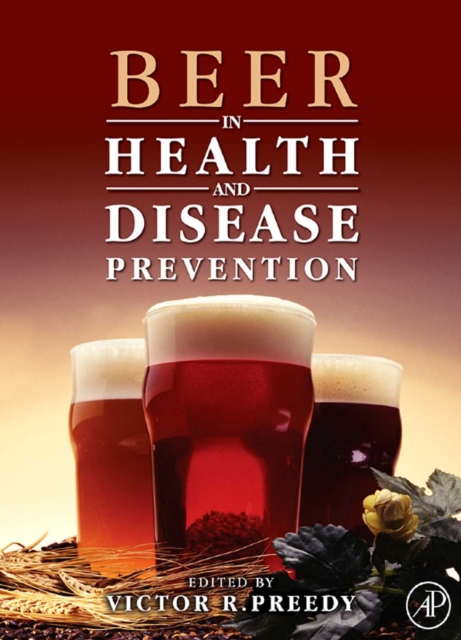
Beer in health and disease prevention
Beer in Health and Disease Prevention is the single comprehensive volume needed to understand beer and beer-related science.Presenting both the concerns and problems of beer consumption as well as the emerging evidence of benefit, this book offers a balanced view of today's findings and the potential of tomorrow's research.Just as wine in.
eBook