
Catalogue Search | MBRL


Are you sure you want to remove the book from the shelf?

{{itemTitle}}
30
result(s) for
"Philippines Antiquities."
Sort by:


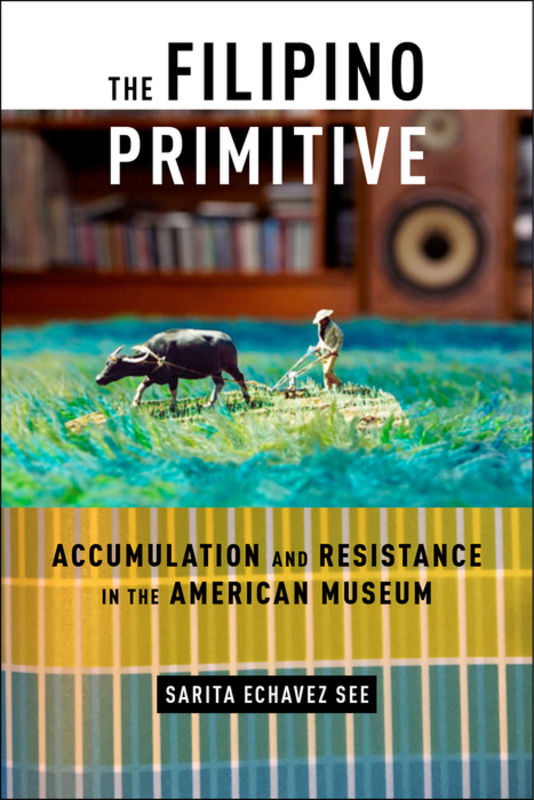
The Filipino Primitive
How museums' visual culture contributes to knowledge accumulation
Sarita See argues that collections of stolen artifacts form the foundation of American knowledge production. Nowhere can we appreciate more easily the triple forces of knowledge accumulation-capitalist, colonial, and racial-than in the imperial museum, where the objects of accumulation remain materially, visibly preserved. The Filipino Primitive takes Karl Marx's concept of \"primitive accumulation,\" usually conceived of as an economic process for the acquisition of land and the extraction of labor, and argues that we also must understand it as a project of knowledge accumulation.
Taking us through the Philippine collections at the University of Michigan Natural History Museum and the Frank Murphy Memorial Museum, also in Michigan, See reveals these exhibits as both allegory and real case of the primitive accumulation that subtends imperial American knowledge, just as the extraction of Filipino labor contributes to American capitalist colonialism. With this understanding of the Filipino foundations of the American drive toward power and knowledge, we can appreciate the value of Filipino American cultural producers like Carlos Bulosan, Stephanie Syjuco, and Ma-Yi Theater Company who have created incisive parodies of this accumulative epistemology, even as they articulate powerful alternative, anti-accumulative social ecologies.
eBook

The problem with looting: An alternative perspective on antiquities trafficking in Southeast Asia
The 1950s and 1960s constitute a key \"moment\" in the history of the looting of archaeological sites in Southeast Asia. The emergence in the region at that time of a commodity market for antiquities such as pottery triggered a wave of illicit excavation of archaeological sites. Simultaneous with the trafficking of antiquities out of the Philippines and Thailand into the hands of private collectors and museums in the West during this period and subsequent decades a thriving domestic antiquities market developed. It is argued here that the valorization of antiquities as national heritage, rather than inhibiting acquisition by citizen collectors, facilitated a process wherein collecting became a form of cultural capital accumulation. It is inaccurate to categorize Thailand and the Philippines simply as \"source\" or \"supply\" nodes in the global antiquities trade. This paper aims for a more nuanced approach to the geoeconomics of antiquities consumption.
Journal Article

Ghost Galleon
Ghost Galleon tells the story of archaeologists’ twenty-year search on a desolate beach in Baja California for the enigmatic remains of a Spanish galleon that disappeared without a trace more than four centuries ago. Carrying a cargo of Asian riches to the New World, Manila galleons forged the final link in the unification of the world through commerce by their annual voyages across the Pacific Ocean. Here, author Edward Von der Porten relates how a chance viewing of Chinese porcelain sherds in a museum catalog led him, his wife Saryl, and a team of researchers to the beachcombers who discovered the sherds. To Von der Porten, these sherds represented the possibility of something much more significant: one of the earliest known Manila galleon shipwrecks on the West Coast. In collaboration with the National Institute of Anthropology and History of Mexico (INAH), Von der Porten and his colleagues undertook the first of many archaeological expeditions to investigate the site in 1999. Over twenty years, a team of American and Mexican archaeologists recovered thousands of artifacts and concluded that they had located the remains of the cargo from a Spanish galleon—most likely the San Juanillo of 1578. This copiously illustrated, highly accessible work offers an inside view of how archaeologists carefully assemble the evidence that allows scientific reconstruction of past events. Despite the grudging resistance of time, Von der Porten and his colleagues have resurrected the tale of the ill-fated San Juanillo to enrich our understanding and appreciation of the past.
eBook

Shell tool technology in Island Southeast Asia: an early Middle Holocene Tridacna adze from Ilin Island, Mindoro, Philippines
Shell artefacts in Island Southeast Asia have often been considered local variants of ground-stone implements, introduced in the Late Pleistocene from Mainland Southeast Asia. The discovery of a well-preserved Tridacna shell adze from Ilin Island in the Philippines, suggests, however, a different interpretation. Using radiocarbon dating, X-ray diffraction and stratigraphic and chronological placement within the archaeological record, the authors place the ‘old shell’ effect into context, and suggest that shell technology was in fact a local innovation that emerged in the early Middle Holocene. The chronology and distribution of these artefacts has significant implications for the antiquity of early human interaction between the Philippines and Melanesia. It may have occurred long before the migrations of Austronesian-speaking peoples and the emergence of the Lapita Cultural Complex that are traditionally thought to mark the first contact.
Journal Article
Terminal Pleistocene to mid-Holocene occupation and an early cremation burial at Ille Cave, Palawan, Philippines
Excavations at a cave site on the island of Palawan in the Philippines show occupation from c. 11000 BP. A fine assemblage of tools and faunal remains shows the reliance of hunter-foragers switching from deer to pig. In 9500-9000 BP, a human cremation burial in a container was emplaced, the earliest yet known in the region.
Journal Article
A 4000 year-old introduction of domestic pigs into the Philippine Archipelago: implications for understanding routes of human migration through Island Southeast Asia and Wallacea
New research into the Neolithic of Island Southeast Asia is broadening the old models and making them more diverse, more human – more like history: people and animals can move through the islands in a multitude of ways. The domestic pig is an important tracker of Neolithic people and practice into the Pacific, and the authors address the controversial matter of whether domestic pigs first reached the islands of Southeast Asia from China via Taiwan or from the neighbouring Vietnamese peninsula. The DNA trajectory read from modern pigs favours Vietnam, but the authors have found well stratified domestic pig in the Philippines dated to c. 4000 BP and associated with cultural material of Taiwan. Thus the perils of relying only on DNA – but are these alternative or additional stories?
Journal Article
A Bayesian approach to dating agricultural terraces: a case from the Philippines
Field terraces are notoriously difficult to date – but historically of high significance. Here the author uses a Bayesian model applied to radiocarbon dates to date the tiered rice fields of the northern Philippines. They turn out to have been built in the sixteenth century probably by peoples retreating inland and upland from the Spanish.
Journal Article

Reproductive dilemmas, labour and remittances
This paper explores the reproductive dilemmas of individuals from a communal compound in Cavite, which are impacted by the complicated intersection of economic globalization and prescriptions of gendered performances and spatialities. Specifically, it looks at how remittances from overseas Filipino worker (OFW) relatives and the personal desires for overseas mobility directly shape these individuals’ decisions regarding reproduction, relationships and intimacies. Wilson’s (2004) concept of intimate economies helps to frame and theoretically encase the ongoing dialogue between global labour economies and personal intimacies related to reproduction and family planning. Ethnographic data and narratives were collected while the Philippines’ Reproductive Health Law (commonly known as the RH Law) was being passed in December 2012. As it mandates public access to reproductive health services including artificial contraceptives, sex education and maternal care, the RH Law continues to face strong opposition from leaders of the Philippine Catholic Church and formidable ‘Anti-RH’ movements (approximately 81% of Filipinos identify themselves as Roman Catholic). This article highlights how reproductive dilemmas are dictated not only by religious beliefs and practices, but also by gendered and economic arrangements against a backdrop that is both politically polemical and rapidly globalizing.
Journal Article