
Catalogue Search | MBRL


Are you sure you want to remove the book from the shelf?

{{itemTitle}}
1,211
result(s) for
"Phillips, P"
Sort by:

Gelfand–Phillips Type Properties of Locally Convex Spaces
We let 1≤p≤q≤∞. Being motivated by the classical notions of the Gelfand–Phillips property and the (coarse) Gelfand–Phillips property of order p of Banach spaces, we introduce and study different types of the Gelfand–Phillips property of order (p,q) (the GP(p,q) property) and the coarse Gelfand–Phillips property of order p in the realm of all locally convex spaces. We compare these classes and show that they are stable under taking direct product, direct sums and closed subspaces. It is shown that any locally convex space is a quotient space of a locally convex space with the GP(p,q) property. Characterizations of locally convex spaces with the introduced Gelfand–Phillips type properties are given.
Journal Article

Emily Dickinson in Love
From the award-winning author of Poe the Detective: The Curious Circumstances Behind \"The Mystery of Marie Roget\"
comes a compelling argument for the identity of Emily Dickinson's true love
Proud of my broken heart
Since thou didst break it,
Proud of the pain I
Did not feel till thee . . .
Those words were written by Emily Dickinson to a married man. Who was he?
For a century or more the identity of Emily Dickinson's mysterious \"Master\" has been eagerly sought, especially since three letters from her to him were found and published in 1955. InEmily Dickinson in Love, John Evangelist Walsh provides the first book-length treatment of this fascinating subject, offering a solution based wholly on documented facts and the poet's own writings.
Crafting the affair as a love story of rare appeal, and writing with exquisite attention to detail, in Part I Walsh reveals and meticulously proves the Master to be Otis Lord, a friend of the poet's father and a man of some reputation in law and politics. Part II portrays the full dimensions of their thirty-year romance, most of it clandestine, including a series of secret meetings in Boston.
After uncovering and confirming the Master's identity, Walsh fits that information into known events of Emily's life to make sense of facts long known but little understood-Emily's decision to dress always in white, for instance, or her extreme withdrawal from a normal existence when she had previously been an active, outgoing friend to many men and women.
In a lengthy section of Notes and Sources, Walsh presents his proofs in abundant detail, demonstrating that the evidence favors one man so irresistibly that there is left no room for doubt. Each reader will decide if he has truly succeeded in making the case for Otis Lord.
eBook
A Scholarly Edition of Samuel P. Newman's a Practical System of Rhetoric
In A Scholarly Edition of Samuel P. Newman's A Practical System of Rhetoric, Beth L. Hewett argues that Newman and his successful nineteenth-century textbook should be evaluated within the era's educational culture and goals, thus establishing their value in rhetorical history.
eBook
Lovecraft and Influence
Recognized as a major innovator in the weird story, H. P. Lovecraft (1890–1937) was an author whose influence was felt by nearly every writer of horror, fantasy, and science fiction in the second half of the twentieth century. Considered one of the leading writers of gothic horror, Lovecraft and his work continue to inspire writers today. In Lovecraft and Influence: His Predecessors and Successors, Robert H. Waugh has assembled essays that are vast in scope, ranging from the Bible through the Edwardian period and well into the present. This collection is devoted to authors whose work had an impact on Lovecraft—Alexander Pope, Jonathan Swift, Nathaniel Hawthorne, Edgar Allan Poe, and Lord Dunsany—and those who drew inspiration from him, including William S. Burroughs, Ramsey Campbell, Thomas Ligotti, and Stephen King. A fascinating anthology, Lovecraft and Influence will appeal to aficionados of classic horror, fantasy, and science fiction and those with an interest in modern authors whose works reflect and honor Lovecraft’s enduring legacy.
eBook
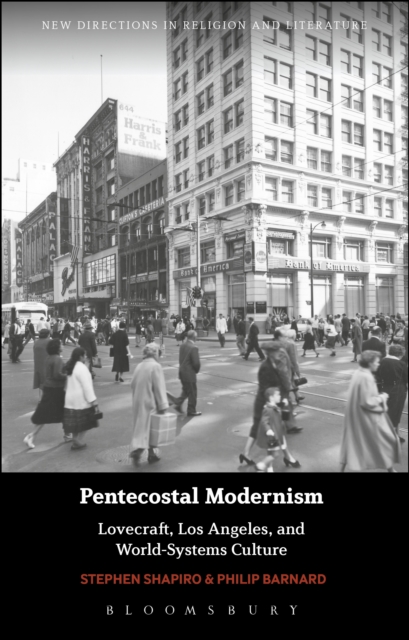
Pentecostal Modernism
Bringing together new accounts of the pulp horror writings of H.P. Lovecraft and the rise of the popular early 20th-century religious movements of American Pentecostalism and Social Gospel, Pentecostal Modernism challenges traditional histories of modernism as a secular avant-garde movement based in capital cities such as London or Paris. Disrupting accounts that separate religion from progressive social movements and mass culture, Stephen Shapiro and Philip Barnard construct a new Modernism belonging to a history of regional cities, new urban areas powered by the hopes and frustrations of recently urbanized populations seeking a better life. In this way, Pentecostal Modernism shows how this process of urbanization generates new cultural practices including the invention of religious traditions and mass-cultural forms.
eBook

Green republican
Green Republicanchronicles the life of Congressman John Saylor and his personal legacy as an environmental champion. Saylor believed the wilderness was intrinsic to the American experience-that our concepts of democracy, love of country, conservation, and independence were shaped by our wilderness experiences. Through his ardent protection of national parks and diligent work to add new areas to the parks system, Saylor helped propel the American environmental movement in the three decades following Word War II.
At the height of the federal dam-building program in the 1950s and 1960s, Saylor blocked efforts to erect hydroelectric dams whose impounded waters would have invaded Dinosaur National Monument and the Grand Canyon. During the energy crisis of the early 1970s, Saylor denounced attempts to open the Alaska National Wildlife Refuge to oil drilling. He was the House architect of the Wilderness Act of 1964 and the Wild and Scenic Rivers Act of 1968. Because Saylor represented a coal-mining district, he doggedly promoted the use of coal, instead of atomic or hydropower, to generate electricity, and repeatedly won the support of his constituents over thirteen terms between 1949 and 1973. But he also fervently supported legislation to purify the air and water and redeem stripped lands.
Considered both a maverick and a pioneer, John Saylor won respect on both sides of the aisle because he was direct, hardworking, and passionate about conservation at a time when the cause was not popular. Environmental leaders dubbed him \"St. John\" because he tenaciously advocated their proposals and battled resistance by resource-use proponents.
Based on extensive research and numerous interviews with Saylor's colleagues and members of the conservationist community, Thomas G. Smith assembles the remarkable story of John Saylor, arguably the leading congressional conservationist of the twentieth century, and a major force in the preservation of America's wilderness.
eBook
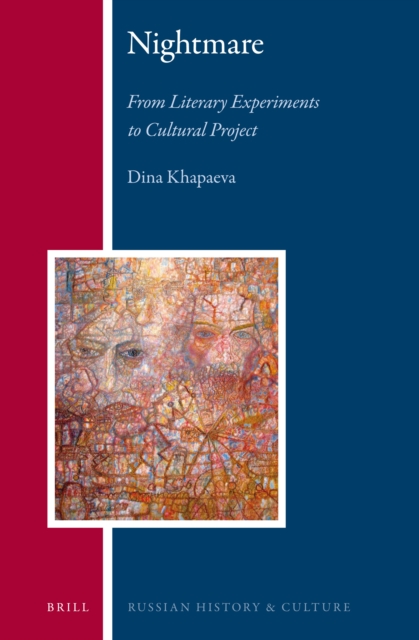
Nightmare
An analysis of the novels of Maturin, Gogol, Dostoevsky, Mann, Lovecraft and Pelevin through the prism of their interest in investigating the nature of the nightmare reveals the unstudied features of the nightmare as a mental state and traces the mosaic of coincidences leading from literary experiments to today's culture of nightmare consumption.
eBook

The p-Gelfand–Phillips property in spaces of operators and Dunford–Pettis like sets
The p-Gelfand–Phillips property (1 ≤ p < ∞) is studied in spaces of operators. Dunford–Pettis type like sets are studied in Banach spaces. We discuss Banach spaces X with the property that every p-convergent operator T:X → Y is weakly compact, for every Banach space Y.
Journal Article
Effects of (Mg1/3Sb2/3)4+ substitution on the structure and microwave dielectric properties of Ce2Zr3(MoO4)9 ceramics
Ce
2
[Zr
1−
x
(Mg
1/3
Sb
2/3
)
x
]
3
(MoO
4
)
9
(0.02 ⩽
x
⩽ 0.10) ceramics were prepared by the traditional solid-state method. A single phase, belonging to the space group of
R
3
¯
c
, was detected by using X-ray diffraction at the sintering temperatures ranging from 700 to 850 °C. The microstructures of samples were examined by applying scanning electron microscopy (SEM). The crystal structure refinement of these samples was investigated in detail by performing the Rietveld refinement method. The intrinsic properties were calculated and explored via far-infrared reflectivity spectroscopy. The correlations between the chemical bond parameters and microwave dielectric properties were calculated and analyzed by Phillips-van Vechten-Levine (P-V-L) theory. Ce
2
[Zr
0.94
(Mg
1/3
Sb
2/3
)
0.06
]
3
(MoO
4
)
9
ceramics with excellent dielectric properties were sintered at 725 °C for 6 h (
ε
r
= 10.37,
Q
×
f
= 71,748 GHz, and
τ
f
= −13.6 ppm/°C,
ε
r
is the dielectric constant,
Q
×
f
is the quality factor, and
τ
f
is the temperature coefficient of resonant frequency).
Journal Article

Lord Dunsany, H. P. Lovecraft, and Ray Bradbury
In his classic study Supernatural Horror in Literature, H. P. Lovecraft discusses the emergence of what he called spectral literature—literature that involves the gothic themes of the supernatural found in the past but also considers modern society and humanity. Beyond indicating how authors of such works derived pleasure from a sense of cosmic atmosphere, Lovecraft did not elaborate on what he meant by the term spectral as a form of haunted literature concerned with modernity. In Lord Dunsany, H. P. Lovecraft, and Ray Bradbury: Spectral Journeys, William F. Touponce examines what these three masters of weird fiction reveal about modernity and the condition of being modern in their tales. In this study, Touponce confirms that these three authors viewed storytelling as a kind of journey into the spectral. Furthermore, he explains how each identifies modernity with capitalism in various ways and shows a concern with surpassing the limits of realism, which they see as tied to the representation of bourgeois society. The collected writings of Lord Dunsany, H. P. Lovecraft, and Ray Bradbury span the length of the tumultuous twentieth century with hundreds of stories. By comparing these authors, Touponce also traces the development of supernatural fiction since the early 1900s. Reading about how these works were tied to various stages of capitalism, one can see the connection between supernatural literature and society. This study will appeal to fans of the three authors discussed here, as well as to scholars and others interested in the connection between literature and society, criticism of supernatural fiction, the nature of storytelling, and the meaning and experience of modernity.
eBook