
Catalogue Search | MBRL


Are you sure you want to remove the book from the shelf?

{{itemTitle}}
9
result(s) for
"Philo of Byblos"
Sort by:

Sur les traces d’Athéna chez les Phéniciens
In the “Phoenicocentric” account of Philo of Byblos Athena is presented as the daughter of El, the Greek Kronos. She is told to have settled in Attica to rule this part of the world, according to her father’s decisions. A set of epigraphic sources shows a different relationship between Athena and the Phoenician communities: the tutelary goddess of Athens regains patronage on her homeland, and from here she meets the Phoenicians, especially in Cyprus. In Idalion and Lapethos, Athena is explicitly identified with the Canaanite goddess Anat, yet poorly documented in the Phoenician area. Together, they seem to overcome an indigenous Great goddess. Inscriptions revealing offerings to the goddesses, often related to military events, depict how the performative powers of both Athena and Anat was appreciated, especially by the kings to whom they assure victory in the battle.
Journal Article

Herennius Philo and the Dilemma of Lexicography
This thesis seeks to explore De Diversis Verborum Significationibus, the surviving epitome of the lexicon of Herennius Philo of Byblos (ca. 64-148 CE). By placing Philo in the timeline of Greek lexica, his prescriptive style and desire for absolute correctness in speech stands out among other lexicographers, and raises this question: what is the purpose of a dictionary, to describe how words are used, or to define “correct” usage?
Dissertation
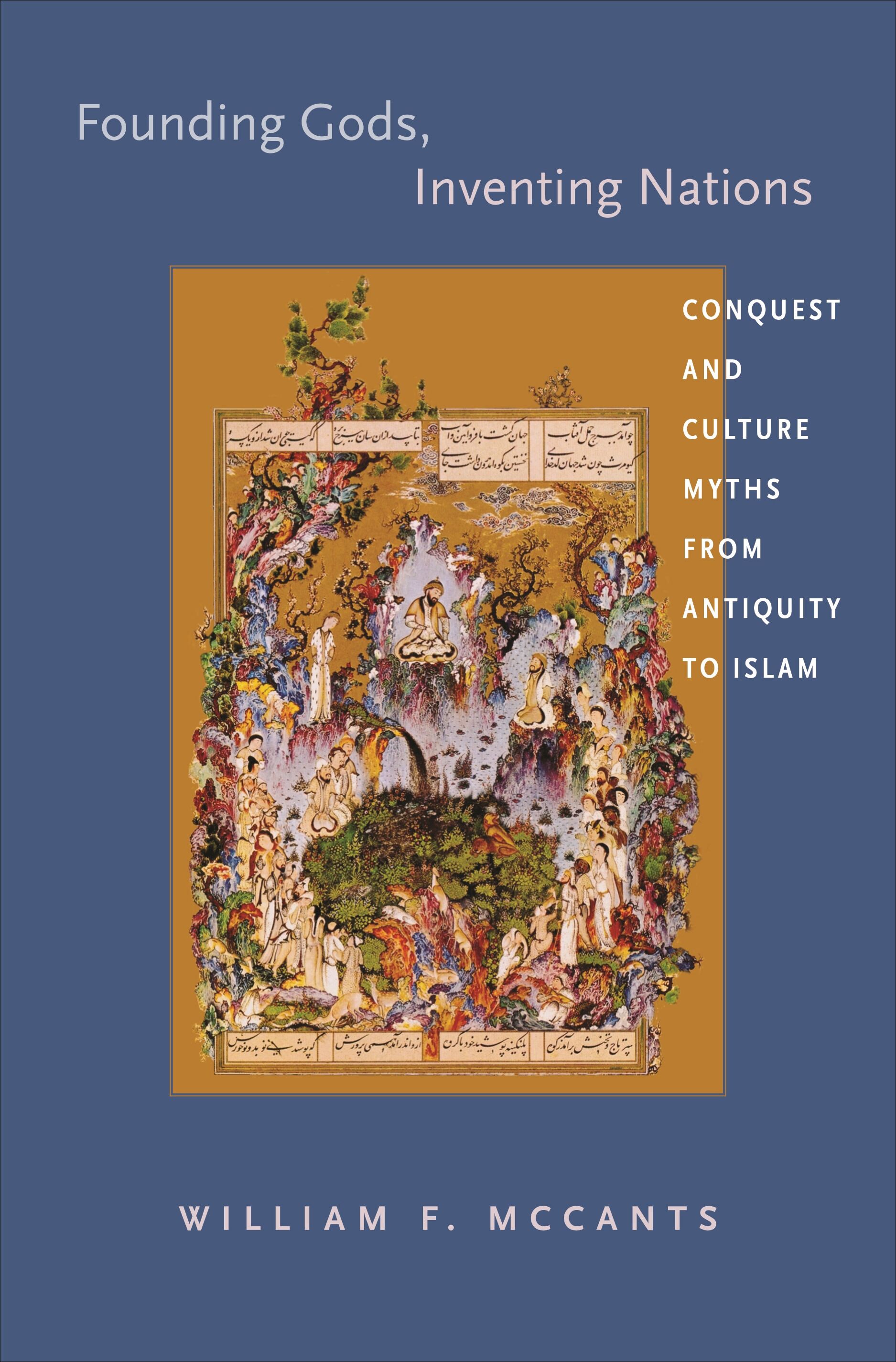
Founding gods, inventing nations
From the dawn of writing in Sumer to the sunset of the Islamic empire, Founding Gods, Inventing Nations traces four thousand years of speculation on the origins of civilization. Investigating a vast range of primary sources, some of which are translated here for the first time, and focusing on the dynamic influence of the Greek, Roman, and Arab conquests of the Near East, William McCants looks at the ways the conquerors and those they conquered reshaped their myths of civilization's origins in response to the social and political consequences of empire.
eBook

Lucian, Philo of Byblos, and Ps.‐Meliton
The first text is Lucian's
On the Syrian Goddess
, and it is a hybrid in various senses. The text is ascribed to the second‐century satirist Lucian of Samosata in all the manuscripts that carry it, but the ascription has been challenged for most of the last four hundred years of the text's history. With all ethnography Lucian shares the practice of
interpretatio graeca
, whereby non‐classical deities are equated with classical ones and given Greek names. Philo of Byblos was born in the time of Nero and lived at least until the reign of Hadrian, on whose reign he wrote a monograph. Philo trades on the Phoenicians' reputation as one of the Near Eastern peoples whose archival records went back to remote antiquity. In the manuscript it is headed “An Oration of Meliton the Philosopher,” and it claims to have been delivered in person, viva voce, to “Antoninus Caesar.”
Book Chapter


Philo or Sanchuniathon? A Phoenicean Cosmogony
Herennius Philo of Byblos is the subject of a notice in the Suda, which states that he was a grammarian born in Nero's time who lived to such an advanced age that he was still composing works in the reign of Hadrian. The titles listed include: On the Acquisition and Choice of Books; On Cities and their Eminent Citizens; and On the Reign of Hadrian (= Fr. 1 Jacoby). His name, like that of Flavius Josephus, could imply the patronage of a Roman family; we may suppose that, like Porphyry and Maximus of Tyre, he was a Phoenicean by origin who had adopted the tongue and culture of the Greeks.
Journal Article
Philo or Sanchuniathon? A Phoenician Cosmogony
Methods and aims of Philo; possible date of the Cosmogony chapter in the Phoenician History
Journal Article

A Concordance of The Phoenician History of Philo of Byblos
\"A Concordance of The Phoenician History of Philo of Byblos\" by J. Cors I Meya is reviewed.
Book Review
