
Catalogue Search | MBRL


Are you sure you want to remove the book from the shelf?

{{itemTitle}}
136
result(s) for
"Philologists."
Sort by:


Origen’s ‘Celsus’: Questions of Identity
This article will investigate a certain similarity between Origen’s response to Celsus’ True Logos and the criticisms against Longinus’ interpretation of the early pages of Plato’s Timaeus made in Proclus’ Commentary by a certain Origenes, usually held to be a pagan though without compelling evidence. Origen begins by assuming that ‘Celsus’ was an Epicurean of that name, even though it has long been obvious that ‘Celsus’ has adopted a Platonist point of view and that Origen’s answers often rely on Plato’s authority; in Proclus, Origenes regularly regards Longinus’ explanations as turning Plato into a hedonist by having him aim at the reader’s pleasure, and at one point Longinus even made reference to Epicurus. The paper uses recent work on the presence in Porphyry and Lucian of alternative names, whether inside philosophic schools or as a nom de plume, to argue that Origen could not be sure of his opponent’s identity, but that as he wrote he came to suspect that ‘Celsus’ was in fact his younger contemporary Longinus, the initial teacher of Porphyry himself. Hence the allusions to his ‘philological’ tendencies. If this is correct, then there is additional reason to identify Origen with Origenes.
Journal Article


Motivational Readiness of Future Teachers-Philologists to Use the Gamification with Elements of Augmented Reality in Education
The article analyzes the students-philologists’ motivations to use the gamification with elements of augmented reality (AR) in education. The domestic and foreign experience of implementation of gamification with elements of AR into current educational practices is generalized. The aspects of implementation of gamification with elements of AR into the educational process of Mykhailo Stelmakh Faculty of Philology and Journalism are highlighted. In particular, the features of creating the board game “Fantaziarium (Imaginarium)” with elements of AR during the study of “Methodic of teaching literature” and “Methodic of teaching the Ukrainian language” are described. The methodological tools to diagnose the level of future teachers’ motivational readiness for the use of gamification with elements of AR are selected, and their indicators are defined. 47 students of the 4th year study of the specialty 014 “Secondary Education” (Ukrainian language and literature) of Vinnytsia Mykhailo Kotsiubynskyi State Pedagogical University took part in the survey. The results of the survey convince of the relevance and effectiveness of organization in studying with the usage of the methods of creative practice-oriented project activities. A certain sequence of steps to increase the motivational readiness of students-philologists in the use of gamification with elements of AR is provided.
Journal Article
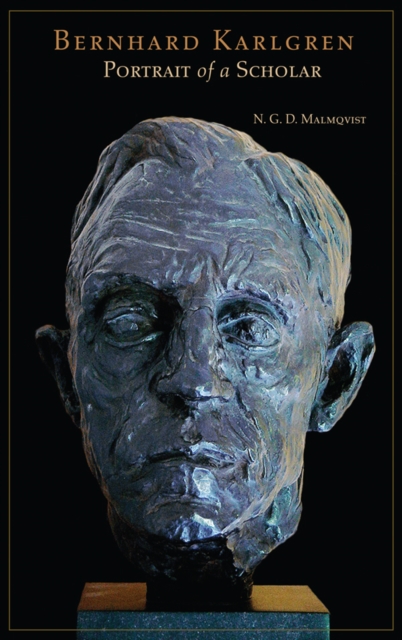
Bernhard Karlgren
This book deals with the life and career of Bernhard Karlgren (1889–1978), whose research in a great variety of fields, particularly the historical phonology of the Chinese language, laid the foundations for modern western sinology. The definition of the term \"sinology\" has undergone great changes since Bernhard Karlgren entered the stage a century ago. At that time the term covered research related to the language, literature, history, thought, and intellectual aspects of early China. Since the mid-twentieth century the definition has been considerably broadened to include more modern aspects, with special emphasis on sociopolitical and economic topics. In many Chinese language departments in both China and the West, studies of early China have been put at a disadvantage. This book may serve as a reminder that the time may have come to redress the imbalance. The book begins by sketching the intellectual milieu that characterized Karlgren's school years and ends with a mention of his last publication, \"Moot words in some Chuang Tse chapters,\" published in 1976. The intervening seventy years were filled with intense scholarly activities-including his disputatio for the PhD in Uppsala in 1915; his subsequent career as professor of East Asian languages at Gothenburg University, 1918-39; and his directorship of the Museum of Far Eastern Antiquities in Stockholm, 1939-59. For many years he served as vice-chancellor of Gothenburg University and as president of the Royal Swedish Academy of Letters, History, and Antiquities. He also played a leading role in various endeavors to strengthen the standing of Swedish humanities.
eBook

Unusual uses for olive oil
Professor Dr. Moritz-Maria von Igelfeld despairs over an academic rival's undeserved acclaim and stumbles into a haphazard romance with a charming widow before a mountaineering accident catapults him into unwanted fame.
Book

In memoriam Igor de Rachewiltz (1929–2016)
In the post-postmodern world it is a commonplace that the broadening academic horizon and mass production, along with the digitised publication of scholarly works,
force researchers to engage in ever more focused and specialised topics and by this
the classical type of scholar, the universal philologist is slowly becoming extinct. Yet
those of us who have been lucky enough may still know some of the representatives
of this sort of professors, and knowing their rareness makes it even harder to learn that someone of the already few ones passed away. Igor de Rachewiltz was undoubtedly a perfect archetype of the open-minded academician driven by a strong desire to make people – scholars and the wider public alike – understand his chosen field better. His letters written with his elegant handwriting, dated already in the digital age, take us back to a time when not only the information itself, but the style of communication was also a form of art per se, and thus they are now meaningful relics to those who were fortunate enough to receive some of them.
Journal Article

The right word : Roget and his thesaurus
The story of \"shy young Peter Mark Roget, [for whom] books were the best companions--and it wasn't long before Peter began writing his own book. But he didn't write stories; he wrote lists. Peter took his love for words and turned it to organizing ideas and finding exactly the right word to express just what he thought. His lists grew and grew, eventually turning into one of the most important reference books of all time\"--Amazon.com.
BOOK
Early Modern Imperial Philologies: Ahmad al-Hajarî and the Lead Books of Granada
The Morisco polymath Ahmad ibn Qâsim al-Hajarî (c.1569–c.1640) was a diplomat, writer and translator. His engagement with philology, i.e., the edition, annotation and translation of texts, especially the Lead Books of Granada, is an important part of his work. This article examines his philological practices and how he deployed them in order to defend Islam and Islamic powers, and to counter the hegemonic claims of the Spanish Catholic Empire.
Journal Article