
Catalogue Search | MBRL


Are you sure you want to remove the book from the shelf?

{{itemTitle}}
20,268
result(s) for
"Philosophie de l"
Sort by:

La educación filosófica como experiencia y posibilidad
El artículo tiene como objetivo presentar conceptualmente la importancia del desarrollo de la actitud filosófica en estudiantes y docentes como posibilidad, condición y experiencia de la educación en los momentos actuales. Procede metodológicamente describiendo y aclarando los enunciados y las prácticas que giran alrededor de la actitud filosófica y su interacción con los procesos educativos y pedagógicos. El texto se organiza temáticamente en varios apartados los cuales presentan: la definición de filosofía como creación de conceptos; respuesta al interrogante: ¿Qué es la actitud filosófica?; la relación entre educación y filosofía. Finalmente se propone un camino metodológico para desarrollar esta actitud en el aula por medio de la pregunta. Con esta propuesta se pretende reflexionar sobre la necesidad del ejercicio filosófico en la escuela contemporánea y presentar la actitud filosófica como herramienta didáctica para filosofar en el aula.
Journal Article

Foucault y el problema de la educación moral
Teniendo como fin de la educación la adquisición de la autonomía del sujeto, se plantea el problema de la diferencia entre técnicas que lo coaccionan o lo liberan. Impasse que dejan de lado las dos principales posturas pedagógicas para responder a esta exigencia educativa, siendo por ello necesaria una tercera postura, a saber, aquella que pone el problema en la base de sus investigaciones acerca del sujeto. Tal es el caso de la diferencia que se establece con Foucault entre unas técnicas de sujeción y unas técnicas de subjetivación. Y por ello la necesidad de abordar el recorrido que hace el filósofo de unas a otras, así como las conclusiones a las que llega.
Journal Article
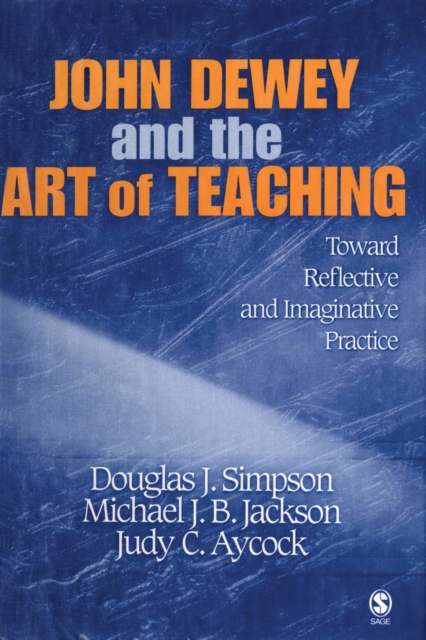
John Dewey and the art of teaching
John Dewey and the Art of Teaching: Toward Reflective and Imaginative Practice is an engaging and accessible introduction to the art of teaching as seen through the eyes of John Dewey. Authors Douglas J. Simpson, Michael J. B. Jackson, and Judy C. Aycock provide a lucid interpretation of the complexities and art of teaching in contemporary classrooms. In addition, they discuss, apply, and question the practical implications of Dewey′s ideas about the art of teaching for beginning and practicing teachers.
eBook
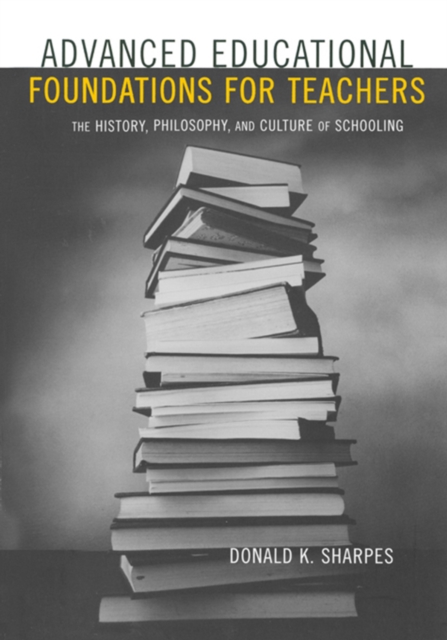
Advanced educational foundations for teachers
Sharpes' approach synthesizes historical, philosophical, and cultural standpoints. The text contains practical teaching applications alongside theory and an integrated emphasis of diversity and other multicultural themes. It also covers the history of schooling from ancient times to the present, including biographies of major non-Western figures as well as the canon of educational innovators.
eBook


The Great Chain of Being
From later antiquity to the close of the 18th century, most educated men accepted without question a traditional view of the plan and structure of the world. In this volume, Lovejoy copiously illustrates the influence of this conception, and of the ideas out of which it was compounded, upon the imagination and feelings as expressed in literature.
eBook

L’idée d’un sens commun à tous. Descartes et Herbert de Cherbury
Le De Veritate de Herbert de Cherbury (1624) et son idée d’un « consentement universel » ont fait l’objet, au xvii e siècle, d’une importante discussion. Après avoir examiné la critique, d’inspiration sceptique, voyant dans toute tentative de passer outre la diversité de l’« opinion commune » une forme d’intolérance épistémique, sont restituées les grandes décisions qui, dans le De Veritate , justifient le recours au consentement universel. Enfin, on montre que Descartes, ne trouvant pas chez Herbert de critère suffisant pour distinguer une « notion commune » d’une erreur universellement partagée, substitue la « lumière naturelle » au consentement universel et l’idée d’un « sens commun à tous » à la tyrannie d’une opinion particulière se donnant l’allure de l’universel. In his De Veritate (1624), Herbert of Cherbury’s idea of “universal consent” triggered an important discussion in the 17th century. First, I examine the reaction of skeptical authors who argued that it seems impossible to go beyond “common opinion” without falling into epistemic intolerance. Then, I attempt to reconstruct the decisions that enable Herbert to appeal to universal consent. Finally, I analyze why Descartes substitutes “natural light” for “universal consent”. To avoid epistemic intolerance, the idea of a “common sense of mankind” is used to distinguish between a “common notion” and a universally shared error.
Journal Article
La question de la grâce dans la philosophie morale de David Hume
Ce texte a pour objet de montrer que le concept de grâce joue dans la philosophie de Hume un rôle important qui est lié à l’explication théorique de l’amour et à la question de l’aisance dans le comportement. Non seulement l’expérience du « je ne sais quoi » corrobore la théorie humienne des passions, mais l’étude de la notion d’aisance montre que la grâce ne se réduit pas à une qualité parmi d’autres, isolée et mineure, mais constitue une manière d’être plus générale qui avive notre idée du mérite d’autrui, renforce notre sentiment moral, et permet de relier la dynamique de l’accoutumance à la communication sociale de la sympathie. This text aims to demonstrate that in Hume’s philosophy the concept of grace plays an important role that is linked to the theoretical explanation of love and to the question of ease in human behavior. The experience of \"I know not what\" corroborates Hume’s theory of the passions. Moreover, the study of the notion of ease shows that grace cannot be reduced to one (isolated and minor) quality among others but rather constitutes a more general way of being. Graace underlies our idea of the merit of others, strengthens our moral feeling, and creates the link connecting the dynamics of habituation to the social communication of sympathy.
Journal Article
Hégémonie de l’Un, anarchie de l’âme. Une lecture croisée de Reiner Schürmann et de Plotin
Dans Des hégémonies brisées , Reiner Schürmann pose que tout principe hégémonique est travaillé du dedans par une puissance anarchique qui brise sa normativité. Il en va ainsi du Premier Principe, l’Un, dans les Ennéades de Plotin. À partir d’une étude de la spécificité de la production de la matière par l’âme et de la notion d’audace [tólma], notre article soutient que le lieu de l’anarchie se trouve non pas dans l’Un, mais dans les âmes, c’est-à-dire à un niveau encore dépendant de la principialité du principe. Explorant la notion paradoxale de « principe d’anarchie » telle qu’élaborée par Schürmann, l’objectif de l’article est de questionner la possibilité d’une normativité anarchique s’exerçant sans principialité hégémonique. In Broken Hegemonies , Reiner Schürmann assumes that every hegemony is internally broken by an anarchic power. This is the case in the First Principle, the One, in Plotinus’s Enneads . In this article, I discuss this thesis and suggest that the anarchistic site is not to be found in the One, but in the Souls, i.e. at an ontological level that still depends on the principle and its power. I study the specific production of Matter by the Soul, and the correlative notion of audacity [ tólma ]. By exploring the paradoxical notion of the “principle of anarchy”, which Schürmann elaborates in his writings, I ask the following question: Can normative power be conceived as non-hegemonic and anarchistic?
Journal Article
Deleuze et le problème de la bêtise
La philosophie « sert à nuire à la bêtise », écrit Deleuze en 1962. Huit ans plus tard, dans Différence et Répétition , après avoir défini la bêtise de plusieurs manières différentes, il l’évoque pourtant comme « la source du plus haut pouvoir » de la pensée. Le but de cet article est de reconstruire l’unité et la compatibilité de ces diverses formules, notamment à partir du chapitre 3 de Différence et Répétition . On s’intéresse d’abord à l’objet central de ce chapitre, « l’image dogmatique de la pensée ». On s’interroge ensuite sur la variété des définitions de la bêtise, que cette « image dogmatique » prétend ramener à l’erreur. On précise enfin les rapports de la bêtise avec les autres « structures de la pensée » que Deleuze mentionne au titre des « négatifs » de la pensée. La relation entre la pensée philosophique et la bêtise est destinée à rester aussi étroite que tendue : la question est finalement celle du rôle qu’y joue « l’image de la pensée » elle-même. Philosophy “is useful for reducing stupidity”, writes Deleuze in 1962. Eight years later, in Difference and Repetition , after defining stupidity in different ways, he evokes it as “the source of the highest power” of thought. The aim of this article is to reconstruct the unity and the compatibility of these different definitions, especially on the basis of Chapter 3 of Difference and Repetition . I will first consider the central subject of the chapter, “the dogmatic image of thought”. I will then examine the diversity of the definitions of stupidity, which the dogmatic image reduces to the notion of error. Finally, I will specify the connections between stupidity and the other “structures of thought” that Deleuze mentions as “negatives” of thought. The relation between philosophical thought and stupidity is meant to be as close as it is strained: the question is finally the role played by “the dogmatic image of thought” itself in this relation.
Journal Article