
Catalogue Search | MBRL


Are you sure you want to remove the book from the shelf?

{{itemTitle}}
194
result(s) for
"Philosophische Anthropologie"
Sort by:

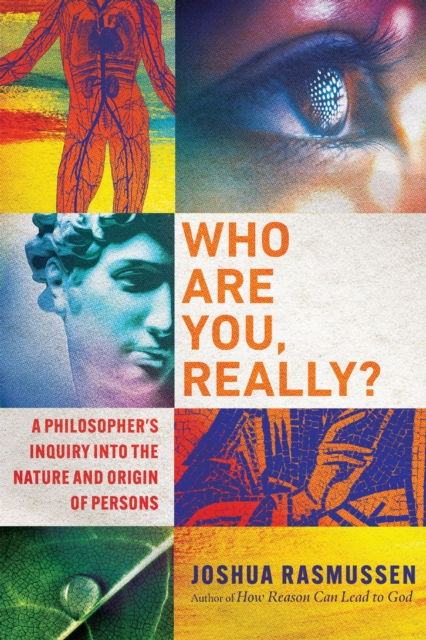
Who Are You, Really?
What does it mean to be human? Philosopher Joshua Rasmussen offers a step-by-step examination into the fundamental nature and ultimate origin of persons. Using accessible language and clear logic, he argues that understanding what it means to be aperson sheds light not only on our own nature but also on the existence of the one who gave us life.
eBook

Brief answers to the big questions
\"Dr. Stephen Hawking was the most renowned scientist since Einstein, known both for his groundbreaking work in physics and cosmology and for his mischievous sense of humor. He educated millions of readers about the origins of the universe and the nature of black holes, and inspired millions more by defying a terrifying early prognosis of ALS, which originally gave him only two years to live. In later life he could communicate only by using a few facial muscles, but he continued to advance his field and serve as a revered voice on social and humanitarian issues. Hawking not only unraveled some of the universe's greatest mysteries but also believed science plays a critical role in fixing problems here on Earth. Now he turns his attention to the most urgent issues facing us. Will humanity survive? Should we colonize space? Does God exist? These are just a few of the questions Hawking addresses in this wide-ranging, passionately argued final book from one of the greatest minds in history. Featuring a foreword by Eddie Redmayne, who won an Oscar playing Stephen Hawking, an introduction by Nobel Laureate Kip Thorne, and an afterword from Hawking's daughter, Lucy.\" -- (Source of summary not specified)
Book
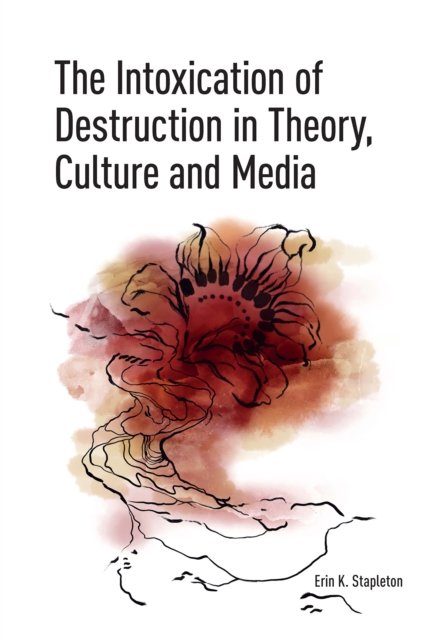
The Intoxication of Destruction in Theory, Culture and Media
This book examines the desire for, and intoxication with destruction as it appears in cultural objects and representation, arguing that all cultural and aesthetic value is fundamentally predicated on its own fragility, as well as the living transience of those who make and encounter it. Beginning with a philosophy of expenditure after Georges Bataille, each chapter maps different operations of destruction in media and culture. These operations are expressed and located in representations of human extinction and explosive architecture, in execution and in eroticism, and in media and digital archives, which constitute a further destabilization of the notion of destruction in the dynamic between aspirational immortality and material volatility embedded in the archival systems of digital cultures.
eBook

The animal that therefore I am
The Animal That Therefore I Am is the long-awaited translation of the complete text of Jacques Derrida's ten-hour address to the 1997 Crisy conference entitled The Autobiographical Animal,the third of four such colloquia on his work. The book was assembled posthumously on the basis of two published sections, one written and recorded session, and one informal recorded session.The book is at once an affectionate look back over the multiple roles played by animals in Derrida's work and a profound philosophical investigation and critique of the relegation of animal life that takes place as a result of the distinction-dating from Descartes-between man as thinking animal and every other living species. That starts with the very fact of the line of separation drawn between the human and the millions of other species that are reduced to a single the animal.Derrida finds that distinction, or versions of it, surfacing in thinkers as far apart as Descartes, Kant, Heidegger, Lacan, and Levinas, and he dedicates extended analyses tothe question in the work of each of them.The book's autobiographical theme intersects with its philosophical analysis through the figures of looking and nakedness, staged in terms of Derrida's experience when his cat follows him into the bathroom in the morning. In a classic deconstructive reversal, Derrida asks what this animal sees and thinks when it sees this naked man. Yet the experiences of nakedness and shame also lead all the way back into the mythologies of man's dominion over the beastsand trace a history of how man has systematically displaced onto the animal his own failings or btises. The Animal That Therefore I Am is at times a militant plea and indictment regarding, especially, the modern industrialized treatment of animals. However, Derrida cannot subscribe to a simplistic version of animal rights that fails to follow through, in all its implications, the questions and definitions of lifeto which he returned in much of his later work.
eBook

Breaking Boundaries
Liminality has the potential to be a leading paradigm for understanding transformation in a globalizing world. As a fundamental human experience, liminality transmits cultural practices, codes, rituals, and meanings in situations that fall between defined structures and have uncertain outcomes. Based on case studies of some of the most important crises in history, society, and politics, this volume explores the methodological range and applicability of the concept to a variety of concrete social and political problems.
eBook

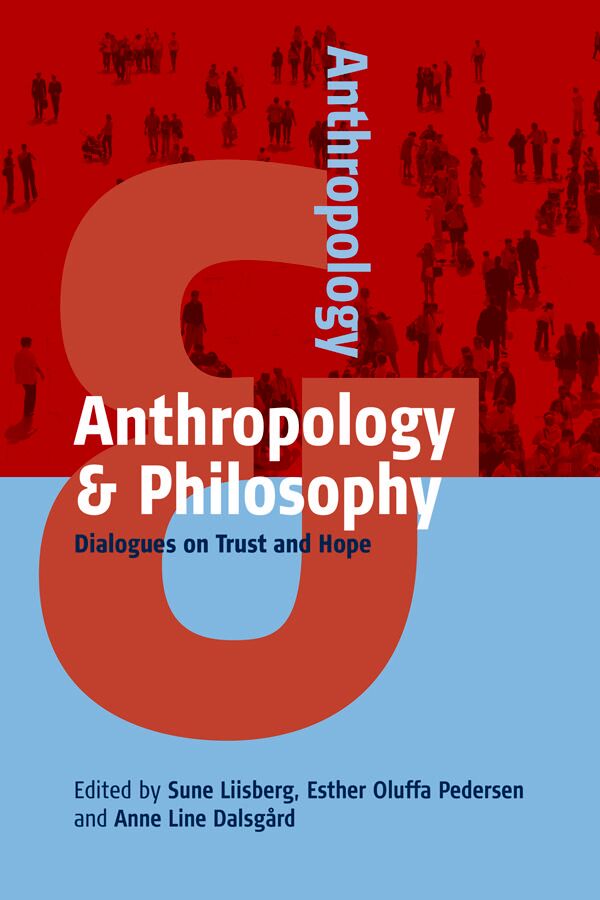
Anthropology and Philosophy
The present book is no ordinary anthology, but rather a workroom in which anthropologists and philosophers initiate a dialogue on trust and hope, two important topics for both fields of study. The book combines work between scholars from different universities in the U.S. and Denmark. Thus, besides bringing the two disciplines in dialogue, it also cuts across differences in national contexts and academic style. The interdisciplinary efforts of the contributors demonstrate how such a collaboration can result in new and challenging ways of thinking about trust and hope. Reading the dialogues may, therefore, also inspire others to work in the productive intersection between anthropology and philosophy.
eBook
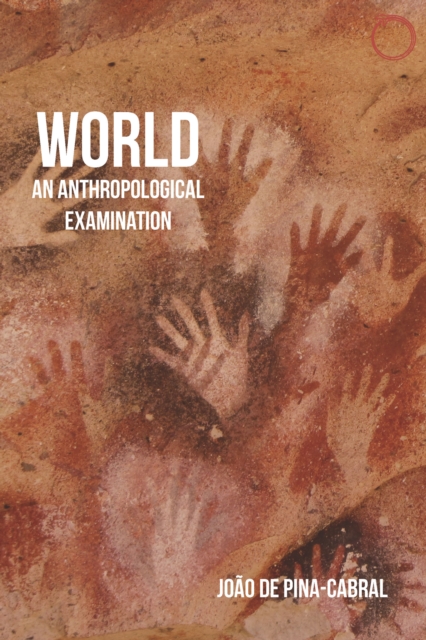
World : an anthropological examination
What do we mean when we refer to world?How does the world relate to the human person?Are the two interdependent and, if so, in what way?What does world mean for an ethnographer or an anthropologist?Much has been said of worlds and worldviews, but do we really know what we mean by these words?.
eBook