
Catalogue Search | MBRL


Are you sure you want to remove the book from the shelf?

{{itemTitle}}
7,169
result(s) for
"Philosophy Study and teaching."
Sort by:

An aesthetic education in the era of globalization
In essays on theory, translation, Marxism, gender, and world literature, and on writers such as Assia Djebar, J.M. Coetzee, and Rabindranath Tagore, Spivak argues for the social urgency of the humanities and renews the case for literary studies, imprisoned in the corporate university.
Book

The School of Libanius in Late Antique Antioch
This book is a study of the fourth-century sophist Libanius, a major intellectual figure who ran one of the most prestigious schools of rhetoric in the later Roman Empire. He was a tenacious adherent of pagan religion and a friend of the emperor Julian, but also taught leaders of the early Christian church like St. John Chrysostom and St. Basil the Great. Raffaella Cribiore examines Libanius's training and personality, showing him to be a vibrant educator, though somewhat gloomy and anxious by nature. She traces how he cultivated a wide network of friends and former pupils and courted powerful officials to recruit top students. Cribiore describes his school in Antioch--how students applied, how they were evaluated and trained, and how Libanius reported progress to their families. She details the professional opportunities that a thorough training in rhetoric opened up for young men of the day. Also included here are translations of 200 of Libanius's most important letters on education, almost none of which have appeared in English before. Cribiore casts into striking relief the importance of rhetoric in late antiquity and its influence not only on pagan intellectuals but also on prominent Christian figures. She gives a balanced view of Libanius and his circle against the far-flung panorama of the Greek East.
eBook


Education's end
The question of what living is for--of what one should care about and why--is the most important question a person can ask. Yet under the influence of the modern research ideal, our colleges and universities have expelled this question from their classrooms, judging it unfit for organized study. In this eloquent and carefully considered book, Tony Kronman explores why this has happened and calls for the restoration of life's most important question to an honored place in higher education. The author contrasts an earlier era in American education, when the question of the meaning of life was at the center of instruction, with our own times, when this question has been largely abandoned by college and university teachers. In particular, teachers of the humanities, who once felt a special responsibility to guide their students in exploring the question of what living is for, have lost confidence in their authority to do so. And they have lost sight of the question itself in the blinding fog of political correctness that has dominated their disciplines for the past forty years. Yet Kronman sees a readiness for change--a longing among teachers as well as students to engage questions of ultimate meaning. He urges a revival of the humanities' lost tradition of studying the meaning of life through the careful but critical reading of great works of literary and philosophical imagination. And he offers here the charter document of that revival.
eBook

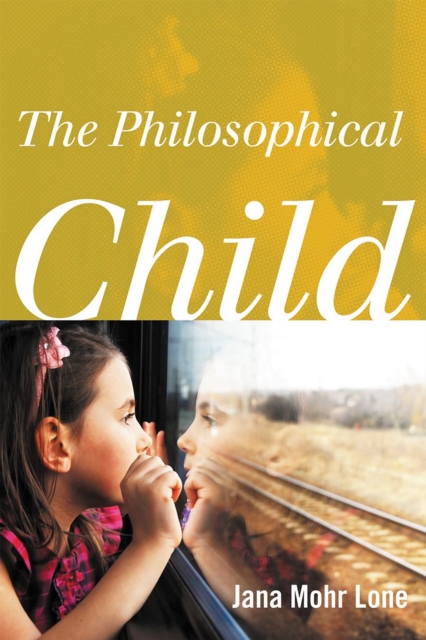
The philosophical child
What does it mean to be good? Why do people die? What is friendship? Children enter the world full of questions and wrestle with deep, thoughtful issues, even if they do not always wonder them aloud. Many parents have the desire to discuss philosophical ideas with their children, but are unsure how to do so. The Philosophical Child offers parents guidance on how to gently approach philosophical questions with children of all ages. Jana Mohr Lone argues that for children to mature emotionally, they must develop their desire and ability to think abstractly about themselves and their experiences. This book suggests easy ways that parents can engage with their children's philosophical questions and help them develop their \"philosophical selves.\"
eBook


God, philosophy, universities
'What does it mean to be a human being?' Given this perennial question, Alasdair MacIntyre, one of America's preeminent philosophers, presents a compelling argument on the necessity and importance of philosophy. Because of a need to better understand Catholic philosophical thought, especially in the context of its historical development and realizing that philosophers interact within particular social and cultural situations, MacIntyre offers this brief history of Catholic philosophy. Tracing the idea of God through different philosophers' engagement of God and how this engagement has played out in universities, MacIntyre provides a valuable, lively, and insightful study of the disintegration of academic disciplines with knowledge. MacIntyre then demonstrates the dangerous implications of this happening and how universities can and ought to renew a shared understanding of knowledge in their mission. This engaging work will be a benefit and a delight to all readers.
eBook


The Pursuit of Philosophy
Eleven Cambridge academics approach philosophy from various fields, to broaden its practical and theoretical applications.
* Guides a tour through various academic departments—including history, political science, classics, law, and English—to ferret out the philosophy in their syllabi, and to show philosophy's symbiotic relationship with other fields
* Provides a map of what philosophy is considered to be at Cambridge in the early twenty-first century, about a hundred years after the \"founding fathers\" of analytic philosophy reigned at Cambridge
* Offers useful new directions for the study and application of philosophy, and how other fields can influence them
eBook