
Catalogue Search | MBRL


Are you sure you want to remove the book from the shelf?

{{itemTitle}}
9,609
result(s) for
"Philosophy and civilization"
Sort by:

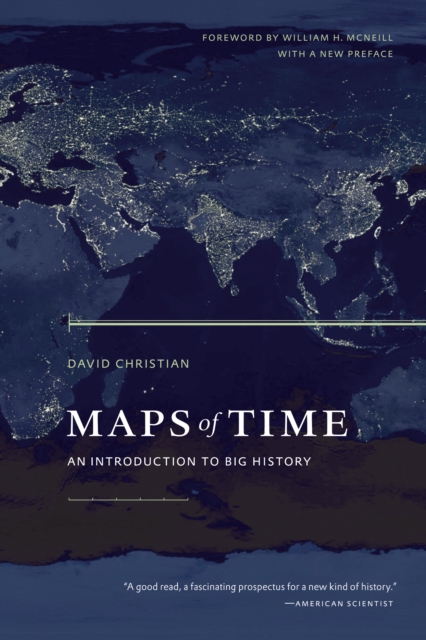
Maps of Time
An introduction to a new way of looking at history, from a perspective that stretches from the beginning of time to the present day, Maps of Time is world history on an unprecedented scale. Beginning with the Big Bang, David Christian views the interaction of the natural world with the more recent arrivals in flora and fauna, including human beings. Cosmology, geology, archeology, and population and environmental studies--all figure in David Christian's account, which is an ambitious overview of the emerging field of \"Big History.\" Maps of Time opens with the origins of the universe, the stars and the galaxies, the sun and the solar system, including the earth, and conducts readers through the evolution of the planet before human habitation. It surveys the development of human society from the Paleolithic era through the transition to agriculture, the emergence of cities and states, and the birth of the modern, industrial period right up to intimations of possible futures. Sweeping in scope, finely focused in its minute detail, this riveting account of the known world, from the inception of space-time to the prospects of global warming, lays the groundwork for world history--and Big History--true as never before to its name.
eBook

Introducing philosophy through pop culture : from Socrates to South Park, Hume to House
Illustrates important philosophical concepts and the work of the major philosophers using examples from film, television, and music including South Park, The Matrix, X-Men, Batman, Harry Potter, Metallica and Lost.
Book
Social and Cultural Dynamics
This classic work is a revised and abridged version, in a single volume, of the work which more than any other catapulted Pitirim Sorokin into being one of the most famed figures of twentieth-century sociology. Its original publication occurred before World War II. This revised version, written some twenty years later, reflects a postwar environment. Earlier than most, Sorokin took the consequences of the breakdown of colonialism into account in discussing the renaissance of the great cultures of African and Asian civilization. Other than perhaps F.S.C. Northrop, no individual better incorporated the new role of the Indian, Chinese, Japanese, and Arabic peoples in this postwar world.
Sorokin came to view social and cultural dynamics in terms of three major processes: a major shift of mankind's creative center from Europe to the Pacific; a progressive disintegration of the sensate culture; and finally the first blush of the emergence and growth of a new idealistic sociocultural order. This volume is perhaps most famous for revealing Sorokin's remarkable efforts to understand the relationship of war and peace to the process of social and political change. Contrary to received wisdom, he shows that the magnitude and depth of war grows in periods of social, cultural, and territorial expansion by the nation. In short, war is just as often a function of development as it is of social decay.
This long-unavailable volume remains one of the major touchstones by which we can judge efforts to create an international social science. There are few areas of social or cultural life that are not covered—from painting, art, and music, to the ethos of universalism and particularism. These are terms which Sorokin introduced into the literature long before the rise of functional doctrines. For all those interested in cultural and historical processes, this volume provides the essence of Sorokin's remarkably prescient effort to achieve sociological transcendence, by takin
eBook

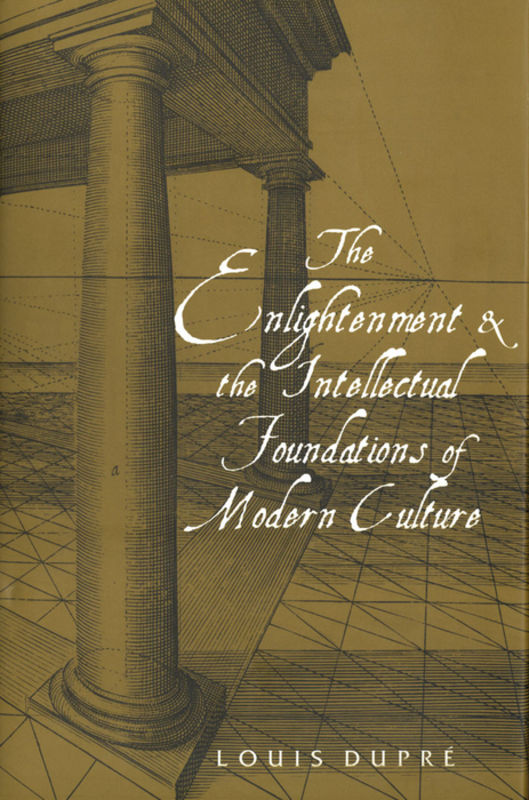
The Enlightenment and the Intellectual Foundations of Modern Culture
The prestige of the Enlightenment has declined in recent years. Many consider its thinking abstract, its art and poetry uninspiring, and the assertion that it introduced a new age of freedom and progress after centuries of darkness and superstition presumptuous. In this book, an eminent scholar of modern culture shows that the Enlightenment was a more complex phenomenon than most of its detractors and advocates assume. It includes rationalist as well as antirationalist tendencies, a critique of traditional morality and religion as well as an attempt to establish them on new foundations, even the beginning of a moral renewal and a spiritual revival.
The Enlightenment's critique of tradition was a necessary consequence of the fundamental modern principle that we humans are solely responsible for the course of history. Hence we can accept no belief, no authority, no institutions that are not in some way justified. This foundation, for better or for worse, determined the course of the following centuries. Despite contemporary reactions against it, the Enlightenment continues to shape our own time and still distinguishes Western culture from any other.
eBook

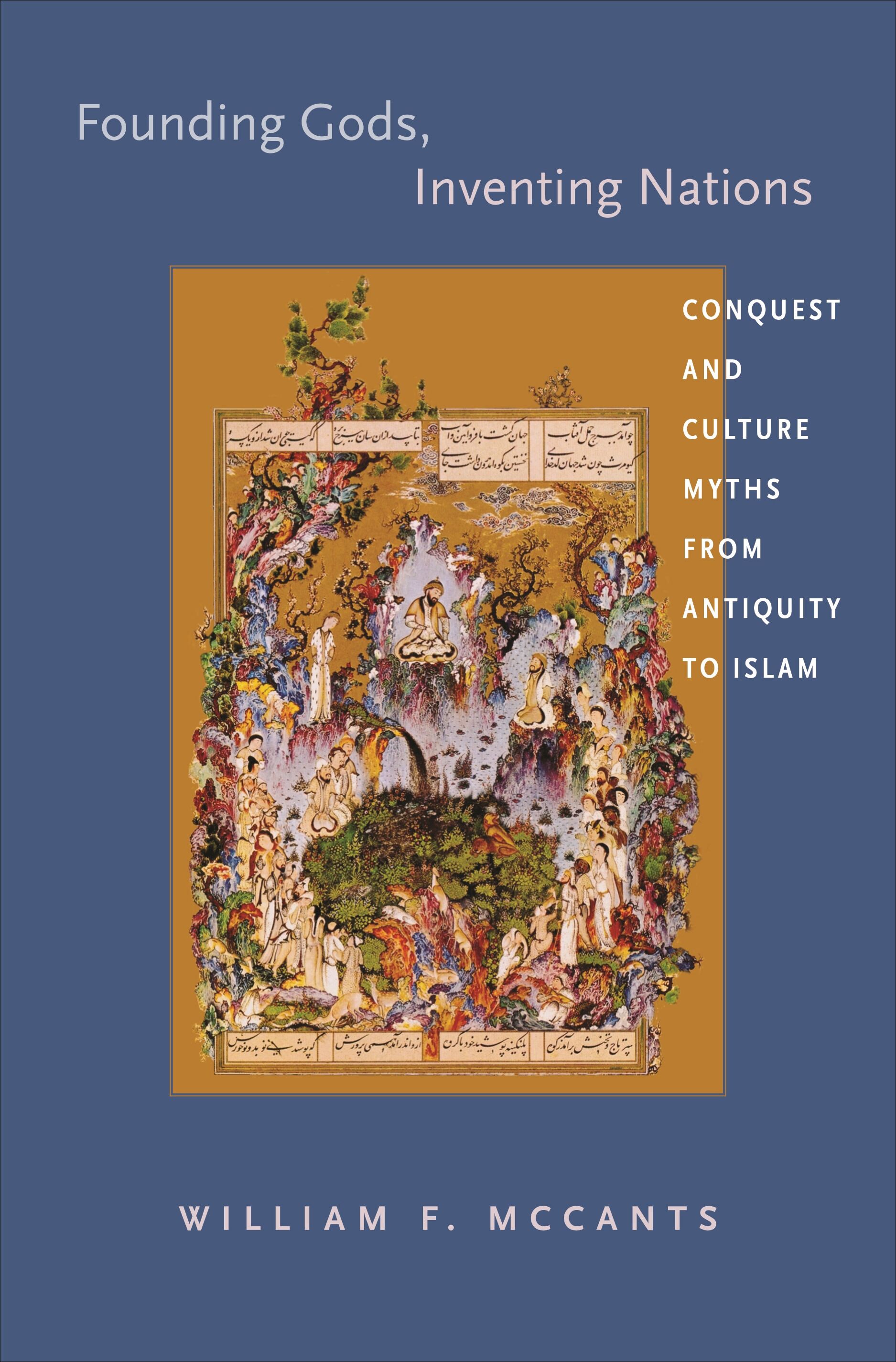
Founding gods, inventing nations
From the dawn of writing in Sumer to the sunset of the Islamic empire, Founding Gods, Inventing Nations traces four thousand years of speculation on the origins of civilization. Investigating a vast range of primary sources, some of which are translated here for the first time, and focusing on the dynamic influence of the Greek, Roman, and Arab conquests of the Near East, William McCants looks at the ways the conquerors and those they conquered reshaped their myths of civilization's origins in response to the social and political consequences of empire.
eBook

