
Catalogue Search | MBRL


Are you sure you want to remove the book from the shelf?

{{itemTitle}}
106,023
result(s) for
"Philosophy of religion"
Sort by:


The Wisdom to Doubt
The Wisdom to Doubtis a major contribution to the contemporary literature on the epistemology of religious belief. Continuing the inquiry begun in his previous book,Prolegomena to a Philosophy of Religion, J. L. Schellenberg here argues that given our limitations and especially our immaturity as a species, there is no reasonable choice but to withhold judgment about the existence of an ultimate salvific reality. Schellenberg defends this conclusion against arguments from religious experience and naturalistic arguments that might seem to make either religious belief or religious disbelief preferable to his skeptical stance. In so doing, he canvasses virtually all of the important recent work on the epistemology of religion. Of particular interest is his call for at least skepticism about theism, the most common religious claim among philosophers.
The Wisdom to Doubtexpands the author's well-known hiddenness argument against theism and situates it within a larger atheistic argument, itself made to serve the purposes of his broader skeptical case. That case need not, on Schellenberg's view, lead to a dead end but rather functions as a gateway to important new insights about intellectual tasks and religious possibilities.
eBook


Giving Beyond the Gift: Apophasis and Overcoming Theomania
This book explores the co-dependency of monotheism and idolatry by examining the thought of several prominent twentieth-century Jewish philosophers Cohen, Buber, Rosenzweig, and Levinas. While all of these thinkers were keenly aware of the pitfalls of scriptural theism, to differing degrees they each succumbed to the temptation to personify transcendence, even as they tried either to circumvent or to restrain it by apophatically purging kataphatic descriptions of the deity. Derrida and Wyschogrod, by contrast, carried the project of denegation one step further, embarking on a path that culminated in the aporetic suspension of belief and the consequent removal of all images from God, a move that seriously compromises the viability of devotional piety. The inquiry into apophasis, transcendence, and immanence in these Jewish thinkers is symptomatic of a larger question. Recent attempts to harness the apophatic tradition to construct a viable postmodern negative theology, a religion without religion, are not radical enough. Not only are these philosophies of transcendence guilty of a turn to theology that defies the phenomenological presupposition of an immanent phenomenality, but they fall short on their own terms, inasmuch as they persist in employing metaphorical language that personalizes transcendence and thereby runs the risk of undermining the irreducible alterity and invisibility attributed to the transcendent other. The logic of apophasis, if permitted to run its course fully, would exceed the need to posit some form of transcendence that is not ultimately a facet of immanence. Apophatic theologies, accordingly, must be supplanted by a more far-reaching apophasis that surpasses the theolatrous impulse lying coiled at the crux of theism, an apophasis of apophasis, based on accepting an absolute nothingness to be distinguished from the nothingness of an absolute that does not signify the unknowable One but rather the manifold that is the pleromatic abyss at being's core. Hence, the much-celebrated metaphor of the gift must give way to the more neutral and less theologically charged notion of an unconditional givenness in which the distinction between giver and given collapses. To think givenness in its most elemental, phenomenological sense is to allow the apparent to appear as given without presuming a causal agency that would turn that given into a gift.
eBook

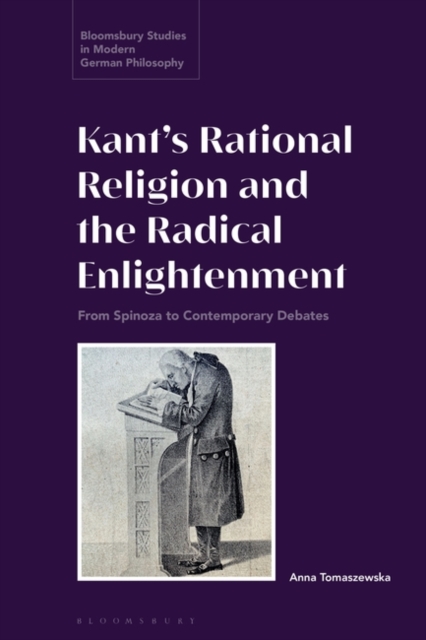
Kant’s Rational Religion and the Radical Enlightenment
Kant’s defence of religion and attempts to reconcile faith with reason position him as a moderate Enlightenment thinker in existing scholarship. Challenging this view and reconceptualising Kant’s religion along rationalist lines, Anna Tomaszewska sheds light on its affinities with the ideas of the radical Enlightenment, originating in the work of Baruch Spinoza and understood as a critique of divine revelation. Distinguishing the epistemological, ethical and political aspects of such a critique, Tomaszewska shows how Kant’s defence of religion consists of rationalizing its core tenets and establishing morality as the essence of religious faith. She aligns him with other early modern rationalists and German Spinozists and reveals the significance for contemporary political philosophy. Arguing that by prioritizing freedom of thought, and hence religious criticism, over an unqualified freedom of belief, Kant’s theology approximates the secularising tendency of the radical Enlightenment. Here is an understanding of how the shift towards a secular outlook in Western culture was shaped by attempts to rationalize rather than uproot Christianity.
eBook
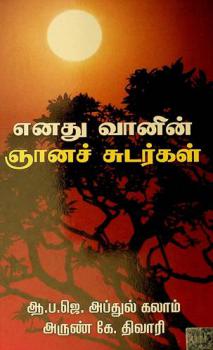
En̲atu vān̲in̲ ñān̲ac cuṭarkaḷ : vāl̲kkaiyin̲ kur̲ikkōḷ kur̲itta uraiyāṭal
Interviews of the President of India, centralised on inspirational life context.
BOOK

How Not to Diversify Philosophy of Religion: A Critique from the Twenty-First Century
Philosophy of religion has been the object of penetrating critiques concerning its continued near-complete blindness to all but a single religion. The need for philosophy of religion to open up so as to include more than merely occasional and tokenistic treatments of ‘Other’ religions is clearly evident from the slew of recently published titles concerned with diversifying the field. In this light, a book such as Victoria Harrison’s Eastern Philosophy of Religion should surely come as a welcome addition. And yet, unfortunately, this book turns out to be a case study in how not to diversify philosophy of religion in the twenty-first century.
Journal Article