
Catalogue Search | MBRL


Are you sure you want to remove the book from the shelf?

{{itemTitle}}
47
result(s) for
"Photography / Individual Photographers / General"
Sort by:
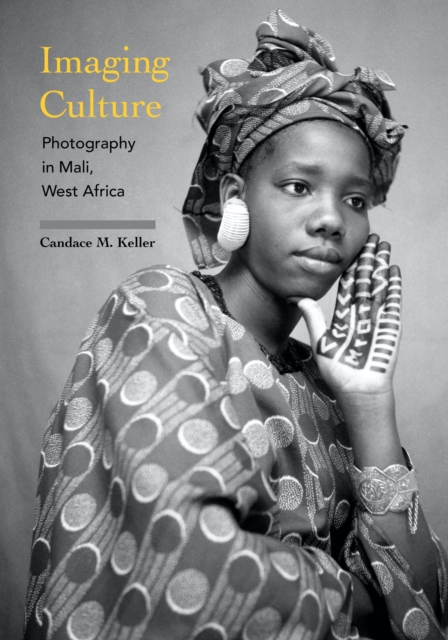
Imaging Culture
Imaging Culture is a sociohistorical study of the
meaning, function, and aesthetic significance of photography in
Mali, West Africa, from the 1930s to the present. Spanning the
dynamic periods of colonialism, national independence, socialism,
and democracy, its analysis focuses on the studio and documentary
work of professional urban photographers, particularly in the
capital city of Bamako and in smaller cities such as Mopti and
Ségu.
Featuring the work of more than twenty-five photographers, it
concentrates on those who have been particularly influential for
the local development and practice of the medium as well as its
international popularization and active participation in the
contemporary art market.
Imaging Culture looks at how local aesthetic ideas are
visually communicated in the photographers' art and argues that
though these aesthetic arrangements have specific relevance for
local consumers, they transcend geographical and cultural
boundaries to have value for contemporary global audiences as
well.
Imaging Culture is an important and visually
interesting book which will become a standard source for those who
study African photography and its global impact.
eBook

Horace Poolaw, Photographer of American Indian Modernity
Laura E. Smith unravels the compelling life story of Kiowa photographer Horace Poolaw (1906-84), one of the first professional Native American photographers. Born on the Kiowa reservation in Anadarko, Oklahoma, Poolaw bought his first camera at the age of fifteen and began taking photos of family, friends, and noted leaders in the Kiowa community, also capturing successive years of powwows and pageants at various fairs, expositions, and other events. Though Poolaw earned some income as a professional photographer, he farmed, raised livestock, and took other jobs to help fund his passion for documenting his community.Smith examines the cultural and artistic significance of Poolaw's life in professional photography from 1925 to 1945 in light of European and modernist discourses on photography, portraiture, the function of art, Native American identity, and American Indian religious and political activism. Rather than through the lens of Native peoples' inevitable extinction or within a discourse of artistic modernism, Smith evaluates Poolaw's photography within art history and Native American history, simultaneously questioning the category of \"fine artist\" in relation to the creative lives of Native peoples.A tour de force of art and cultural history,Horace Poolaw, Photographer of American Indian Modernityilluminates the life of one of Native America's most gifted, organic artists and documentarians and challenges readers to reevaluate the seamlessness between the creative arts and everyday life through its depiction of one man's lifelong dedication to art and community.
eBook

Singular Images, Failed Copies
Focusing on early nineteenth-century England?and on the works and texts of the inventor of paper photography, William Henry Fox Talbot?Singular Images, Failed Copieshistoricizes the conceptualization of photography in that era as part of a major historical change.
Treating photography not merely as a medium or a system of representation but also as an epistemology, Vered Maimon challenges today's prevalent association of the early photograph with the camera obscura. Instead, she points to material, formal, and conceptual differences between those two types of images by considering the philosophical and aesthetic premises linked with early photography. Through this analysis she argues that the emphasis in Talbot's accounts on the removal of the \"artist's hand\" in favor of \"the pencil of nature\" didnotmark a shift from manual to \"mechanical\" and more accurate or \"objective\" systems of representation.
InSingular Images, Failed Copies, Maimon shows that the perception of the photographic image in the 1830s and 1840s was in fact symptomatic of a crisis in the epistemological framework that had informed philosophical, scientific, and aesthetic thought for two centuries.
eBook

Seduced by Modernity
Mary O'Connor and Katherine Tweedie tell the story of a dedicated artist in difficult circumstances whose working life spanned a Victorian upbringing in Hamilton, Ontario, and the witnessing of the first Soviet Five-Year Plan. The authors use feminist and historical questions as well as close readings of the photographs to relate Watkins' work to questions of gender, modernity, and visual culture. Watkins' modernism, which involved experimentation and a radical focus on form, transgressed boundaries of conventional, high-art subject matter. Her focus was daily life and her photographs, whether an exploration of the objects in her New York kitchen or the public and industrial spaces of Glasgow, Paris, Cologne, Moscow, and Leningrad in the 1930s, strike a balance between abstraction and an evocation of the everyday, offering a unique gendered perspective on modernism and modernity.
eBook

Awakening the Eye
Until now, celebrated photographer Robert Frank's daring and unconventional work as a filmmaker has not been awarded the critical notice it deserves. In this timely volume, George Kouvaros surveys Frank's films and videos and places them in the larger context of experimentation in American art and literature since World War II.
Born in 1924, Frank emigrated from Switzerland to the United States in 1947 and quickly made his mark as a photojournalist. A 1955 Guggenheim Foundation fellowship allowed him to travel across the country, photographing aspects of American life that had previously received little attention. The resulting book,The Americans, with an Introduction by Jack Kerouac, is generally considered a landmark in the history of postwar photography. During the same period, Frank befriended other artists and writers, among them Allen Ginsberg, Peter Orlovsky, and Gregory Corso, all of whom are featured in his first film,Pull My Daisy, which is narrated by Kerouac. This film set the terms for a new era of experimental filmmaking.
By examining Frank's films and videos, includingPull My Daisy,Me and My Brother, andCocksucker Blues, in the framework of his more widely recognized photographic achievements, Kouvaros develops a model of cross-media history in which photography, film, and video are complicit in the search for fresh forms of visual expression.Awakening the Eyeis an insightful, compelling, and, at times, moving account of Frank's determination to forge a personal connection between the circumstances of his life and the media in which he works.
eBook
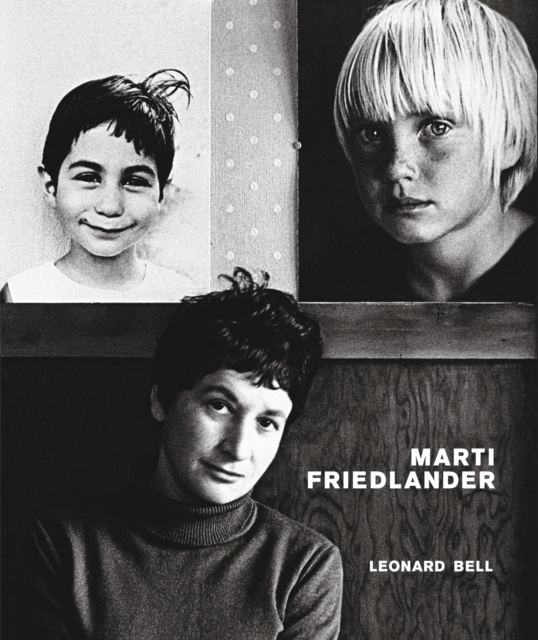
Marti Friedlander
From journeys through various countries to New Zealand's transformation in the last half century, this is a riveting and comprehensive look at the work of photographer Marti Friedlander. Showing how this distinguished artist has not only recorded the places, events, and personalities of recent history, this engaging study also demonstrates how she brings subjectivity, empathy, and a distinctive eye to her subjects. From her arrival in New Zealand as a Jewish immigrant from England in 1958, this biography proves how her photographs—whether of artists, writers, protests, or street scenes—have consistently drawn out the key human dynamics of conflict, ambivalence, anger, and warmth. Beautifully illustrated amidst a world of throwaway images, this monograph provides evidence of how a sustained, inquiring, and attentive perspective for both the photographer and viewers can lead to new truths.
eBook

Re-creating Paul Bowles, the other, and the imagination
This work underscores the true brilliance and timelessness of colonial metaphors of authorship that extend into the postmodern Age. The emphasis is upon both re-invention and comprehensive scholarship on music and film.
eBook

The life and photography of Doris Ulmann
Doris Ulmann (1882-1934) was one of the foremost photographers of the twentieth century, yet until now there has never been a biography of this fascinating, gifted artist.Born into a New York Jewish family with a tradition of service, Ulmann sought to portray and document individuals from various groups that she feared would vanish from American.
eBook

Chinese Opera
Chinese opera embraces over 360 different styles of theatre that make one of the richest performance arts in the world. It combines music, speech, poetry, mime, acrobatics, stage fighting, vivid face-painting and exquisite costumes. First experiences of Chinese opera can be baffling because its vocabulary of stagecraft is familiar only to the seasoned aficionado. Chinese Opera: The Actor’s Craft makes the experience more accessible for everyone. This book uses breath-taking images of Chinese opera in performance by Hong Kong photographer Siu Wang-Ngai to illustrate and explain Chinese opera stage technique. The book explores costumes, gestures, mime, acrobatics, props and stage techniques. Each explanation is accompanied by an example of its use in an opera and is illustrated by in-performance photographs. Chinese Opera: The Actor’s Craft provides the reader with a basic grammar for understanding uniquely Chinese solutions to staging drama.
eBook

So That All Shall Know/Para que todos lo sepan
How does an artist respond to the horrors of war and the genocide of his or her people? Can art play a role in the fight for justice? These are key questions for understanding the work of Guatemalan photographer Daniel Hernández-Salazar. Since the 1980s, Hernández-Salazar has created both documentary and aesthetic works that confront the state-sponsored terrorism and mass killings of Guatemala's long civil war (1962-1996). His photographic polyptych (4-panel image) \"Clarification\" became the icon for the Recovery of Historical Memory project of the Archbishopric of Guatemala, as well as a rallying symbol for Guatemalans. Broadening his crusade for justice in the twenty-first century, Hernández-Salazar is now also using the shouting angel of his polyptych (entitled \"So That All Shall Know\") to challenge the forgetting and/or erasure of painful history in many parts of the world, including Mexico, Japan, the United States, Canada, and Argentina. So That All Shall Know is a powerful, comprehensive overview of the work of Daniel Hernández-Salazar on recent Guatemalan history. Portfolios of images present his early photojournalistic work documenting the Guatemalan genocide; his Eros + Thanatos series that responds aesthetically to the destruction of war; and his Street Angel project, which uses his image \"So That All Shall Know\" to protest against injustice and historical forgetting around the world. Accompanying the images are bilingual English-Spanish essays by four scholars who discuss the development of Hernández-Salazar's art in the context of contemporary photography, the social and political conditions that inspire his work, and the broader questions that arise when artists engage in social struggle. Introduced by Nobel Peace Laureate Rigoberta Menchú Tum, So That All Shall Know is a moving testament to the horrors of genocide and the power of art to give voice to the silenced and presence to the disappeared.
eBook