
Catalogue Search | MBRL


Are you sure you want to remove the book from the shelf?

{{itemTitle}}
1,412
result(s) for
"Photonics Mathematics."
Sort by:

Computational liquid crystal photonics : fundamentals, modelling and applications
Optical computers and photonic integrated circuits in high capacity optical networks are hot topics, attracting the attention of expert researchers and commercial technology companies. Optical packet switching and routing technologies promise to provide a more efficient source of power, and footprint scaling with increased router capacity; integrating more optical processing elements into the same chip to increase on-chip processing capability and system intelligence has become a priority.
This book is an in-depth look at modelling techniques and the simulation of a wide range of liquid crystal based modern photonic devices with enhanced high levels of flexible integration and enhanced power processing. It covers the physics of liquid crystal materials; techniques required for modelling liquid crystal based devices; the state-of-the art liquid crystal photonic based applications for telecommunications such as couplers, polarization rotators, polarization splitters and multiplexer-demultiplexers; liquid core photonic crystal fiber (LC-PCF) sensors including biomedical and temperature sensors; and liquid crystal photonic crystal based encryption systems for security applications.
Key features
* Offers a unique source of in-depth learning on the fundamental principles of computational liquid crystal photonics.
* Explains complex concepts such as photonic crystals, liquid crystals, waveguides and modes, and frequency- and time-domain techniques used in the design of liquid crystal photonic crystal photonic devices in terms that are easy to understand.
* Demonstrates the useful properties of liquid crystals in a diverse and ever-growing list of technological applications.
* Requires only a foundational knowledge of mathematics and physics.
eBook
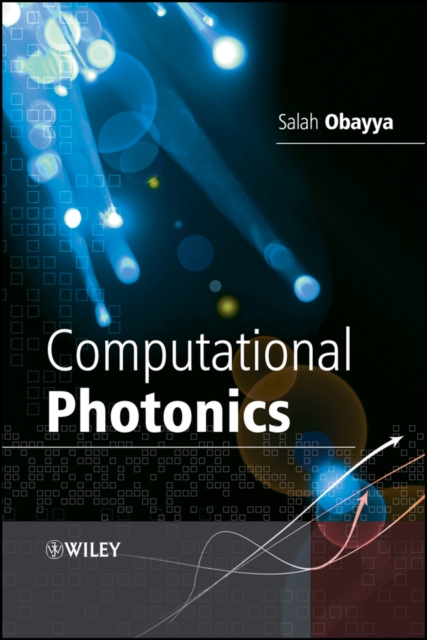
Computational photonics
This book explores the state-of-the art in computational modelling techniques for photonic devices In this book, the author provides a comprehensive coverage of modern numerical modelling techniques for designing photonic devices for use in modern optical telecommunications systems. In addition the book presents the state-of-the-art in computational photonics techniques, covering methods such as full-vectorial finite-element beam propagation, bidirectional beam propagation, complex-envelope alternative direction implicit finite difference time domain, multiresolution time domain, and finite volume time domain. The book guides the reader through the concepts of modelling, analysing, designing and optimising the performance of a wide range of photonic devices by building their own numerical code using these methods. Key Features: •Provides a thorough presentation of the state-of-the art in computational modelling techniques for photonics •Contains broad coverage of both frequency- and time-domain techniques to suit a wide range of photonic devices •Reviews existing commercial software packages for photonics •Presents the advantages and disadvantages of the different modelling techniques as well as their suitability for various photonic devices •Shows the reader how to model, analyse, design and optimise the performance of a wide range of photonic devices by building their own numerical code using these methods •Accompanying website contains the numerical examples representing the numerical techniques in this book, as well as several design examples (http://www.wiley.com/go/obayya_computational) This book will serve as an invaluable reference for researchers, optical telecommunications engineers, engineers in the photonics industry. PhD and MSc students undertaking courses in the areas of photonics and optical telecommunications will also find this book of interest.
eBook

Computational Photonics
A comprehensive manual on the efficient modeling and analysis of photonic devices through building numerical codes, this book provides graduate students and researchers with the theoretical background and MATLAB programs necessary for them to start their own numerical experiments. Beginning by summarizing topics in optics and electromagnetism, the book discusses optical planar waveguides, linear optical fiber, the propagation of linear pulses, laser diodes, optical amplifiers, optical receivers, finite-difference time-domain method, beam propagation method and some wavelength division devices, solitons, solar cells and metamaterials. Assuming only a basic knowledge of physics and numerical methods, the book is ideal for engineers, physicists and practising scientists. It concentrates on the operating principles of optical devices, as well as the models and numerical methods used to describe them.
eBook
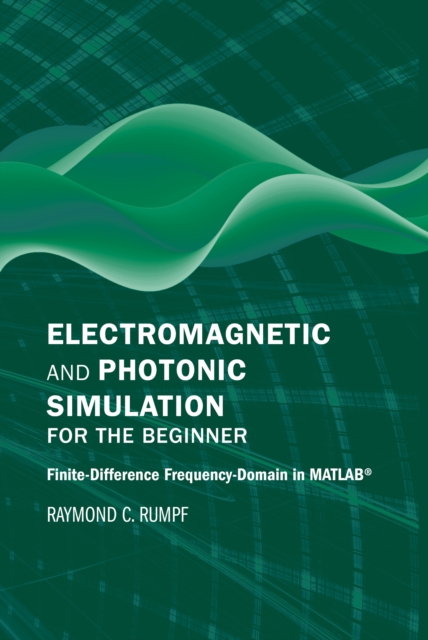
Electromagnetic and Photonic Simulation for the Beginner: Finite-Difference Frequency-Domain in Matlab(r)
Finite Difference Frequency Domain in MATLAB. Written especially for those who are new to computational electromagnetics, this book teaches you everything you need to know to simulate a wide variety of electromagnetic and photonic devices using the powerful finite-difference frequency-domain FDFD method. The book comprehensively reviews key concepts from electromagnetics and is packed with MATLAB codes and special techniques that demonstrate how FDFD can be applied to a very wide array of devices and applications. You will learn how to simulate three-dimensional devices like metamaterials and frequency selective
eBook

Advances in FDTD computational electrodynamics : photonics and nanotechnology
Advances in photonics and nanotechnology have the potential to revolutionize humanity's ability to communicate and compute. To pursue these advances, it is mandatory to understand and properly model interactions of light with materials such as silicon and gold at the nanoscale, i.e., the span of a few tens of atoms laid side by side. These interactions are governed by the fundamental Maxwell's equations of classical electrodynamics, supplemented by quantum electrodynamics.This book presents the current state-of-the-art in formulating and implementing computational models of these interactions. Maxwell's equations are solved using the finite-difference time-domain (FDTD) technique, pioneered by the senior editor, whose prior Artech House books in this area are among the top ten most-cited in the history of engineering. You discover the most important advances in all areas of FDTD and PSTD computational modeling of electromagnetic wave interactions.This cutting-edge resource helps you understand the latest developments in computational modeling of nanoscale optical microscopy and microchip lithography. You also explore cutting-edge details in modeling nanoscale plasmonics, including nonlocal dielectric functions, molecular interactions, and multi-level semiconductor gain. Other critical topics include nanoscale biophotonics, especially for detecting early-stage cancers, and quantum vacuum, including the Casimir effect and blackbody radiation.
eBook

Topological insulator laser: Theory
Ideas based on topology, initially developed in mathematics to describe the properties of geometric space under deformations, are now finding application in materials, electronics, and optics. The main driver is topological protection, a property that provides stability to a system even in the presence of defects. Harari et al. outline a theoretical proposal that carries such ideas over to geometrically designed laser cavities. The lasing mode is confined to the topological edge state of the cavity structure. Bandres et al. implemented those ideas to fabricate a topological insulator laser with an array of ring resonators. The results demonstrate a powerful platform for developing new laser systems. Science , this issue p. eaar4003 , p. eaar4005 Lasing is observed in an edge mode of a designed optical topological insulator. Topological insulators are phases of matter characterized by topological edge states that propagate in a unidirectional manner that is robust to imperfections and disorder. These attributes make topological insulator systems ideal candidates for enabling applications in quantum computation and spintronics. We propose a concept that exploits topological effects in a unique way: the topological insulator laser. These are lasers whose lasing mode exhibits topologically protected transport without magnetic fields. The underlying topological properties lead to a highly efficient laser, robust to defects and disorder, with single-mode lasing even at very high gain values. The topological insulator laser alters current understanding of the interplay between disorder and lasing, and at the same time opens exciting possibilities in topological physics, such as topologically protected transport in systems with gain. On the technological side, the topological insulator laser provides a route to arrays of semiconductor lasers that operate as one single-mode high-power laser coupled efficiently into an output port.
Journal Article
Non-Hermitian topological light steering
Photonic topological insulators provide a route for disorder-immune light transport, which holds promise for practical applications. Flexible reconfiguration of topological light pathways can enable high-density photonics routing, thus sustaining the growing demand for data capacity. By strategically interfacing non-Hermitian and topological physics, we demonstrate arbitrary, robust light steering in reconfigurable non-Hermitian junctions, in which chiral topological states can propagate at an interface of the gain and loss domains. Our non-Hermitian–controlled topological state can enable the dynamic control of robust transmission links of light inside the bulk, fully using the entire footprint of a photonic topological insulator.
Journal Article

Band gap formation and Anderson localization in disordered photonic materials with structural correlations
Disordered dielectric materials with structural correlations show unconventional optical behavior: They can be transparent to long-wavelength radiation, while at the same time have isotropic band gaps in another frequency range. This phenomenon raises fundamental questions concerning photon transport through disordered media. While optical transparency in these materials is robust against recurrent multiple scattering, little is known about other transport regimes like diffusive multiple scattering or Anderson localization. Here, we investigate band gaps, and we report Anderson localization in 2D disordered dielectric structures using numerical simulations of the density of states and optical transport statistics. The disordered structures are designed with different levels of positional correlation encoded by the degree of stealthiness χ. To establish a unified view, we propose a correlation-frequency (χ–ν) transport phase diagram. Our results show that, depending only on χ, a dielectric material can transition from localization behavior to a band gap crossing an intermediate regime dominated by tunneling between weakly coupled states.
Journal Article