
Catalogue Search | MBRL


Are you sure you want to remove the book from the shelf?

{{itemTitle}}
7
result(s) for
"Physical chemistry solutions manual"
Sort by:
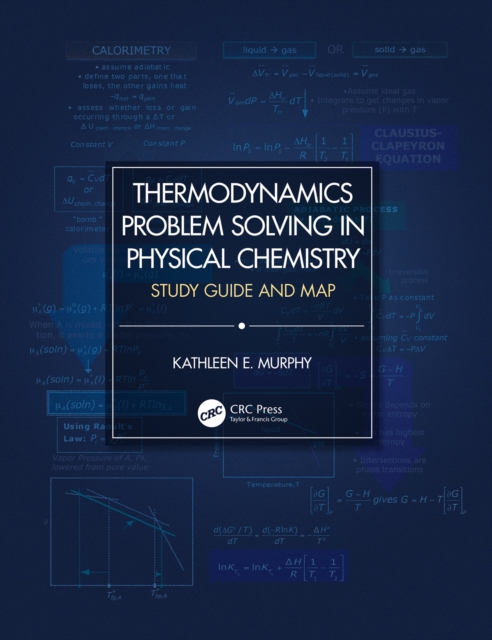
Thermodynamics Problem Solving in Physical Chemistry
Thermodynamics Problem-Solving in Physical Chemistry: Study Guide and Map is an innovative and unique workbook that guides physical chemistry students through the decision-making process to assess a problem situation, create appropriate solutions, and gain confidence through practice in solving physical chemistry problems.
The workbook includes six major sections with 20-30 solved problems in each section that span from easy, single-objective questions to difficult, multistep analysis problems. Each section of the workbook contains key points that highlight major features of the topic, to remind students of what they need to apply to solve problems in the topic area.
Key Features:
Includes a visual map that shows how all the \"equations\" used in thermodynamics are connected and how they are derived from the three major energy laws.
Acts as a guide in deriving the correct solution to a problem.
Illustrates the questions students should ask themselves about the critical features of the concepts to solve problems in physical chemistry
Can be used as a stand-alone product for review of thermodynamics questions for major tests.
eBook

Corrosion Behaviour of Weld Metal of Ultra-High-Strength Steel Weldments in a Sodium Chloride Aqueous Solution
As high-strength and ultra-high-strength steels are widely used in all kinds of modern welded constructions, a lot of research is carried out to investigate the mechanical properties of the weldments of these steels, but there is little information on such important characteristics as their corrosion behaviour. This research focuses on the corrosion behaviour of the weld metal of the weldments of S906QL and S700MC steels. The weld metal was tested electrochemically in a 3.5% NaCl aqueous solution via a potentiodynamic scan to determine the corrosion rate and its dependence on the welding gap. No influence of the welding gap on the corrosion rate was found, but the experimental results suggested that the corrosion rate depended on the chemical composition of the filler material and the microstructure of the weld metal.
Journal Article

alternative approach for assessment of liquid chromatography-mass spectrometry matrix effects using auto-sampler programmed co-injection
We report the use of auto-sampler programmable functions to co-inject analyte standard solution and matrix extract to assess ion enhancement and suppression (matrix effects) in LC-MS. This is effectively an automated post-extraction addition (APEA) procedure, emulating the manual post-extraction addition (PEA) approach widely adopted for assessment of matrix effects. To verify that APEA was comparable to the conventional PEA approach, matrix effects were determined using both methods for a selection of 31 illicit and pharmaceutical drugs in 10 different human urine extracts. Matrix effects measured using APEA were statistically indistinguishable from manual PEA methodology for 27 of the 31 drugs. Of the four drugs that showed significant differences using the two methods, three differed by less than 2 %, which is within the expected accuracy limits required for matrix effect determinations. The remaining analyte, trimeprazine, was found to degrade in the spiked PEA matrix extract, accounting for the difference between matrix effects measured by the PEA and APEA approaches. APEA enables a single matrix extract to be assessed at multiple analyte concentrations, resulting in a considerable reduction in sample preparation time. In addition, APEA can reduce the quantity of analyte-free sample matrix required for matrix effect assessment, which is an important consideration in certain analytical and bioanalytical fields. This work shows that APEA may be considered as an acceptable alternative to PEA for the assessment of matrix effects in LC-MS method validation and may be applicable to a variety of matrices such as environmental samples.
Journal Article

Extended-nanofluidic systems for chemistry and biotechnology
For the past decade, new research fields utilizing microfluidics have been formed. General micro-integration methods were proposed, and the supporting fundamental technologies were widely developed. These methodologies have made various applications in the fields of analytical and chemical synthesis, and their superior performances such as rapid, simple, and high efficient processing have been proved. Recently, the space is further downscaling to 101–103nm scale (we call the space extended-nano space). The extended-nano space located between the conventional nanotechnology (100–101nm) and microtechnology (>1μm), and the research tools are not well established. In addition, the extended-nano space is a transient space from single molecules to bulk condensed phase, and fluidics and chemistry are not unknown. For these purposes, basic methodologies were developed, and new specific phenomena in fluidics and chemistry were found. These new phenomena were applied to unique chemical operations such as concentration and ion selection. The new research fields which are now being created are quite different from those in microspace. Unique devices are also increasingly being reported. In this book, we describe the fundamental technologies for extended-nano space and show the unique liquid properties found in this space and applications for single molecule or cell analysis.
eBook

Synthesis and Evaluation of Conformationally Restricted N4-Tetradentate Ligands for Implementation in An(III)/Ln(III) Separations
The previous literature demonstrates that donor atoms softer than oxygen are effective for separating trivalent lanthanides (Ln(III)) from trivalent actinides (An(III)) (Nash, K.L., in: Gschneider, K.A. Jr., et al. (eds.) Handbook on the Physics and Chemistry of Rare Earths, vol. 18—Lanthanides/Actinides Chemistry, pp. 197–238. Elsevier Science, Amsterdam, 1994). It has also been shown that ligands that “restrict” their donor groups in a favorable geometry, appropriate to the steric demands of the cation, have an increased binding affinity. A series of tetradentate nitrogen containing ligands have been synthesized with increased steric “limits”. The pKa values for these ligands have been determined using potentiometric titration methods and the formation of the colored copper(II) complex has been used as a method to determine ligand partitioning between the organic and aqueous phases. The results for the 2-methylpyridyl-substituted amine ligands are encouraging, but the results for the 2-methylpyridyl-substituted diimines indicate that these ligands are unsuitable for implementation in a solvent extraction system due to hydrolysis.
Journal Article

Fundamental nonlinearities of the reactor-settler interaction in the activated sludge process
The activated sludge process can be modelled by ordinary and partial differential equations for the biological reactors and secondary settlers, respectively. Because of the complexity of such a system, simulation models are most often used to investigate them. However, simulation models cannot give general rules on how to control a complex nonlinear process. For a reduced-order model with only two components, soluble substrate and particulate biomass, general results on steady-state solutions have recently been obtained, such as existence, uniqueness and stability of solutions. The aim of the present paper is to utilize those results to formulate some implications of practical importance. In particular, strategies are described for the manual control of the effluent substrate concentration subject to the constraint that the settler is maintained in normal operation (with a sludge blanket in the thickening zone) in steady state. Such strategies contain how the two control parameters, the recycle and waste volumetric flow ratios, should be chosen for any (steady-state) values of the input variables.
Journal Article
Introduction to linear regression analysis
DOUGLAS C. MONTGOMERY, PhD, is Regents Professor of Industrial Engineering and Statistics at Arizona State University. Dr. Montgomery is a Fellow of the American Statistical Association, the American Society for Quality, the Royal Statistical Society, and the Institute of Industrial Engineers and has more than thirty years of academic and consulting experience. He has devoted his research to engineering statistics, specifically the design and analysis of experiments, statistical methods for process monitoring and optimization, and the analysis of time-oriented data. Dr. Montgomery is the coauthor of Generalized Linear Models: With Applications in Engineering and the Sciences, Second Edition and Introduction to Time Series Analysis and Forecasting, both published by Wiley. ELIZABETH A. PECK, PhD, is Logistics Modeling Specialist at the Coca-Cola Company in Atlanta, Georgia. G. GEOFFREY VINING, PhD, is Professor in the Department of Statistics at Virginia Polytechnic and State University. He has published extensively in his areas of research interest, which include experimental design and analysis for quality improvement, response surface methodology, and statistical process control. A Fellow of the American Statistical Association and the American Society for Quality, Dr. Vining is the coauthor of Generalized Linear Models: With Applications in Engineering and the Sciences, Second Edition (Wiley).
eBook