
Catalogue Search | MBRL


Are you sure you want to remove the book from the shelf?

{{itemTitle}}
27,097
result(s) for
"Physical fitness Health aspects."
Sort by:

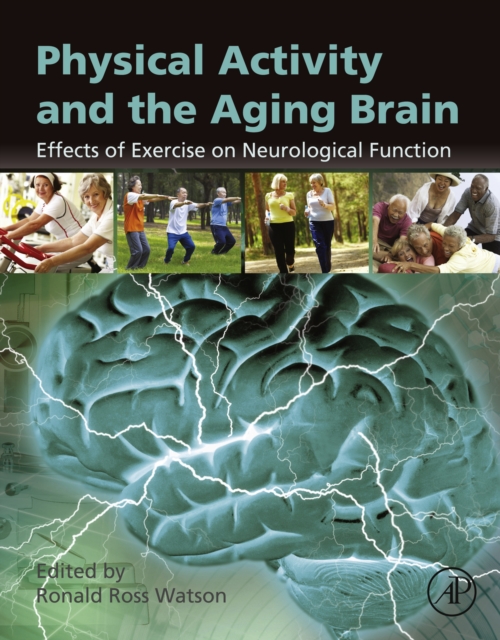
Physical activity and the aging brain : effects of exercise on neurological function
Physical Activity and the Aging Brain: Effects of Exercise on Neurological Function is a complete guide to the manifold effects of exercise and physical activity on the aging brain. Cognitive decline and motor impairment, onset of diseases and disorders, and even changes in family structure and social settings that occur as we age can all impact activity levels, yet continued physical activity is crucial for successful neurological functioning. This book examines the role that exercise and physical activity play in halting or modulating the deleterious effects of these numerous aging concerns by first examining the current state of research into how exercise manifests physical changes in the brain. It then discuss how physical activity combines with other lifestyle factors to benefit the aging brain, including nutrition, computerized brain training, and social engagement. Most significantly, it also covers how physical activity can serve as therapy to help alleviate the symptoms of various neurological diseases impacting aging populations, with particular emphasis on Alzheimer's disease and age-related cognitive decline. The book provides broad coverage of the effects of exercise and physical activity on the aging brain, its therapeutic effects, and the many factors that influence the aging process.Presents research scientists with a complete understanding of the role of exercise in healthy brain agingConsiders the roles of nutrition, the mind-body connection, and other lifestyle factorsPresents a major resource for exercise and physical activity in the neurological health of older adultsProvides a synopsis of key ideas associated with the many aspects of physical activity, along with lifestyle factors that can modify neurological diseases and age-related neurological decline
eBook

ReSYNC your life : 28 days to a stronger, leaner, smarter, happier you
\"#1 Fitness Trainer in the World\" four times in a row, health and fitness expert Samir Becic motivates readers to become a stronger, leaner, smarter, and happier version of themselves in 28 days by using his revolutionary and highly effective ReSYNC\"--Publisher supplied summary.
Book

Physical activity and health in Europe : evidence for action
Physical activity is a fundamental means of improving people's physical and mental health. It reduces the risks of many noncommunicable diseases and benefits society by increasing social interaction and community engagement. Unfortunately, more than half the population of the WHO European Region is not active enough to meet health recommendations, and the trend is towards less activity, not more.A potentially important way to respond to this challenge is the promotion of health-enhancing physical activity. This concept stresses the importance of physical activity as part of everyday life, not an optional extra to be added at the end of a busy day.This booklet is written for European policy-makers and leaders from different sectors that can promote physical activity, including health, sports and recreation, transport, employment, urban planning, education and the mass media. It sets out the facts about health-enhancing physical activity, provides examples of action already being taken, highlights the contributions that can be made by health and other sectors and makes the case for concerted action across the WHO European Region.
eBook


The enculturated gene
In the 1980s, a research team led by Parisian scientists identified several unique DNA sequences, or haplotypes, linked to sickle cell anemia in African populations. After casual observations of how patients managed this painful blood disorder, the researchers in question postulated that the Senegalese type was less severe. The Enculturated Gene traces how this genetic discourse has blotted from view the roles that Senegalese patients and doctors have played in making sickle cell \"mild\" in a social setting where public health priorities and economic austerity programs have forced people to improvise informal strategies of care.
eBook


Understanding physical literacy in the context of health: a rapid scoping review
Background
Physical literacy is a multidimensional concept that describes a holistic foundation for physical activity engagement. Understanding the utilization and effectiveness of physical literacy in the context of health and the health care setting will support clinical and population health programming. The purpose of this rapid scoping review was to: 1) map the conceptualization of physical literacy as it relates to health; 2) identify and describe the utilization of physical literacy in the context of health and engagement of health care providers; and 3) better understand the relationship between physical literacy, physical activity, and health.
Methods
Following established scoping review methods adapted for a rapid review approach, we searched electronic databases Medline OVID, CINAHL Ebsco, PsycInfo Ebsco, Web of Science ISI, and ERIC Ebsco from conception until September 2019. Tabulation coding was used to identify the key themes across included articles and synthesize findings. The review follows an integrated knowledge translation approach based on a partnership between the health system, community organizations, and researchers.
Results
Following removal of duplicates, our search identified 475 articles for title and abstract screening. After full text review, 17 articles were included (12 original research papers and five conceptual or review papers). There was near consensus among included papers with 16 of 17 using the Whiteheadian definition of physical literacy. There was limited involvement of health care providers in the concept of physical literacy. Physical literacy was connected to the following health indicators: BMI and body weight, waist circumference, cardiorespiratory fitness, physical activity, and sedentary behaviour. The primary demographic focus of included studies was children and there was a conceptual focus on the physical domain of physical literacy.
Conclusions
Despite growing popularity, the empirical evidence base linking physical literacy and health outcomes is limited and the relationship remains theoretical. Physical literacy may present a novel and holistic framework for health-enhancing physical activity interventions that consider factors vital to sustained participation in physical activity across the life course. Future work should continue to explore the nature and direction of the relationship between physical activity and physical literacy to identify appropriate focused approaches for health promotion.
Journal Article


Aerobic and resistance exercise improves physical fitness, bone health, and quality of life in overweight and obese breast cancer survivors: a randomized controlled trial
Background
Exercise is an effective strategy to improve quality of life and physical fitness in breast cancer survivors; however, few studies have focused on the early survivorship period, minorities, physically inactive and obese women, or tested a combined exercise program and measured bone health. Here, we report the effects of a 16-week aerobic and resistance exercise intervention on patient-reported outcomes, physical fitness, and bone health in ethnically diverse, physically inactive, overweight or obese breast cancer survivors.
Methods
One hundred breast cancer survivors within 6 months of completing adjuvant treatment were assessed at baseline, post-intervention, and 3-month follow-up (exercise group only) for physical fitness, bone mineral density, serum concentrations of bone biomarkers, and quality of life. The exercise intervention consisted of moderate-vigorous (65–85% heart rate maximum) aerobic and resistance exercise thrice weekly for 16 weeks. Differences in mean changes for outcomes were evaluated using mixed-model repeated measure analysis.
Results
At post-intervention, the exercise group was superior to usual care for quality of life (between group difference: 14.7, 95% CI: 18.2, 9.7;
p
< 0.001), fatigue (p < 0.001), depression (p < 0.001), estimated VO
2max
(p < 0.001), muscular strength (p < 0.001), osteocalcin (
p
= 0.01), and BSAP (
p
= 0.001). At 3-month follow-up, all patient-reported outcomes and physical fitness variables remained significantly improved compared to baseline in the exercise group (
p
< 0.01).
Conclusions
A 16-week combined aerobic and resistance exercise program designed to address metabolic syndrome in ethnically-diverse overweight or obese breast cancer survivors also significantly improved quality of life and physical fitness. Our findings further support the inclusion of supervised clinical exercise programs into breast cancer treatment and care.
Trial registration
This trial is registered on ClinicalTrials.gov:
NCT01140282
as of June 9, 2010.
Journal Article