
Catalogue Search | MBRL


Are you sure you want to remove the book from the shelf?

{{itemTitle}}
5,777
result(s) for
"Physical sciences Study and teaching."
Sort by:

Teaching big history
\"Big History is a new field on a grand scale: it tells the story of the universe over time through a diverse range of disciplines that spans cosmology, physics, chemistry, astronomy, geology, evolutionary biology, anthropology, and archaeology, thereby reconciling traditional human history with environmental geography and natural history. Weaving the myriad threads of evidence-based human knowledge into a master narrative that stretches from the beginning of the universe to the present, the Big History framework helps students make sense of their studies in all disciplines by illuminating the structures that underlie the universe and the connections among them. Teaching Big History is a powerful analytic and pedagogical resource, and serves as a comprehensive guide for teaching Big History, as well for sharing ideas about the subject and planning a curriculum around it. Readers are also given helpful advice about the administrative and organizational challenges of instituting a general education program constructed around Big History. The book includes teaching materials, examples, and detailed sample exercises. This book is also an engaging first-hand account of how a group of professors built an entire Big History general education curriculum for first-year students, demonstrating how this thoughtful integration of disciplines exemplifies liberal education at its best and illustrating how teaching and learning this incredible story can be transformative for professors and students alike\"--Provided by publisher.
Book

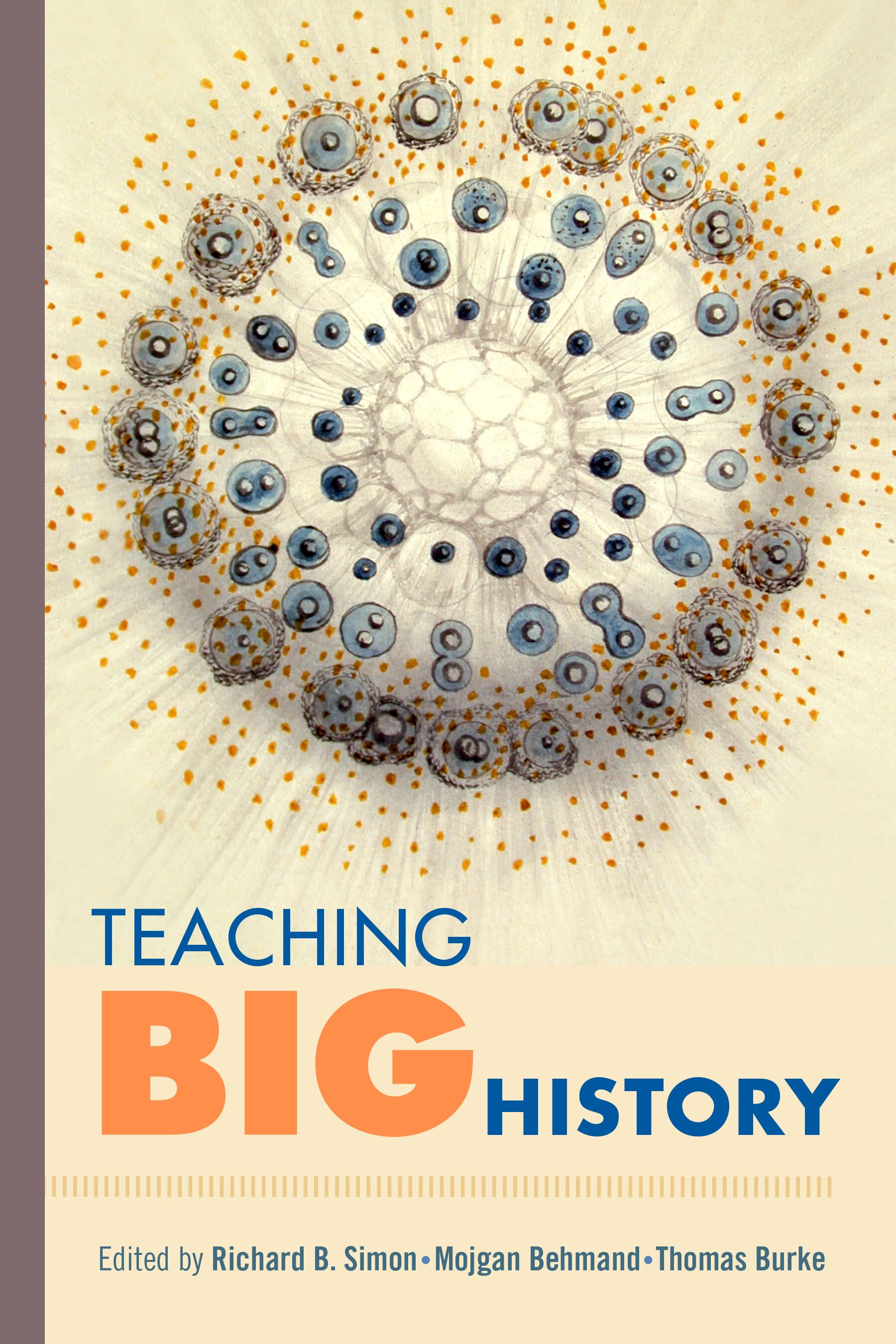
Teaching big history
Big History is a new field on a grand scale: it tells the story of the universe over time through a diverse range of disciplines that spans cosmology, physics, chemistry, astronomy, geology, evolutionary biology, anthropology, and archaeology, thereby reconciling traditional human history with environmental geography and natural history. Weaving the myriad threads of evidence-based human knowledge into a master narrative that stretches from the beginning of the universe to the present, the Big History framework helps students make sense of their studies in all disciplines by illuminating the structures that underlie the universe and the connections among them. Teaching Big History is a powerful analytic and pedagogical resource, and serves as a comprehensive guide for teaching Big History, as well for sharing ideas about the subject and planning a curriculum around it. Readers are also given helpful advice about the administrative and organizational challenges of instituting a general education program constructed around Big History. The book includes teaching materials, examples, and detailed sample exercises. This book is also an engaging first-hand account of how a group of professors built an entire Big History general education curriculum for first-year students, demonstrating how this thoughtful integration of disciplines exemplifies liberal education at its best and illustrating how teaching and learning this incredible story can be transformative for professors and students alike.
eBook


Next Generation Science Standards
Next Generation Science Standards identifies the science all K-12 students should know. These new standards are based on the National Research Council's A Framework for K-12 Science Education . The National Research Council, the National Science Teachers Association, the American Association for the Advancement of Science, and Achieve have partnered to create standards through a collaborative state-led process. The standards are rich in content and practice and arranged in a coherent manner across disciplines and grades to provide all students an internationally benchmarked science education.
The print version of Next Generation Science Standards complements the nextgenscience.org website and:
Provides an authoritative offline reference to the standards when creating lesson plans
Arranged by grade level and by core discipline, making information quick and easy to find
Printed in full color with a lay-flat spiral binding
Allows for bookmarking, highlighting, and annotating
eBook

The Chemical Bond
This is the perfect complement to \"Chemical Bonding - Across the Periodic Table\" by the same editors, who are two of the top scientists working on this topic, each with extensive experience and important connections within the community. The resulting book is a unique overview of the different approaches used for describing a chemical bond, including molecular-orbital based, valence-bond based, ELF, AIM and density-functional based methods. It takes into account the many developments that have taken place in the field over the past few decades due to the rapid advances in quantum chemical models and faster computers.
eBook

The Spectrum of Teaching Styles in Physical Education
This is the first in-depth, practice-focused book to explain 'spectrum theory' and its application in physical education and sports coaching. Spectrum theory identifies 11 distinct teaching styles, with decision making as a central characteristic, and allows teachers to select age and developmentally appropriate styles across social, physical, ethical, emotional and cognitive channels. The book brings together leading thinkers in spectrum theory, to demonstrate how it can be applied to improve teaching and learning in PE and coaching.
Drawing on real-world research in schools and universities, the book considers the history of spectrum theory, and examines its significance across important areas such as physical education teacher education, sport pedagogy, teacher development, models such as Games Sense and Teaching Games for Understanding, skill acquisition and student learning and perception. Every chapter highlights the practical implications of research in real-world settings and considers how spectrum theory can enhance learning experiences.
This book is invaluable reading for all pre-service and in-service school physical education teachers, sports coaches, school pedagogical leaders and college lecturers.
eBook

Expanding Underrepresented Minority Participation
In order for the United States to maintain the global leadership and competitiveness in science and technology that are critical to achieving national goals, we must invest in research, encourage innovation, and grow a strong and talented science and technology workforce. Expanding Underrepresented Minority Participation explores the role of diversity in the science, technology, engineering and mathematics (STEM) workforce and its value in keeping America innovative and competitive. According to the book, the U.S. labor market is projected to grow faster in science and engineering than in any other sector in the coming years, making minority participation in STEM education at all levels a national priority.
Expanding Underrepresented Minority Participation analyzes the rate of change and the challenges the nation currently faces in developing a strong and diverse workforce. Although minorities are the fastest growing segment of the population, they are underrepresented in the fields of science and engineering. Historically, there has been a strong connection between increasing educational attainment in the United States and the growth in and global leadership of the economy. Expanding Underrepresented Minority Participation suggests that the federal government, industry, and post-secondary institutions work collaboratively with K-12 schools and school systems to increase minority access to and demand for post-secondary STEM education and technical training.
The book also identifies best practices and offers a comprehensive road map for increasing involvement of underrepresented minorities and improving the quality of their education. It offers recommendations that focus on academic and social support, institutional roles, teacher preparation, affordability and program development.
eBook