
Catalogue Search | MBRL


Are you sure you want to remove the book from the shelf?

{{itemTitle}}
23,105
result(s) for
"Physician-Patient Relations"
Sort by:


The Psychiatric Interview
Focusing on the practical skills needed to establish rapport with patients and gain valuable clinical insights,The Psychiatric Interview, 5th Edition, offers a practical, concise approach to improving interviewing skills.Noted psychiatrist and award-winning mental health journalist Dr.Daniel J.
eBook

Technology and the doctor-patient relationship
\"Medicine is an ancient profession that advances as each generation of practitioners passes it down to the next. It remains a distinguished, flawed and rewarding vocation-but it may be coming to an end as we know it. Computer algorithms promise patients better access, safer therapies and more predictable outcomes. Technology reduces costs, designs more effective and personalized treatments and diminishes fraud and waste. Balanced against these miraculous developments is the risk that medical professionals will forget their primary responsibility is to their patients, not to a template of care. Written for anyone who has considered a career in health care-and for any patient who has had an office visit where a provider spent more time doing data-entry than examining them-this book weighs the benefits of emerging technologies against the limitations of traditional systems to envision a future where both doctors and patients are better-informed consumers of health care tools\"-- Provided by publisher.
Book
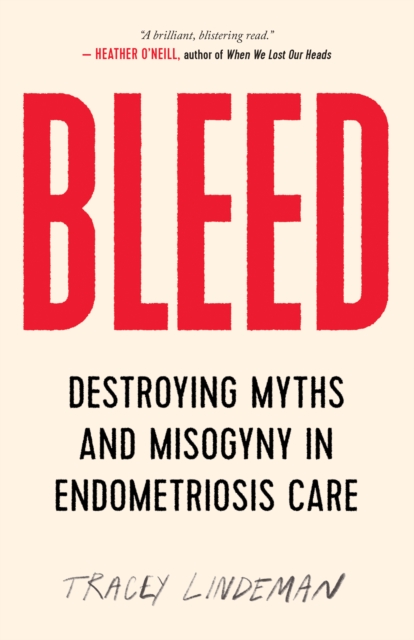
Bleed
A blend of memoir and journalism, a scathing examination of how the uterus has been sidelined, ignored, and mistreated. For the tens of millions globally who suffer from endometriosis as well as those looking to understand the deeply rooted misogyny of the medical system.
eBook


A Chatbot Versus Physicians to Provide Information for Patients With Breast Cancer: Blind, Randomized Controlled Noninferiority Trial
The data regarding the use of conversational agents in oncology are scarce.
The aim of this study was to verify whether an artificial conversational agent was able to provide answers to patients with breast cancer with a level of satisfaction similar to the answers given by a group of physicians.
This study is a blind, noninferiority randomized controlled trial that compared the information given by the chatbot, Vik, with that given by a multidisciplinary group of physicians to patients with breast cancer. Patients were women with breast cancer in treatment or in remission. The European Organisation for Research and Treatment of Cancer Quality of Life Group information questionnaire (EORTC QLQ-INFO25) was adapted and used to compare the quality of the information provided to patients by the physician or the chatbot. The primary outcome was to show that the answers given by the Vik chatbot to common questions asked by patients with breast cancer about their therapy management are at least as satisfying as answers given by a multidisciplinary medical committee by comparing the success rate in each group (defined by a score above 3). The secondary objective was to compare the average scores obtained by the chatbot and physicians for each INFO25 item.
A total of 142 patients were included and randomized into two groups of 71. They were all female with a mean age of 42 years (SD 19). The success rates (as defined by a score >3) was 69% (49/71) in the chatbot group versus 64% (46/71) in the physicians group. The binomial test showed the noninferiority (P<.001) of the chatbot's answers.
This is the first study that assessed an artificial conversational agent used to inform patients with cancer. The EORTC INFO25 scores from the chatbot were found to be noninferior to the scores of the physicians. Artificial conversational agents may save patients with minor health concerns from a visit to the doctor. This could allow clinicians to spend more time to treat patients who need a consultation the most.
Clinicaltrials.gov NCT03556813, https://tinyurl.com/rgtlehq.
Journal Article

Attending : medicine, mindfulness, and humanity
\"As a third-year Harvard Medical student doing a clinical rotation in surgery, Ronald Epstein watched an experienced surgeon fail to notice his patient's kidney turning an ominous shade of blue. In that same rotation, Epstein was awestruck by another surgeon's ability to slow down and shift between autopilot and intentionality. The difference between these two doctors left a lasting impression on Epstein and set the stage for his life's work--to identify the qualities and habits that distinguish masterful doctors from those who are merely competent. The secret, he learned, was mindfulness\"--Amazon.com.
Book
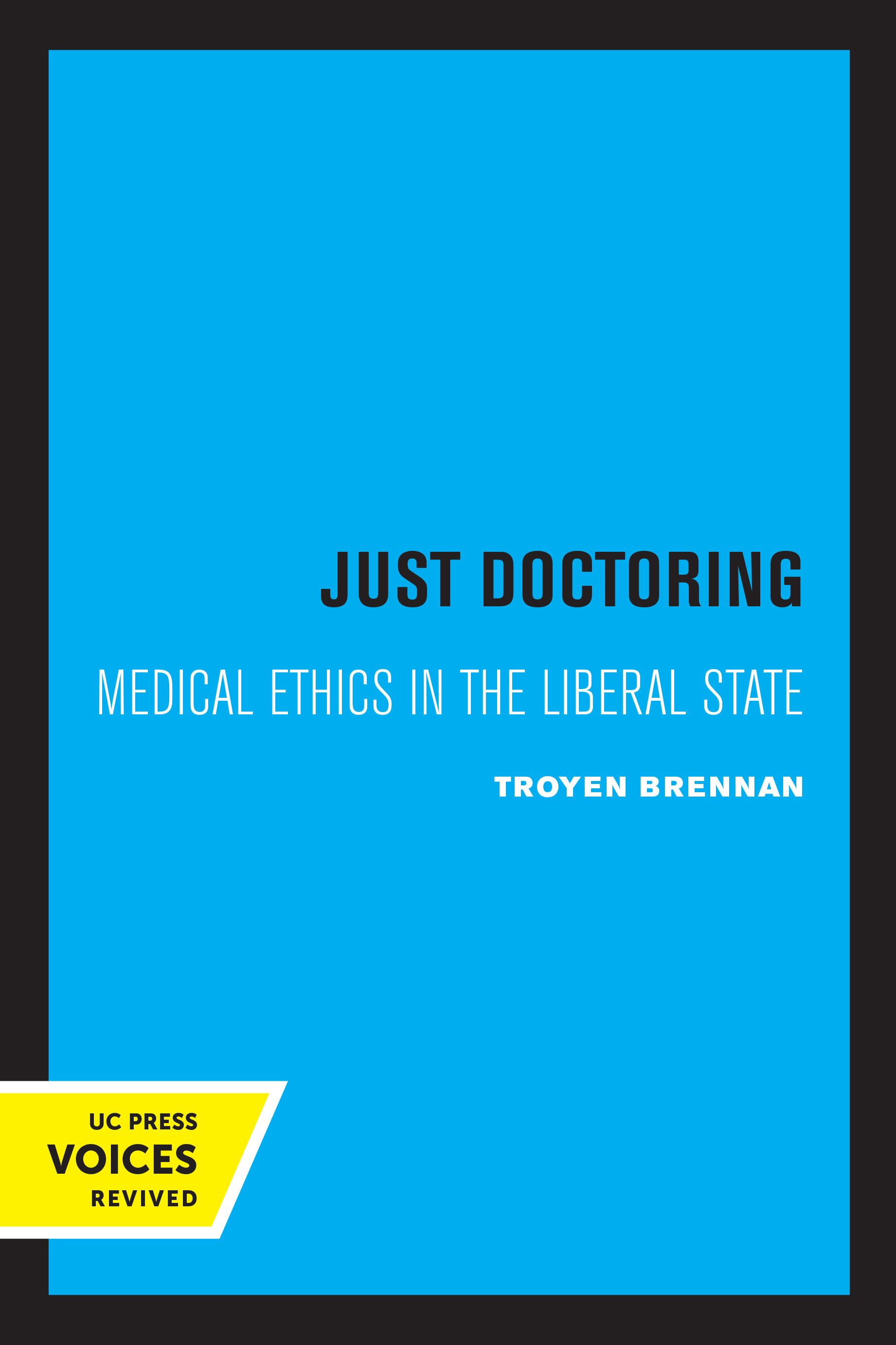
Just Doctoring
Just Doctoring draws the doctor-patient relationship out of the consulting room and into the middle of the legal and political arenas where it more and more frequently appears. Traditionally, medical ethics has focused on the isolated relationship of physician to patient in a setting that has left the physician virtually untouched by market constraints or government regulation. Arguing that changes in health care institutions and legal attention to patient rights have made conventional approaches obsolete, Troyen Brennan points the way to a new, more aware and engaged medical ethics. The medical profession is no longer isolated, even theoretically, from the liberal, market-dominated state. Old ideas of physician beneficence and altruism must make way for a justice-based medical ethics, assuming a relationship between equals more compatible with liberal political philosophy. Brennan offers clinical examples of many of today's most challenging medical problems--from informed consent to care rationing and the repercussions of the HIV epidemic--and gives his recommendation for a new ethical perspective. This lively and controversial plea for a rethinking of medical ethics goes right to the heart of medical care at the end of the twentieth century. This title is part of UC Press's Voices Revived program, which commemorates University of California Press's mission to seek out and cultivate the brightest minds and give them voice, reach, and impact. Drawing on a backlist dating to 1893, Voices Revived makes high-quality, peer-reviewed scholarship accessible once again using print-on-demand technology. This title was originally published in 1991. Many titles in the Voices Revived program are also newly available as ebooks, offered at a discounted price to support wider access to scholarly work.
eBook


Biological, clinical, and ethical advances of placebo effects
For many years, placebos have been defined by their inert content and their use as controls in clinical trials and treatments in clinical practice. Recent research shows that placebo effects are genuine psychobiological events attributable to the overall therapeutic context, and that these effects can be robust in both laboratory and clinical settings. There is also evidence that placebo effects can exist in clinical practice, even if no placebo is given. Further promotion and integration of laboratory and clinical research will allow advances in the ethical use of placebo mechanisms that are inherent in routine clinical care, and encourage the use of treatments that stimulate placebo effects.
Journal Article