
Catalogue Search | MBRL


Are you sure you want to remove the book from the shelf?

{{itemTitle}}
562
result(s) for
"Physicians -- Great Britain"
Sort by:

Elizabeth Garrett Anderson, 1836-1917
Biography of Elizabeth Garrett Anderson (1836-1917), first female physician in England; by her daughter, Louisa Garrett Anderson.
Book

How to succeed at the medical interview
How to Succeed at the Medical Interview provides candidates with a competitive edge. It reduces the likelihood of unexpected questions or situations and helps improve confidence before and during the medical interview. This new second edition includes updated content on changes to the structure of healthcare and how this affects both the application and interview process. It details the types of questions that will be asked at medical interviews and also provides improved guidance for overseas doctors and healthcare professionals and for those seeking to practice abroad. How to Succeed at the Medical Interview is the ideal guide for Foundation Programme trainees, Specialist Registrars and General Practitioner trainees. It is also valuable for healthcare professionals facing competitive medical interviews at any stage of their career.
eBook

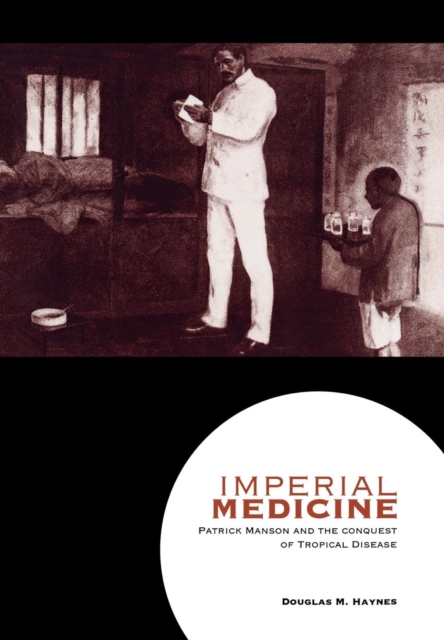
Imperial medicine : Patrick Manson and the conquest of tropical disease
\"Imperial Medicine . . . effectively situates Manson in two very different professional and political locations--China and London--and makes informative connections between the filarial and malarial stages of his career.\"--Victorian Studies.
eBook

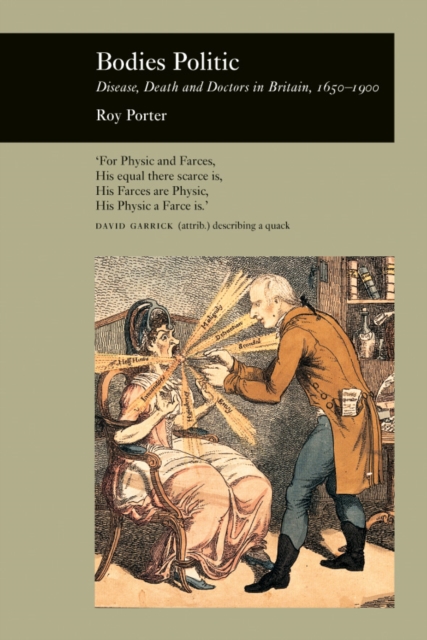
Bodies Politic
In this historical tour de force, now available in B-format paperback, Roy Porter takes a critical look at representations of the body in health, disease and death in Britain from the mid-seventeenth to the twentieth century. Porter argues that great symbolic weight was attached to contrasting conceptions of the healthy and diseased body, and that such ideas were mapped onto antithetical notions of the good and the bad, the beautiful and the ugly. With these images in mind, he explores aspects of being ill alongside the practice of medicine, paying special attention to self-presentations by physicians, surgeons and quacks, and to changes in practitioners' public identities over time. Porter also examines the wider symbolic meanings of disease and doctoring and the 'body politic'. Porter's book is packed with outrageous and amusing anecdotes portraying diseased bodies and medical practitioners alike.
eBook

What is a doctor? : a GP's prescription for the future
'What is a Doctor?' is a vital contribution to the ongoing debate about how we maintain an NHS that is both fit for purpose and free. Using stories and case studies from across his thirty-year career as a GP, Phil Whitaker offers insight into the medical movements, political interference and societal changes that have transformed the role of doctor over the past three decades. Much has altered for the better but, even when based on good intentions, an equal or greater amount has been damaging and threatens the sustainability of the NHS. In examining what it means to be a doctor today this book also answers an accompanying question 'what is a patient?' - and how we can all take a more active role in our healthcare. And looking forward Dr Whitaker describes what might yet be done to restore the NHS and its capacity for properly patient-centred care.
Book
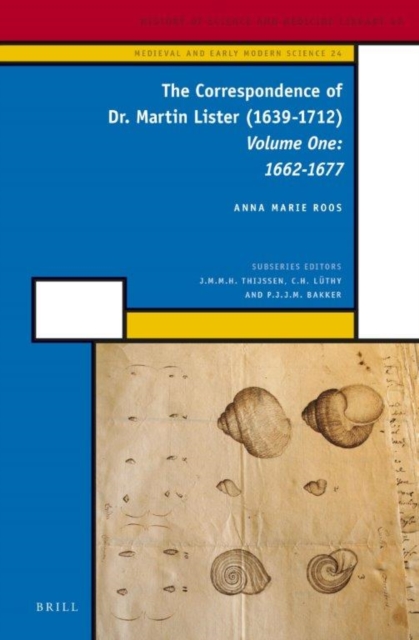
The correspondence of Dr. Martin Lister (1639-1712)
Winner of the 2017 John Thackray Medal awarded by the Society for the History of Natural History, U.K. Martin Lister (1639-1712) was a consummate virtuoso, the first arachnologist and conchologist, and a Royal physician. As one of the most prominent corresponding fellows of the Royal Society, many of Lister's discoveries in natural history, archaeology, medicine, and chemistry were printed in the Philosophical Transactions. Lister corresponded extensively with explorers and other virtuosi such as John Ray, who provided him with specimens, observations, and locality records from Jamaica, America, Barbados, France, Italy, the Netherlands, and his native England. This volume of ca. 400 letters (one of three), consists of Lister's correspondence dated from 1662 to 1677, including his time as a Cambridge Fellow, his medical training in Montpellier, and his years as a practicing physician in York.
eBook


James Cowles Prichard of the Red Lodge
Margaret M. Crump offers the first thorough biography of British scientist and physician James Cowles Prichard (1786–1848), an intellectual giant in the developing human sciences, a pioneering psychiatric theorist, and Europe’s leading anthropologist during the first half of the nineteenth century.
eBook