
Catalogue Search | MBRL


Are you sure you want to remove the book from the shelf?

{{itemTitle}}
316
result(s) for
"Physicians Cuba."
Sort by:

Revolutionary doctors : how Venezuela and Cuba are changing the world's conception of health care
\"Revolutionary Doctors gives readers a first-hand account of Venezuela's innovative and inspiring program of community healthcare, designed to serve--and largely carried out by--the poor themselves. Drawing on long-term participant observations as well as in-depth research, Brouwer tells the story of Venezuela's Integral Community Medicine program, in which doctor-teachers move into the countryside and poor urban areas to recruit and train doctors from among peasants and workers. Such programs were first developed in Cuba, and Cuban medical personnel play a key role in Venezuela today as advisors and organizers. This internationalist model has been a great success--Cuba is a world leader in medicine and medical training--and Brouwer shows how the Venezuelans are now, with the aid of their Cuban counterparts, following suit. But this program is not without its challenges. It has faced much hostility from traditional Venezuelan doctors as well as all the forces antagonistic to the Venezuelan and Cuban revolutions. Despite the obstacles it describes, Revolutionary Doctors demonstrates how a society committed to the well-being of its poorest people can actually put that commitment into practice, by delivering essential healthcare through the direct empowerment of the people it aims to serve\"--Provided by publisher.
Book
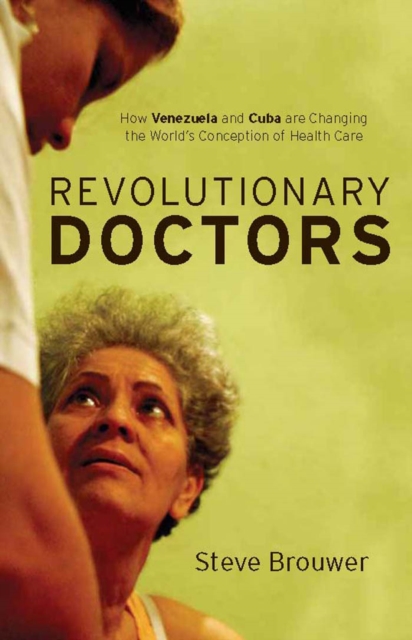
Revolutionary Doctors
Revolutionary Doctors gives readers a first-hand account of Venezuela's innovative and inspiring program of community healthcare, designed to serve - and largely carried out by - the poor themselves. Drawing on long-term participant observations as well as in-depth research, Brouwer tells the story of Venezuela's Integral Community Medicine program, in which doctor-teachers move into the countryside and poor urban areas to recruit and train doctors from among peasants and workers. Such programs were first developed in Cuba, and Cuban medical personnel play a key role in Venezuela today as advisors and organizers. This internationalist model has been a great success - Cuba is a world leader in medicine and medical training - and Brouwer shows how the Venezuelans are now, with the aid of their Cuban counterparts, following suit.But this program is not without its challenges. It has faced much hostility from traditional Venezuelan doctors as well as all the forces antagonistic to the Venezuelan and Cuban revolutions. Despite the obstacles it describes, Revolutionary Doctors demonstrates how a society committed to the well-being of its poorest people can actually put that commitment into practice, by delivering essential healthcare through the direct empowerment of the people it aims to serve.
eBook

Advancing dementia preparedness in Low and Middle Income countries: A randomized trial to improve diagnosis in primary care
INTRODUCTION Dementia disproportionately affects individuals in low‐ and middle‐income countries (LMICs), yet diagnostic capabilities there are often inadequate. This study assesses the impact of a structured training program for primary care physicians (PCPs) in Cuba to improve early dementia detection. METHODS We conducted a cluster‐randomized trial involving 16 primary care clinics, randomizing them into intervention and control groups (CGs). The intervention group (IG) received comprehensive training on dementia diagnosis and management. The effectiveness was measured through changes in diagnosis rates and PCP diagnostic confidence over a 12‐month period. RESULTS The IG demonstrated a significant improvement in PCP confidence and dementia diagnosis rates compared to baseline and the CG. Comparisons of clinic‐based and community‐based dementia prevalence highlighted the effectiveness of the intervention. DISCUSSION Structured training can significantly enhance the capabilities of PCPs in LMICs for early dementia detection. Ongoing training and integration into health systems are critical for sustaining these improvements. Highlights This study developed and implemented a tailored training program for PCPs to specifically enhance their skills in dementia diagnosis. We used the 10/66 dementia protocol to benchmark and validate the effectiveness of the training program against community‐based prevalence rates. In a cluster‐randomized trial, we observed a significant post‐training increase in dementia detection in primary care settings. Similar programs may address healthcare disparities by demonstrating the feasibility and impact of educational interventions in resource‐constrained settings. We provide evidence‐based recommendations for scaling similar training programs across other LMICs to improve dementia care globally.
Journal Article

A review on the occurrence of companion vector-borne diseases in pet animals in Latin America
Companion vector-borne diseases (CVBDs) are an important threat for pet life, but may also have an impact on human health, due to their often zoonotic character. The importance and awareness of CVBDs continuously increased during the last years. However, information on their occurrence is often limited in several parts of the world, which are often especially affected. Latin America (LATAM), a region with large biodiversity, is one of these regions, where information on CVBDs for pet owners, veterinarians, medical doctors and health workers is often obsolete, limited or non-existent. In the present review, a comprehensive literature search for CVBDs in companion animals (dogs and cats) was performed for several countries in Central America (Belize, Caribbean Islands, Costa Rica, Cuba, Dominican Republic, El Salvador, Guatemala, Honduras, Mexico, Nicaragua, Panama, Puerto Rico) as well as in South America (Argentina, Bolivia, Brazil, Chile, Colombia, Ecuador, French Guiana, Guyana (British Guyana), Paraguay, Peru, Suriname, Uruguay, Venezuela) regarding the occurrence of the following parasitic and bacterial diseases: babesiosis, heartworm disease, subcutaneous dirofilariosis, hepatozoonosis, leishmaniosis, trypanosomosis, anaplasmosis, bartonellosis, borreliosis, ehrlichiosis, mycoplasmosis and rickettsiosis. An overview on the specific diseases, followed by a short summary on their occurrence per country is given. Additionally, a tabular listing on positive or non-reported occurrence is presented. None of the countries is completely free from CVBDs. The data presented in the review confirm a wide distribution of the CVBDs in focus in LATAM. This wide occurrence and the fact that most of the CVBDs can have a quite severe clinical outcome and their diagnostic as well as therapeutic options in the region are often difficult to access and to afford, demands a strong call for the prevention of pathogen transmission by the use of ectoparasiticidal and anti-feeding products as well as by performing behavioural changes.
Journal Article

The Curious Case of Cuba
As health professionals in the United States consider how to focus health care and coverage to ensure better, more equitable patient and population health outcomes, the experience of Cuba’s National Health System over the last 5 decades may provide useful insights. Although mutual awareness has been limited by long-term political hostilities between the United States and Cuban governments, the history and details of the Cuban health system indicate that their health system merits attention as an example of a national integrated approach resulting in improved health status. More extensive analysis of the principles, practices, and outcomes in Cuba is warranted to inform health system transformation in the United States, despite differences in political-social systems and available resources.
Journal Article

Lessons from Building a Sustainable Healthcare Exchange between the Netherlands and Cuba
Over the past ten years, seven Dutch Universities have built a sustainable exchange with seven institutes in Cuban healthcare. The exchange was initiated by the Leiden University Medical Centre and the University of Medical Sciences of Havana. Cooperation with Cuba was chosen as Cuba has excellent primary healthcare and has a strong focus on prevention and public health. These were considered important due to the major contribution of non-communicable diseases to morbidity and mortality in the Netherlands. Exchanges have occurred with Dutch health professionals and students visiting Cuban healthcare institutions and Cuban postgraduate students studying in the Netherlands. There has been an increased awareness of the importance of public health and prevention in Dutch professional organizations following the exchange. The exchange has also helped to break the scientific and economic US blockade of Cuba and resulted in joint publications. In this review we described the process, key aspects, results and lessons learned in this process. Collaboration between Cuba (a middle income) and the Netherlands (a high-income country) is possible.
Journal Article
From Nuremberg to Guantanamo Bay: Uses of Physicians in the War on Terror
Seventy years after the Nuremberg Doctors’ Trial, health professionals and lawyers working together after 9/11 played a critical role in designing, justifying, and carrying out the US state-sponsored torture program in the CIA “Black Sites” and US military detention centers, including Abu Ghraib, Bagram, and Guantanamo Bay, Cuba. We analyze the similarities between the Nazi doctors and health professionals in the War on Terror and address the question of how it happened that health professionals, including doctors, psychologists, physician assistants, and nurses, acted as agents of the state to utilize their medical and healing skills to cause harm and sanitize barbarous acts, similar to (though not on the scale of) how Nazi doctors were used by the Third Reich.
Journal Article

Guantanamo Bay: A Medical Ethics–free Zone?
U.S. physicians have not widely criticized medical policies at Guantanamo. But force-feeding mentally competent hunger strikers violates medical ethics, and such actions taken by military physicians on behalf of the government devalue medical ethics for all physicians.
American physicians have not widely criticized medical policies at the Guantanamo Bay detainment camp that violate medical ethics. We believe they should. Actions violating medical ethics, taken on behalf of the government, devalue medical ethics for all physicians. The ongoing hunger strike at Guantanamo by as many as 100 of the 166 remaining prisoners presents a stark challenge to the U.S. Department of Defense (DOD) to resist the temptation to use military physicians to “break” the strike through force-feeding.
President Barack Obama has publicly commented on the hunger strike twice. On April 26, he said, “I don't want these individuals . . .
Journal Article

“We are the ones who will have to make the change”: Cuban health cooperation and the integration of Cuban medical graduates into practice in the Pacific
Background
This paper responds to Asante et al. (in Hum Resour Health, 2014), providing an updated picture of the impacts of Cuban medical training in the Pacific region based on research carried out in 2019–2021, which focused on the experiences of Pacific Island doctors trained in Cuba and their integration into practice in their home countries.
Methods
The research focussed on two case studies—Solomon Islands and Kiribati. Study methods for this research included multi-sited ethnographic methods and semi-structured interviews as well as qualitative analysis of policy documents, reports, and media sources.
Results
The Cuban health assistance programme has had a significant impact on the medical workforce in the Pacific region increasing the number of doctors employed by Pacific Ministries of Health between 2012 and 2019. Qualitatively, there have been some notable improvements in the medical workforce and health delivery over this period. However, the integration of the Cuban-trained doctors into practise has been challenging, with criticisms of their clinical, procedural and communication skills, and the need for the rapid development of bridging and internship training programmes (ITPs) which were inadequately planned for at the outset of the programme.
Conclusions
The Cuban programme in the Pacific is an important model of development assistance for health in the region. While Cuba’s offer of scholarships was the trigger for a range of positive outcomes, the success of the programme has relied on input from a range of actors including support from other governments and institutions, and much hard work by the graduates themselves, often in the face of considerable criticism. Key impacts of the programme to date include the raw increase in the number of doctors and the development of the ITPs and career pathways for the graduates, although this has also led to the reorientation of Cuban graduates from preventative to curative health. There is considerable potential for these graduates to contribute to improved health outcomes across the region, particularly if their primary and preventative health care skills are utilised.
Journal Article

Health in Timor-Leste: 20 years of change
Life expectancy was less than 60 years. Since 2002, successive governments have focused on rebuilding the country. In recent years, there has been a push by the government and by non-governmental organisations to provide people with nutrition-based agricultural support, including educating parents about healthy food they can produce and eat including sweet potatoes and leafy greens, and the benefits of preserving traditional recipes that are unique to Timor-Leste. According to a WHO survey in 2014, a fifth of all adults have three or more NCD risk factors, including smoking, inadequate diet, high blood pressure, alcohol use, and inadequate physical activity. According to the 2014 WHO survey, 70% of men consume tobacco in some form.
Journal Article